If you spend any time texting, scrolling social media, or chatting online, you have probably seen the term “IMO.” It appears in comments, messages, and even professional discussions. Yet many people pause and wonder what it really means and when to use it.
This small three-letter term carries a surprisingly important role in communication. It helps people share opinions without sounding aggressive or arrogant.
Understanding what IMO means in text can make your conversations clearer, friendlier, and more confident. It also helps you understand other people’s tone and intentions better.
In this guide, you will learn the exact meaning, origin, emotional context, real conversations, and proper usage of IMO in modern life.
IMO – Quick Meaning
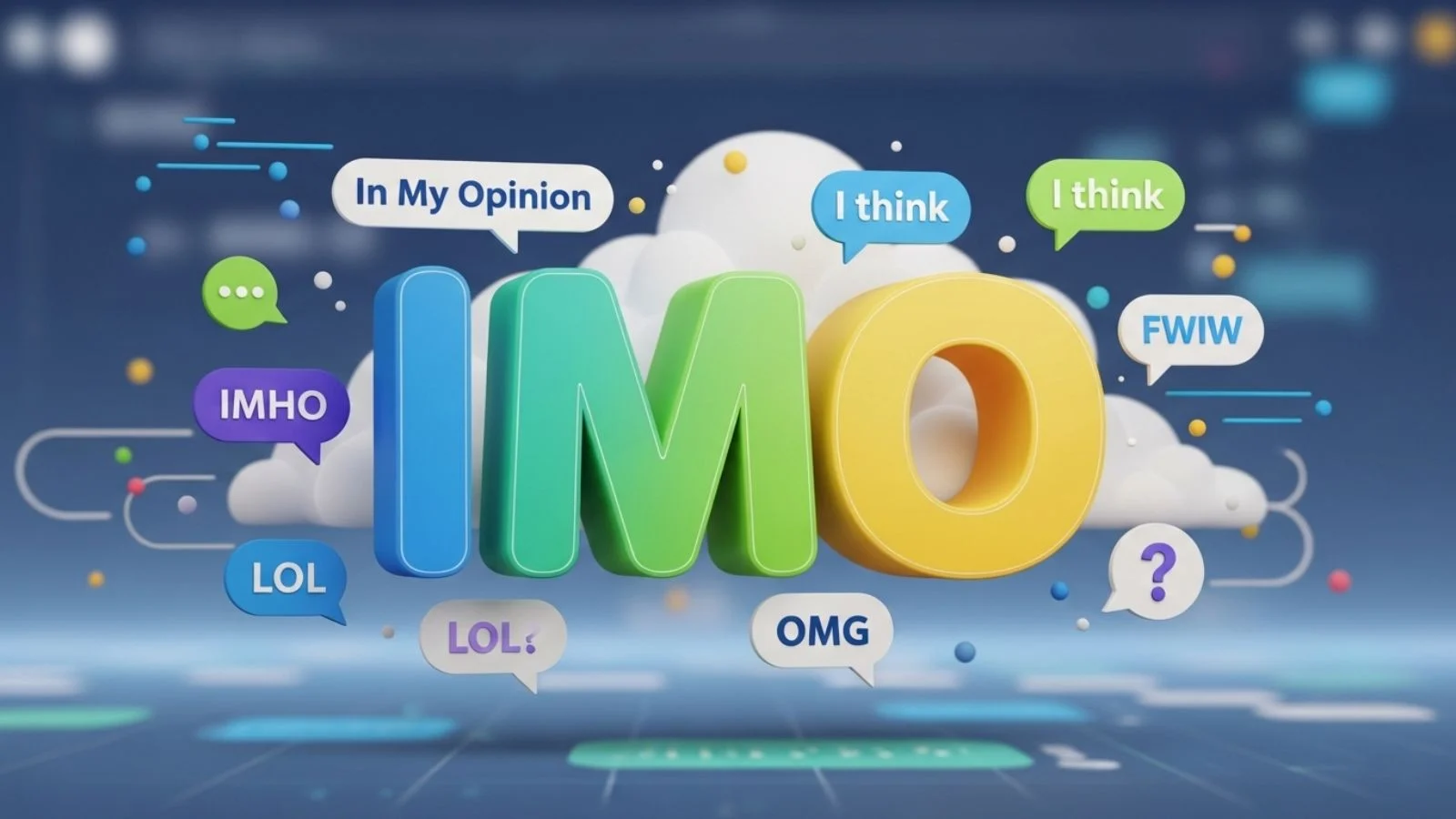
IMO stands for “In My Opinion.”
It is used to show that someone is sharing a personal view, not a fact.
Simple definition:
- It introduces a personal belief or perspective
- It softens statements to avoid sounding rude
- It shows respect for other opinions
Quick examples:
- “IMO, this movie was better than the first one.”
- “IMO, you handled that situation perfectly.”
- “This restaurant is overrated, IMO.”
In simple words, IMO means “this is what I personally think.”
Origin and Background of IMO
IMO originated in early internet chatrooms and forums in the 1980s and 1990s. At that time, people needed fast ways to type during live conversations.
Instead of writing “In my opinion” every time, users shortened it to IMO.
It became especially popular on online forums like Reddit, where discussions and debates were common.
Over time, IMO spread everywhere:
- Text messaging
- Social media
- Gaming chats
- Workplace communication
Today, it is one of the most widely recognized internet abbreviations globally.
Its popularity grew because it makes communication sound more polite and less confrontational.
Real-Life Conversations Using IMO
To truly understand IMO, let’s look at how real people use it in everyday chats.
WhatsApp Conversation Example
On WhatsApp
Person A: Should I buy the black shoes or white ones?
Person B: IMO, black looks more classy and matches everything.
Person A: Yeah, I was thinking the same.
Here, IMO shows a friendly suggestion, not a command.
Instagram DM Example
On Instagram
Person A: Do you think my new profile picture is good?
Person B: IMO, your previous one looked more natural.
Person A: Thanks, I might switch back.
The term makes the feedback sound gentle and honest.
TikTok Comment Example
On TikTok
Commenter 1: This song is the best this year.
Commenter 2: IMO, last year’s songs were better.
Here, IMO prevents the comment from sounding like an attack.
Text Message Example
Person A: Should I quit my job?
Person B: IMO, you should wait until you find another one first.
This shows care and thoughtful advice.
Emotional and Psychological Meaning
IMO is more than just an abbreviation. It reflects emotional intelligence.
When people use IMO, they are showing:
1. Respect
They acknowledge others may think differently.
2. Humility
They avoid sounding like they know everything.
3. Confidence with politeness
They share views without forcing them.
4. Emotional safety
It creates a comfortable space for discussion.
For example, saying:
“This idea is bad.”
Sounds harsh.
But saying:
“IMO, this idea may need improvement.”
Sounds respectful and constructive.
That small change protects relationships.
Usage in Different Contexts
IMO is flexible. It works in many situations.
Social Media
People use IMO to share thoughts safely.
Example:
“IMO, this actor deserves an award.”
It prevents arguments.
Friends and Relationships
IMO helps give advice without hurting feelings.
Example:
“IMO, you should talk to her honestly.”
It sounds supportive.
Work or Professional Settings
IMO can be used carefully in professional chats.
Example:
“IMO, this strategy could improve sales.”
It shows professionalism and teamwork.
However, avoid overusing it in formal documents.
Casual vs Serious Situations
Casual:
“IMO, pizza is better than burgers.”
Serious:
“IMO, you should think carefully before making that decision.”
It works in both emotional and light conversations.
Common Misunderstandings
Many people misunderstand IMO.
Here are common mistakes:
Mistake 1: Thinking it means a fact
IMO always means opinion, not fact.
Wrong thinking:
“IMO means truth.”
Correct:
It means personal belief.
Mistake 2: Using it in formal writing
Avoid IMO in academic papers.
Use:
“In my opinion”
instead.
Mistake 3: Thinking it weakens your opinion
It actually makes you sound mature, not weak.
Mistake 4: Using it sarcastically
Sometimes people use IMO sarcastically.
Example:
“IMO, that was a genius move.”
This may mean the opposite.
Context matters.
Comparison Table
| Term | Meaning | Tone | Usage |
|---|---|---|---|
| IMO | In my opinion | Polite | General conversations |
| IMHO | In my humble opinion | More humble | Respectful debates |
| TBH | To be honest | Honest, direct | Personal truth |
| FYI | For your information | Neutral | Informative |
| Fact | Something proven | Strong | No opinion |
| IDK | I don’t know | Uncertain | Lack of opinion |
Key Insight
IMO softens opinions, while others like TBH can sound more direct or emotional.
Variations and Types of IMO
Here are common variations people use:
1. IMHO
In my humble opinion
Adds extra politeness.
Example:
IMHO, this is the best option.
2. IMO honestly
Adds emphasis.
Shows strong personal belief.
3. Just IMO
Shows modesty.
Example:
Just IMO, you did great.
4. IMO only
Emphasizes personal view.
5. IMO though
Softens disagreement.
6. Strictly IMO
Shows personal responsibility for opinion.
7. IMO yes
Agreement with condition.
8. IMO no
Polite disagreement.
9. Personal IMO
Emphasizes individuality.
10. IMO based on experience
Shows credibility.
Example:
IMO based on experience, this works better.
How to Respond When Someone Uses IMO
Your reply depends on situation.
Casual replies
- I agree
- Makes sense
- Good point
Example:
IMO, that movie was boring.
Reply:
Yeah, I felt the same.
Funny replies
- Your opinion is noted
- You might be right
Playful tone.
Mature replies
- I respect your opinion
- That’s a good perspective
Shows emotional intelligence.
Respectful replies
- Thanks for sharing honestly
- I appreciate your view
Strengthens relationships.
Confident replies
- I see it differently
- Interesting, but I disagree
Healthy disagreement.
Regional and Cultural Usage
IMO is global, but usage style varies.
Western Culture
Very common.
Used in:
- Debates
- Social media
- Work chats
Shows individuality.
Asian Culture
Used more carefully.
Respect and harmony matter.
IMO softens disagreement.
Middle Eastern Culture
Used in private chats more than public debate.
Shows politeness.
Global Internet Usage
Universal meaning.
Young people use it daily.
It is now part of digital language.
Frequently Asked Questions
What does IMO mean in texting?
IMO means “In my opinion.” It shows a personal view.
Is IMO rude?
No. It makes opinions sound polite and respectful.
What is the difference between IMO and IMHO?
IMHO adds extra humility.
Both mean similar things.
Can IMO be used professionally?
Yes, but use carefully in formal communication.
Is IMO positive or negative?
It can be both.
Depends on sentence.
Why do people use IMO?
To share opinions politely.
Is IMO still popular today?
Yes. It is widely used worldwide.
Real-Life Experience Perspective
In my years observing communication trends, IMO has helped prevent countless misunderstandings.
For example, I once saw a workplace disagreement escalate because someone said:
“This idea won’t work.”
It sounded harsh.
But another colleague said:
“IMO, this idea may face challenges.”
The conversation stayed respectful.
That small difference protected teamwork.
This shows the real power of IMO.
It is not just slang.
It is emotional intelligence in action.
Internal Link Style Recommendation
You may also want to read related guides such as:
ROFL meaning in text
TBH meaning in chat
IDK meaning explained
These terms often appear with IMO.
Conclusion
So, what is IMO mean in text?
It simply means “In my opinion.”
But its impact goes far beyond three words.
It makes conversations respectful.
It protects relationships.
It allows honest expression without conflict.
In today’s fast digital world, tone matters more than ever.
Using IMO shows maturity, confidence, and emotional awareness.
It tells others:
“This is my view, and I respect yours too.”
That is why IMO remains one of the most powerful and useful expressions in modern communication.
Understanding it will help you communicate smarter, connect better, and express yourself with confidence.