Have you ever received a message saying “ASL?” and wondered what it meant?
If you’re new to online chatting, gaming, or social media, this three-letter abbreviation can be confusing. The meaning of ASL depends on the conversation, and using the wrong interpretation can lead to misunderstandings.
In this guide, you’ll learn the ASL meaning in chat, where people use it, when you should use it, real-life examples, common mistakes, and much more. By the end, you’ll know exactly what ASL means whenever you see it online.
What Does ASL Mean in Chat?
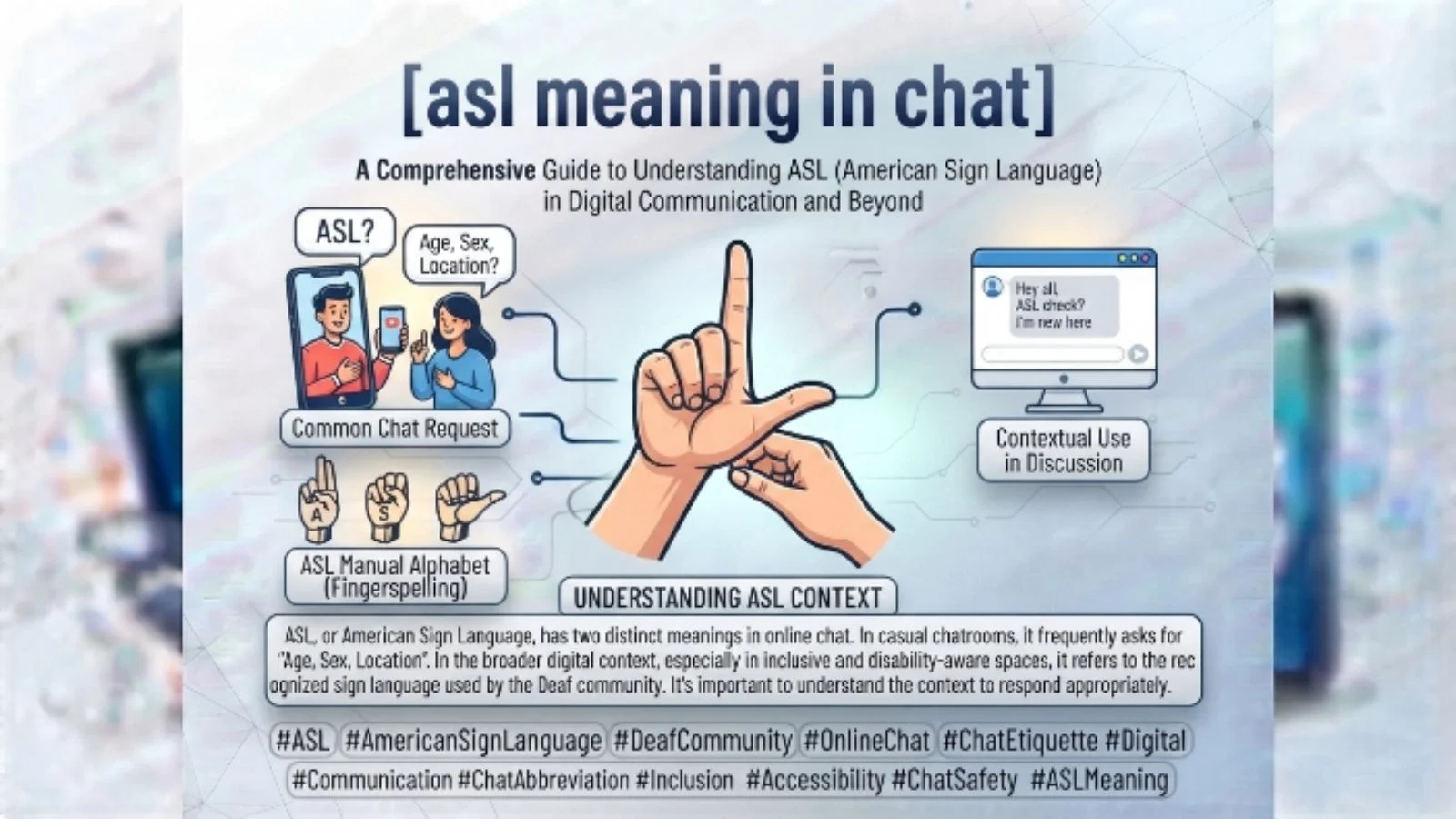
ASL usually stands for Age, Sex, Location in online chats.
It is a short way of asking someone three basic questions:
- Age – How old are you?
- Sex – Are you male or female? (Today, many people simply mean gender.)
- Location – Where are you from?
Featured Snippet Definition
ASL meaning in chat is Age, Sex, Location. It is an internet abbreviation used to quickly ask someone their age, gender, and location during online conversations, especially in chat rooms, gaming communities, and messaging apps.
Simple Meaning of ASL
In simple words, ASL is a quick introduction.
Instead of typing:
How old are you?
Are you male or female?
Where do you live?
People simply type:
“ASL?”
The other person might reply:
22/F/Canada
This means:
- 22 = Age
- F = Female
- Canada = Location
Someone else might answer:
18/M/USA
Meaning:
- 18 years old
- Male
- Lives in the United States
The abbreviation became popular because it saves time while chatting.
Where Is ASL Used?
Although ASL started many years ago in internet chat rooms, people still use it today in certain online communities.
You may see ASL on:
- Online chat rooms
- Gaming platforms
- Discord servers
- Reddit discussions
- Social media messages
- Anonymous chatting websites
- Dating apps
- Messenger conversations
It is less common on professional platforms but still appears in casual conversations.
Why Do People Use ASL?
People use ASL because it is quick and convenient.
Some common reasons include:
- To introduce themselves
- To know who they’re chatting with
- To find people of a similar age
- To connect with people from the same country
- To make online conversations easier
Instead of asking three separate questions, one short abbreviation does the job.
The History of ASL in Online Chat
ASL became popular during the late 1990s and early 2000s.
Back then, websites like:
- AOL Chat Rooms
- Yahoo Messenger
- MSN Messenger
- IRC Chat
were filled with strangers meeting online.
The first question many users asked was:
ASL?
It quickly became one of the most recognized internet abbreviations.
Although modern social media profiles already display much of this information, ASL still appears in some online communities today.
Different Meanings of ASL
While Age, Sex, Location is the most common meaning in chat, ASL can mean different things depending on the context.
| Context | Meaning |
|---|---|
| Online Chat | Age, Sex, Location |
| Education | American Sign Language |
| Medical | Advanced Support Life (less common) |
| Business | Application Services Library (technical use) |
When someone simply sends:
ASL?
they almost always mean Age, Sex, Location.
If someone says:
I’m learning ASL.
They usually mean American Sign Language, not Age, Sex, Location.
Always understand the context before assuming the meaning.
Real-Life Examples of ASL in Chat
Example 1
Person A:
Hi!
Person B:
ASL?
Person A:
20/F/UK
Explanation
Person B wants to know Person A’s age, gender, and location.
Example 2
Player 1:
Anyone want to play together?
Player 2:
Sure. ASL?
Player 1:
19/M/Australia
Explanation
Player 2 wants basic information before continuing the conversation.
Example 3
Friend:
Who’s new here?
New User:
23/F/Brazil
Explanation
The new user answers the ASL question before it is even asked.
Example 4
Anonymous Chat
User 1:
ASL?
User 2:
21/M/Germany
Explanation
This is one of the most common uses on anonymous chat websites.
ASL vs Similar Internet Terms
Many internet abbreviations are used during introductions.
| Abbreviation | Meaning | Purpose |
|---|---|---|
| ASL | Age, Sex, Location | Basic introduction |
| IRL | In Real Life | Talking about offline life |
| DM | Direct Message | Private conversation |
| PM | Private Message | Personal messaging |
| BRB | Be Right Back | Temporary absence |
| IMO | In My Opinion | Sharing opinions |
| IDK | I Don’t Know | Expressing uncertainty |
| TBH | To Be Honest | Honest opinion |
Unlike these abbreviations, ASL focuses on personal information.
When Should You Use ASL?
ASL is best used in casual conversations where introductions are expected.
Good situations include:
- Joining an online community
- Meeting new gaming friends
- Anonymous chat platforms
- Friendly social conversations
It is usually acceptable when everyone is voluntarily sharing basic information.
When Should You Avoid Using ASL?
Although ASL is common, it is not appropriate everywhere.
Avoid using it:
- During professional conversations
- At work
- In business emails
- On LinkedIn
- With people who may feel uncomfortable sharing personal information
Also remember that not everyone wants to reveal their age or location online.
Respect their privacy if they choose not to answer.
Is ASL Still Popular Today?
Yes—but not as much as it once was.
Today’s social media platforms already show:
- Age (sometimes)
- Gender (optional)
- Location
- Photos
- Personal profiles
Because of this, people don’t need to ask “ASL?” as often.
However, it is still common on:
- Gaming communities
- Anonymous chat apps
- Online forums
- Random chat websites
Common Misunderstandings About ASL
Many people confuse the different meanings of ASL.
Here are the biggest misunderstandings.
Mistake 1: Thinking ASL Always Means American Sign Language
Not always.
If someone asks:
ASL?
during an online chat, they almost certainly mean Age, Sex, Location.
Mistake 2: Assuming Everyone Knows ASL
Many younger users have never seen this abbreviation before because newer apps rely on user profiles instead.
Mistake 3: Feeling Required to Answer
You never have to share personal information online.
If someone asks:
ASL?
You can politely ignore it or respond with only what you’re comfortable sharing.
Mistake 4: Sharing Too Much Information
Giving your city or country is often enough.
Avoid sharing:
- Home address
- School
- Phone number
- Workplace
- Personal details
Online safety should always come first.
Is It Safe to Answer ASL?
Generally, sharing limited information like your age range and country is less risky than providing detailed personal information. Still, you should think carefully before responding, especially when chatting with strangers.
For better online safety:
- Share only what you’re comfortable revealing.
- Avoid giving your exact address or other sensitive details.
- Be cautious if someone quickly asks for more personal information after your ASL response.
- Trust your instincts—if a conversation feels suspicious, end it.
Protecting your privacy is more important than answering every question.
Pro Tips for Using ASL Correctly
Keep these tips in mind:
- Understand the context before assuming what ASL means.
- Use it only in casual conversations.
- Respect privacy if someone doesn’t answer.
- Avoid sharing sensitive personal information.
- Remember that ASL can also mean American Sign Language.
- Use complete introductions in professional settings instead of internet abbreviations.
These simple habits help you communicate clearly and safely online.
Final Thoughts
The ASL meaning in chat is Age, Sex, Location, a classic internet abbreviation that allows people to introduce themselves quickly during online conversations. While it is not as common as it was in the early days of internet chat rooms, it still appears on gaming platforms, anonymous chat sites, and social communities.
The key is understanding the context. Sometimes ASL refers to Age, Sex, Location, while in other situations it means American Sign Language. Before replying, consider the conversation and decide how much personal information you’re comfortable sharing. Using ASL wisely helps you communicate effectively while protecting your privacy.
Frequently Asked Questions
What does ASL mean in chat?
In most online chats, ASL means Age, Sex, Location. It is a quick way to ask someone for basic personal information.
Is ASL still used today?
Yes. Although it is less common than it was in the early internet era, ASL is still used in gaming communities, anonymous chat platforms, and some online forums.
Does ASL always mean Age, Sex, Location?
No. In many other contexts, ASL stands for American Sign Language. The meaning depends on the conversation.
Should I answer when someone asks “ASL?”
It is your choice. You should only share information you are comfortable revealing and avoid giving sensitive personal details to strangers online.