Have you ever received a message that simply said “ASL?” and wondered what it meant?
If you’re new to texting, social media, or online gaming, this short abbreviation can be confusing. The interesting part is that ASL has more than one meaning, and the correct meaning depends on the conversation.
In this guide, you’ll learn what does ASL mean in text, where people use it, when to use it, common misunderstandings, and plenty of real-life examples. By the end, you’ll know exactly how to respond whenever someone types ASL.
What Does ASL Mean in Text?
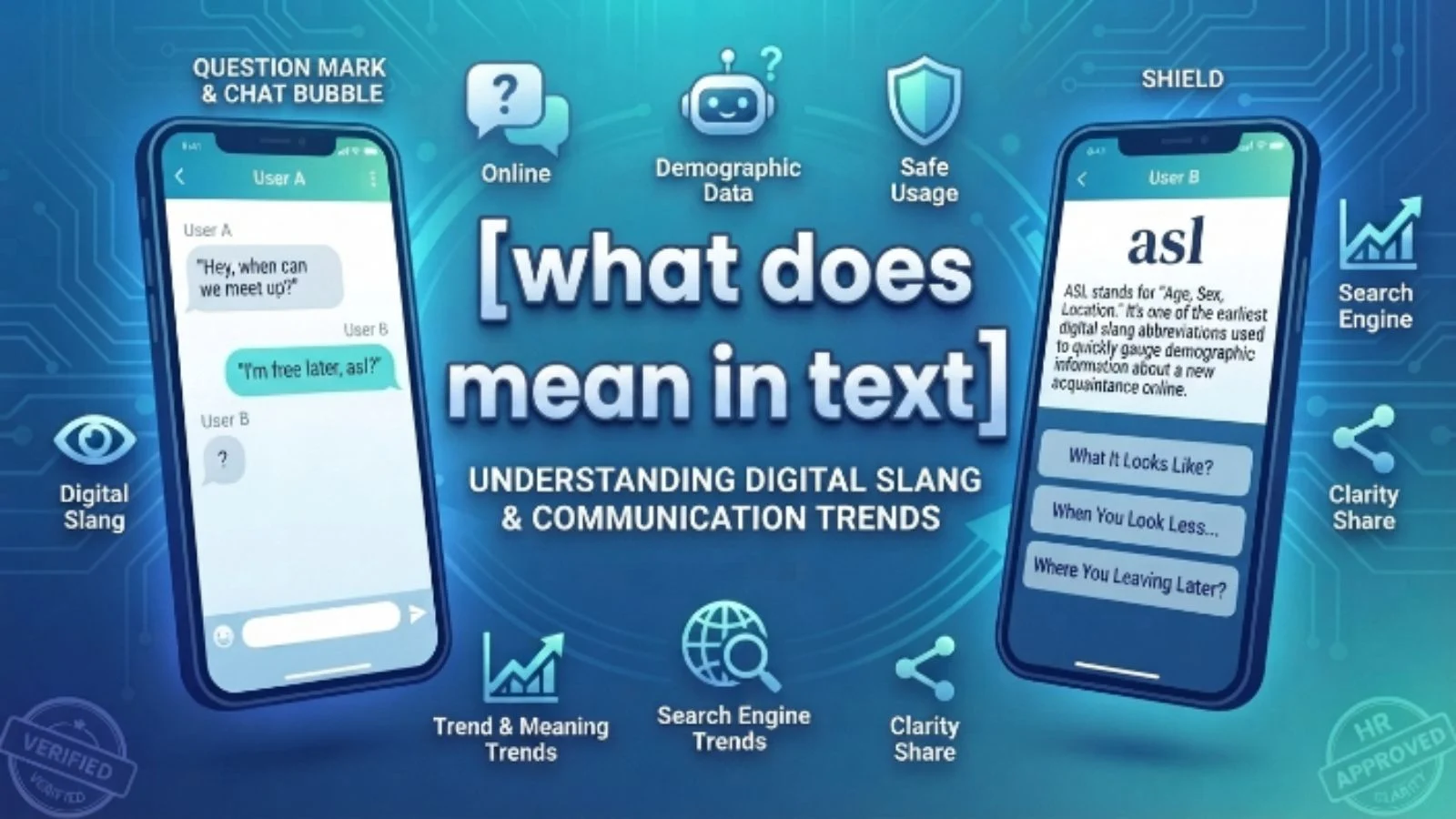
ASL most commonly means “Age, Sex, Location” in text messages and online chats. It is a quick way to ask someone their basic information when getting to know them online.
For example:
Person 1: Hi! ASL?
Person 2: 22, Female, Texas.
In modern conversations, however, ASL can also stand for American Sign Language, especially when the discussion is about communication, education, or accessibility.
Featured Definition:
ASL usually means “Age, Sex, Location” in texting. People use it to ask someone’s age, gender, and where they live. In other conversations, ASL can also refer to American Sign Language.
Simple Meaning of ASL
In easy words:
- A = Age
- S = Sex (or Gender)
- L = Location
Years ago, people often used ASL in online chat rooms to quickly introduce themselves.
Today, people are more likely to ask these questions separately because sharing personal information online isn’t always recommended.
Depending on the topic, ASL may instead mean:
- American Sign Language
- Less commonly, other technical or professional terms outside texting.
Always read the conversation before deciding which meaning fits.
Where Is ASL Used?
You may see ASL on many online platforms, including:
- Text messages
- Snapchat
- Instagram DMs
- Facebook Messenger
- Discord
- Online games
- Chat rooms
- Dating apps
- Live streaming chats
The meaning changes depending on where it’s used.
For example:
On a dating app
“ASL?” usually means:
“How old are you, what’s your gender, and where are you from?”
In a classroom discussion
“I’m learning ASL.”
Here, it clearly means:
American Sign Language.
Why Do People Use ASL?
People use abbreviations because they save time.
Instead of typing:
- How old are you?
- Are you male or female?
- Where do you live?
Someone can simply type:
ASL?
Other reasons people use it include:
- Faster conversations
- Less typing
- Internet slang culture
- Habit from older chat rooms
- Starting conversations quickly
Although it was extremely popular in the early internet days, younger users today often prefer asking questions individually.
The History of ASL in Online Chat
The abbreviation became famous during the late 1990s and early 2000s.
Popular messaging platforms and chat rooms encouraged quick conversations, so users shortened common questions.
A typical conversation looked like this:
User A: Hi.
User B: ASL?
User A: 18/F/California.
Back then, this was considered a normal way to introduce yourself online.
Today, people are much more aware of online privacy, so sharing personal details immediately is less common.
Different Meanings of ASL
Although Age, Sex, Location is the classic meaning, ASL has several interpretations.
1. Age, Sex, Location
This is the most common texting meaning.
Example:
ASL?
Meaning:
Tell me your age, gender, and location.
2. American Sign Language
This is one of the world’s most recognized sign languages used by many Deaf and hard-of-hearing people.
Example:
She is studying ASL.
Meaning:
She is learning American Sign Language.
3. Context-Specific Meanings
In specialized industries, ASL may have other meanings.
Examples include:
- Technical documents
- Medical fields
- Engineering
- Business reports
However, these meanings are rarely used in everyday texting.
Real-Life Examples of ASL in Text
Example 1
Alex: Hey!
Jordan: Hi! ASL?
Alex: 20, Male, Canada.
Explanation:
Jordan wants to know Alex’s age, gender, and location.
Example 2
Emma: I’m taking ASL classes this semester.
Lily: That’s awesome!
Explanation:
ASL means American Sign Language, not Age, Sex, Location.
Example 3
Chris: Anyone here knows ASL?
Taylor: Yes, I learned it in college.
Explanation:
They are talking about sign language.
Example 4
Player 1: ASL?
Player 2: Sorry, I don’t share personal information online.
Explanation:
This is a safe and perfectly acceptable response.
ASL vs Similar Text Abbreviations
| Abbreviation | Meaning | Purpose |
|---|---|---|
| ASL | Age, Sex, Location | Ask basic personal information |
| AFAIK | As Far As I Know | Share uncertain information |
| IMO | In My Opinion | Give an opinion |
| IDK | I Don’t Know | Express uncertainty |
| IRL | In Real Life | Talk about offline life |
| DM | Direct Message | Private conversation |
| BRB | Be Right Back | Temporary absence |
Each abbreviation serves a different purpose, so they should not be confused.
When Should You Use ASL?
You can use ASL when:
- Talking casually online
- Chatting with new people
- Participating in online communities
- Playing multiplayer games
- Discussing American Sign Language
However, think carefully before asking strangers for personal information.
Many people today prefer conversations that develop naturally instead of asking personal questions immediately.
When Should You Avoid Using ASL?
There are situations where ASL may not be appropriate.
Avoid using it:
- During professional conversations
- In workplace chats
- In business emails
- When speaking with someone uncomfortable sharing personal details
- If privacy is important
Instead, ask respectful questions one at a time if needed.
Is ASL Still Popular?
Yes—but not as much as it once was.
During the early internet era, ASL was everywhere.
Today:
- Older internet users recognize it instantly.
- Younger users may understand it but rarely use it.
- Dating apps sometimes still use it.
- Gaming communities occasionally use it.
- Discussions about sign language use ASL regularly.
So while it’s less common than before, it’s definitely not outdated.
Common Misunderstandings About ASL
Many people misunderstand this abbreviation.
Mistake 1: Thinking It Always Means American Sign Language
Not always.
If someone messages:
ASL?
They’re almost certainly asking:
Age, Sex, Location.
Mistake 2: Thinking It Always Means Age, Sex, Location
If someone says:
I want to learn ASL.
They’re referring to American Sign Language.
Mistake 3: Sharing Too Much Information
Some users respond with very detailed personal information.
It’s safer to protect your privacy online and only share information with people you trust.
How to Reply When Someone Says “ASL?”
Your response depends on your comfort level.
Possible replies include:
If you’re comfortable:
24, Female, Australia.
Or
19, Male, New York.
If you don’t want to answer:
I’d rather not share personal information.
Or
Let’s just chat first.
Both responses are polite and respectful.
Pro Tips for Using ASL
Keep these tips in mind before using ASL online.
- Understand the context before assuming its meaning.
- Protect your privacy when chatting with strangers.
- Don’t pressure others to share personal details.
- Remember that ASL also means American Sign Language.
- Use complete questions if someone may not understand internet slang.
- Be respectful in online conversations.
Following these tips helps you communicate clearly and safely.
Why Context Matters
The same abbreviation can have completely different meanings.
Consider these examples:
“ASL?”
This usually means:
Age, Sex, Location.
“I’m fluent in ASL.”
This clearly refers to:
American Sign Language.
Looking at the surrounding conversation is the easiest way to understand the intended meaning.
Frequently Asked Questions
What does ASL mean in text messages?
In texting, ASL usually means Age, Sex, Location. It is a quick way to ask someone for basic personal information.
Does ASL always mean Age, Sex, Location?
No. Depending on the conversation, ASL may also stand for American Sign Language.
Is it safe to answer ASL questions?
Only share personal information with people you trust. If you’re uncomfortable, it’s perfectly fine to decline or give a polite response without revealing private details.
Is ASL still used today?
Yes, although it is less common than it was during the early internet years. It still appears in text messages, gaming communities, online chats, dating apps, and conversations about American Sign Language.
Final Thoughts
If you’ve been wondering what does ASL mean in text, the answer depends entirely on the conversation. In most online chats, it stands for Age, Sex, Location, a shorthand used to ask for basic personal information. In educational or accessibility-related discussions, it usually refers to American Sign Language.
Whenever you see ASL, take a moment to read the surrounding messages before deciding what it means. Context is the key to understanding internet slang correctly. If someone asks you ASL, remember that you’re never obligated to share personal information. Respond only if you’re comfortable, and always prioritize your privacy when chatting online.