You are having a heated debate in a group chat, or you are scrolling through a comment section under a viral video. Someone drops a six-letter acronym that looks like a total alphabet soup: DILLIGAF.
You pause. Is it a typo? Is it a new German car brand? A bizarre spell from a fantasy novel?
The internet moves fast, and if you do not keep up with the slang, text conversations can quickly feel like a foreign language. If you have been left scratching your head wondering what DILLIGAF means in text messages, social media posts, or casual gaming chats, you are in the right place.
Let us break down exactly what this viral acronym stands for, how people use it, and the unwritten rules of dropping it into a conversation without burning bridges.
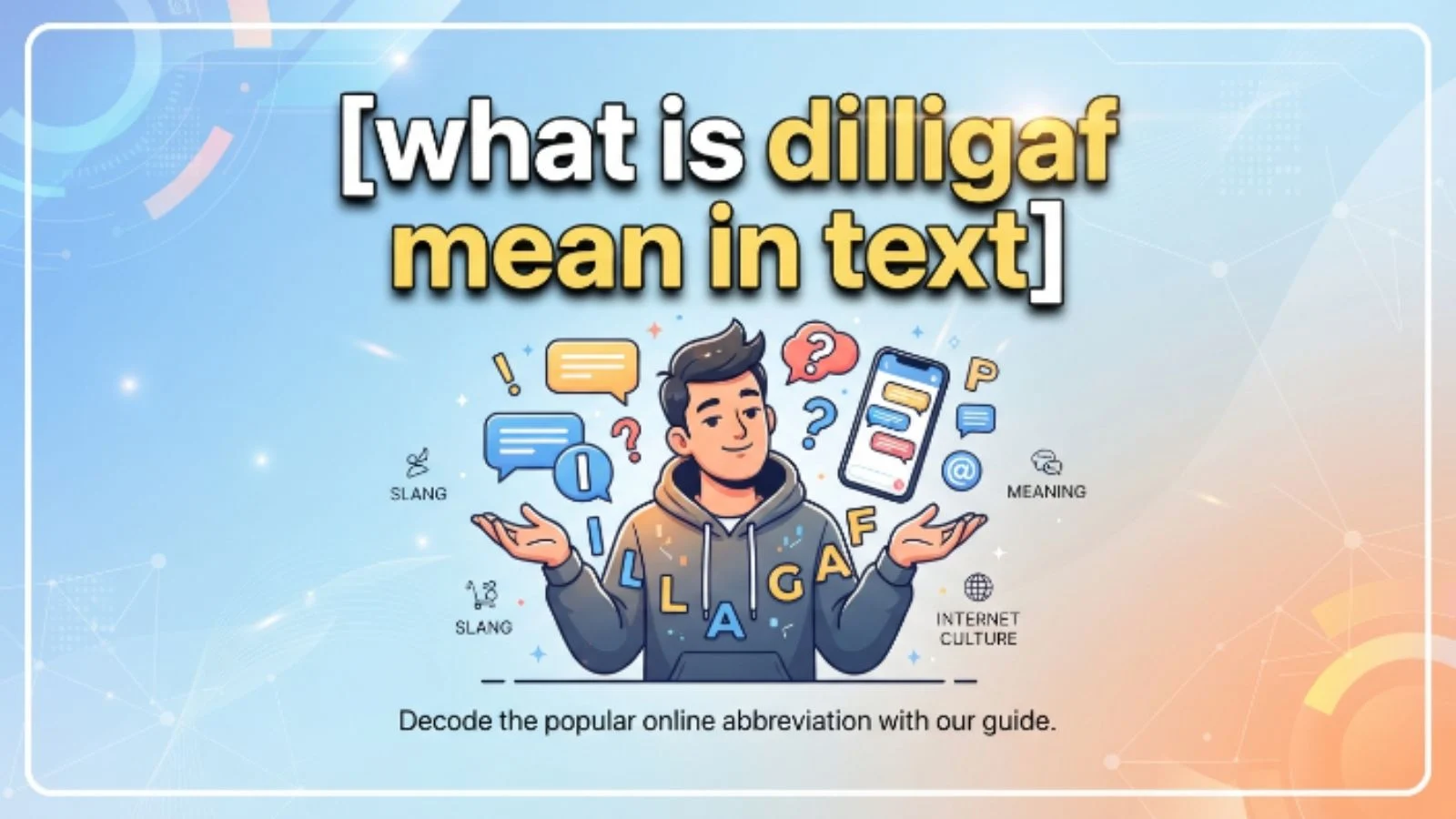
What Does DILLIGAF Mean in Text?
If you are looking for the direct, unfiltered answer, here it is:
DILLIGAF is an acronym that stands for “Do I Look Like I Give A F*?”**
It is a blunt, slang expression used to show complete and utter indifference, a lack of interest, or a total disregard for whatever someone else is talking about. When someone sends this, they are essentially saying, “I could not care less about this if I tried.”
Because it contains a swear word, it carries a punchy, rebellious, and sometimes aggressive tone. However, depending on who you are talking to, it can also be used as a sarcastic joke among close friends.
The Simple Meaning: Breaking It Down for Everyday Use
If we strip away the edgy phrasing, the core meaning of DILLIGAF is pure apathy. It is the digital equivalent of a massive shrug, an eye-roll, or turning your back on a conversation.
The phrase has been around much longer than smartphone texting. It actually traces its roots back to military slang and was later popularized in mainstream pop culture by musicians like Kevin Bloody Wilson in the late 1980s.
With the rise of internet culture, smartphones, and character limits on apps like Twitter (now X) and TikTok, the lengthy phrase was compressed into the neat, six-letter package we see today. It serves as a quick shortcut to shut down a conversation or express that a topic simply does not matter to you.
Where Is DILLIGAF Used Most Often?
You will not find DILLIGAF in corporate emails or formal letters—or at least, you shouldn’t if you want to keep your job. Instead, it thrives in casual digital spaces. Here are the primary places you will spot it:
1. Direct Text Messaging and Group Chats
In private messages on apps like WhatsApp, iMessage, or Messenger, friends use it to roast each other or complain about external situations. If a friend is complaining about a minor inconvenience for the hundredth time, someone might reply with DILLIGAF as a friendly, albeit harsh, reality check.
2. Social Media Comment Sections
TikTok, Reddit, Instagram, and X are breeding grounds for this acronym. It is frequently dropped into comment sections to dismiss trolls, haters, or people who leave overly critical opinions on a post where nobody asked for their input.
3. Online Gaming Lobbies
In fast-paced multiplayer games like Call of Duty, League of Legends, or Valorant, players do not have time to type out long sentences. If a teammate is complaining about strategy or whining about a loss, a quick “DILLIGAF” in the text chat serves as an instant mute button.
Why Do People Choose to Use DILLIGAF?
With so many ways to say “I do not care,” why do people reach for this specific acronym? There are a few reasons it remains a staple of internet culture:
- It Saves Time: Typing eight words takes effort. Typing six letters takes a fraction of a second.
- It Establishes a Boundary: It makes a strong statement. It tells the other person that their complaints or opinions are hitting a brick wall.
- It Fits an “Idgaf” Persona: Internet culture often glorifies a detached, unbothered attitude. Using this acronym projects an image of someone who is too cool or too busy to care about minor drama.
- Humor and Sarcasm: Among tight-knit friend groups, using overly aggressive acronyms can actually be a form of banter.
Real-Life Examples of DILLIGAF in Action
To truly understand how this slang functions, it helps to see it in a few realistic scenarios. Context changes everything when it comes to text-based communication.
Example 1: The Workplace Complainant (Among Coworkers)
- Person A: “Can you believe management is changing the dress code policy to ban open-toed shoes on Fridays?”
- Person B: “Honestly, dilligaf. I work from home four days a week anyway.”
Explanation: In this case, Person B is not mad at Person A. They are just stating that the new rule has zero impact on their life, so they have no emotional energy to waste on it.
Example 2: The Unwanted Advice (Social Media)
- User A (Posts a video of their new tattoo): “Just got this finished today!”
- User B (Random Commenter): “The shading on the left side looks a bit uneven, you should have gone to a better artist.”
- User A: “DILLIGAF. I love it.”
Explanation: Here, User A uses the acronym defensively to shut down unsolicited criticism from a stranger. It signals that the troll’s opinion carries no weight.
Example 3: Friendly Banter
- Friend A: “Bro, I just spent three hours organizing my digital shoe collection by color gradient.”
- Friend B: “Wow… dilligaf man, let’s just log on and play some Xbox.”
Explanation: This is playful. Friend B is teasing Friend A for wasting time on a boring hobby, using the acronym to playfully mock them.
DILLIGAF vs. Similar Internet Acronyms
The internet has a million ways to say the same thing. If you are confused about how DILLIGAF stacks up against other common apathy acronyms, this comparison table breaks down the nuances:
| Acronym | What it Stands For | Tone / Vibe | Best Used For |
| DILLIGAF | Do I Look Like I Give A F***? | Aggressive, Bold, Rebellious | Shutting down arguments, intense indifference |
| IDGAF | I Don’t Give A F*** | Direct, Unbothered, Self-focused | Stating your own personal lack of care |
| IDC | I Don’t Care | Neutral, Simple, Mild | Everyday casual disinterest without swearing |
| IDTS | I Don’t Think So | Skeptical, Disagreeing | Rejecting a claim or an idea |
| IDK | I Don’t Know | Neutral, Informational | Stating a lack of information |
When Should You Use It (and When Should You Avoid It)?
Because this acronym packs a punch, you need to use it carefully. Misplacing it can cause real-world drama that you might not want to deal with.
✅ Safe to Use When:
- You are texting a close friend who understands your sense of humor and will not take it personally.
- You are dealing with an internet troll who is actively trying to ruin your day, and you want to show them they failed.
- You are talking about an abstract situation, a celebrity, or a minor event that does not involve the person you are texting.
⚠️ Avoid Using When:
- At Work: Sending this to a boss, client, or even a casual coworker in a professional setting can easily get you flagged by HR.
- During Serious Arguments: If your partner or family member is trying to communicate a genuine emotional issue, replying with DILLIGAF is highly dismissive and toxic.
- With People You Don’t Know Well: They may read it as pure hostility rather than casual internet slang.
Common Misunderstandings About DILLIGAF
Because it is a less common acronym than basic ones like “LOL” or “BRB,” people often misinterpret it.
The biggest misunderstanding is that it is always an insult aimed directly at the recipient. While it can be used that way, it is often just an expression of external frustration. For example, if someone says “DILLIGAF about the rainy weather,” they are angry at the rain, not at you.
Another mistake is misreading the letters. People sometimes confuse it with DILLIGAFF (adding an extra F for ‘finally’) or mistake it for a weird typo of DELISH. Always look at the context of the sentence to see if an expression of “not caring” makes sense.
Pro Tips for Navigating Internet Slang
If you want to use slang like an absolute expert, keep these three rules in mind:
- Capitalization Matters: Typing DILLIGAF in all capital letters makes it sound like you are screaming it at the top of your lungs. Typing it in lowercase as dilligaf makes it feel much more casual, quiet, and passive.
- Read the Room: If the person you are texting uses perfect grammar, periods at the end of sentences, and zero emojis, they might not know what this means. Keep it for your internet-savvy friends.
- Don’t Overuse It: If you reply to everything with apathy, people will stop sharing things with you. Use it sparingly for maximum comedic or dramatic impact.
Final Thoughts
The digital landscape is constantly evolving, bringing new shorthand terms into our daily vocabulary. DILLIGAF is the ultimate shield against internet drama, boring conversations, and unwanted opinions. It is bold, it is a little bit rude, but it gets the point across instantly. Now that you know exactly what it means, you can spot it in the wild without missing a beat—or drop it into your next chat when you truly, deeply, just do not care.
FAQ Section
Is DILLIGAF an offensive term?
Yes, it can be considered offensive because it contains a profanity. It should be avoided in polite, formal, or professional conversations. However, in casual settings among adults, it is viewed as standard internet slang.
What is the difference between DILLIGAF and IDGAF?
The difference lies in the perspective. IDGAF stands for “I Don’t Give A F***,” which is a direct statement about your own feelings. DILLIGAF stands for “Do I Look Like I Give A F***?”, which challenges the other person’s perception and asks them to look at how unbothered you are. DILLIGAF tends to sound slightly more confrontational.
Where did the term DILLIGAF originate?
While it gained massive popularity online, the phrase originated decades ago as military slang during the mid-20th century. It later became a cultural pop phrase in Australia and the US through comedy music acts before transitioning into the digital world.
Can I use DILLIGAF at work if I am close with my coworkers?
It is highly risky. Even if you are close with your team, text channels like Slack, Teams, or company text threads are often monitored or can be audited. It is always safer to use a cleaner alternative like “IDC” or “Not my circus, not my monkeys” in any professional environment.