Picture this: You are having a deep conversation with a friend, or maybe you are pitching an idea to a colleague over a messaging app. You type out what you think is a solid thought, and a few seconds later, their typing bubbles appear. They hit you with a single, sharp sentence: “Can you elaborate?”
Suddenly, your heart sinks a little. Are they confused? Are they annoyed? Did you say something wrong?
Texting is tough because we lose body language and tone of voice. A simple message can easily feel cold or demanding. If someone just asked you to elaborate, or if you are trying to figure out how to use this word in your own chats without sounding like a textbook, you are in the right place. Let’s break down exactly what this word means, why people use it, and how to navigate it like a pro.
What Does “Elaborate” Mean in Text?
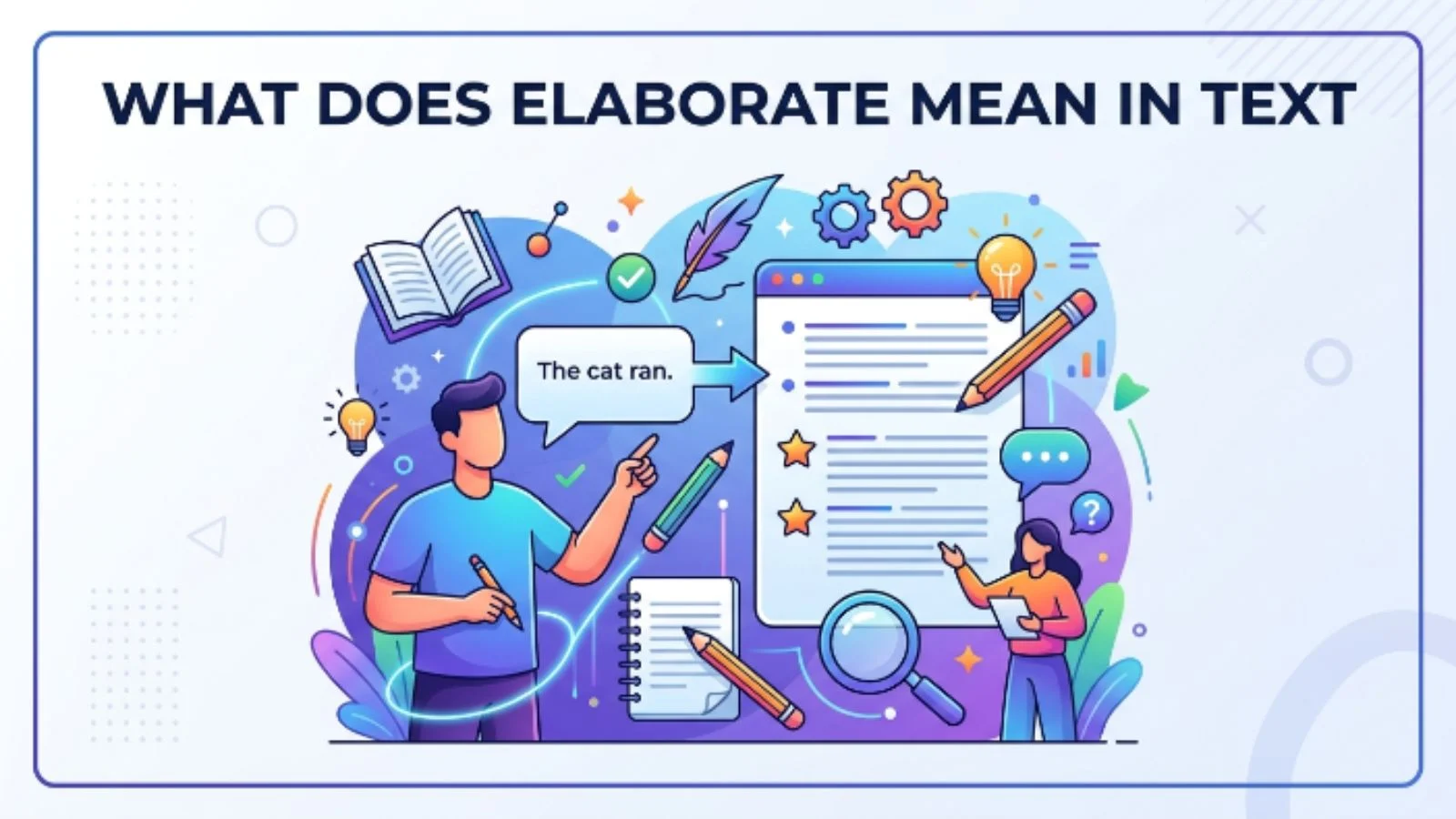
When someone types “elaborate” or asks you to “elaborate on that” in a text message, they are asking you to provide more details, add more context, or explain your point further.
In the digital world, “elaborate” serves as a polite shorthand for: “I am interested in what you just said, but I need you to flesh it out because I don’t have enough information to fully understand.”
The Quick Definition: In texting and digital chat, elaborate is a verb that means to expand on a statement, share the story behind a short message, or give additional details to make a vague thought clear.
The Simple Meaning Behind the Word
To understand this term fully, think of your initial text message as a skeleton. It has the basic structure, but it is missing the meat. When someone asks you to elaborate, they are simply asking you to add the meat to the bones.
They want to know the why, the how, or the what happens next. Instead of leaving them with a cliffhanger or a vague statement, they want you to paint the full picture. It is the opposite of keeping things brief or giving a one-word answer.
Where Is This Term Actually Used?
You will encounter this phrase across a massive variety of digital platforms. However, the vibe of the word changes depending on where the conversation is happening.
Workplace Apps (Slack, Microsoft Teams, Discord)
This is the most common hunting ground for the word. In a professional setting, people love concise communication. If a manager or coworker drops a “Could you elaborate on this point during our next sync?” it is a professional way of saying your bullet point needs a full paragraph of data or reasoning.
Casual Texting (i.eMessage, WhatsApp)
In casual chats, the word can sometimes feel a bit formal. If a friend uses it, they might be being slightly dramatic or sarcastic, or they genuinely find what you said fascinating and want the full, unfiltered gossip.
Social Media Threads (X, Reddit, TikTok Comments)
If you post a hot take or a wild story online and someone replies with “Elaborate?”, it means you caught their attention. The community wants evidence, background context, or a storytime video to back up your claim.
Why Do People Choose to Use It?
Why don’t people just type “tell me more” or “what do you mean?” instead? There are a few distinct reasons why this specific word dominates our screens.
- It saves time: Type out “elaborate” is fast, and it instantly communicates a specific request for detail.
- It keeps things professional: In a work chat, asking “What do you mean by that?” can sometimes sound mildly aggressive or accusatory. “Can you elaborate?” sounds objective, neutral, and helpful.
- It signals genuine interest: When someone asks you to expand on a thought, it means they didn’t just skim your text. They read it, processed it, and want to know more about how your mind works.
Real-Life Examples and Text Scenarios
To really see how this plays out in real life, let’s look at a few common texting scenarios.
Scenario 1: The Workplace Project
- You: “I think we need to completely redesign the landing page for the summer campaign.”
- Your Manager: “Interesting thought. Can you elaborate on why you think the current layout won’t work?”
- What it means: Your manager isn’t shutting down your idea. They want to know your specific complaints about the current design (e.g., low conversion rates, bad user flow) before making a decision.
Scenario 2: The Friend Drama
- You: “Well, Sarah and Jamie got into a massive fight at dinner last night and walked out.”
- Your Friend: “Wait, WHAT? Elaborate immediately.”
- What it means: Your friend is hooked. They don’t just want to know that a fight happened; they want the full play-by-play narrative of what caused it.
Scenario 3: The Vague Update
- You: “I don’t think I can make it to the party tonight, things got complicated.”
- The Group Chat: “Hope everything is okay! Care to elaborate?”
- What it means: They are checking in on you. They want to make sure you are safe or see if there is a specific problem they can help you solve.
“Elaborate” vs. Similar Texting Terms
It is easy to confuse this word with other common phrases. Let’s look at how it stacks up against similar terms you see on your screen every day.
| Term | What It Really Means | Best Used For… |
| Elaborate | Add more details and depth to a thought you already shared. | Deepening a conversation or explaining a concept. |
| Clarify | Fix a misunderstanding or make a confusing point clear. | Correcting a miscommunication or typing error. |
| Explain | Teach someone how something works from scratch. | Breaking down a complex process for a beginner. |
| Specificate / Specify | Name a precise item, time, or date instead of being general. | Setting concrete deadlines or picking a exact location. |
When Should You Use It in Your Own Texts?
Using this word can make your digital communication much smoother, but timing is everything.
You should use it when:
- You are managing a project and a teammate gives a vague status update like “The task is hitting some roadblocks.”
- You want to encourage someone to keep sharing their thoughts without interrupting their flow.
- You need to remain completely neutral and professional in a delicate work situation.
You should skip it when:
- You are talking to a younger sibling or a very casual friend who might think you sound like an English professor. In those cases, “Tell me everything” or “What happened?” works much better.
- The text is genuinely confusing due to bad grammar or missing words. In that scenario, you want them to clarify, not elaborate.
Common Misunderstandings About the Word
Because text messages lack facial expressions, the word can sometimes be misread. Here are two big myths to keep in mind.
Myth 1: “They ask me to elaborate because they think I’m wrong.”
Not at all. Most of the time, it is a sign of curiosity or a necessity for project alignment. If someone thought you were wrong, they would likely challenge your data or offer a counterpoint. Asking for elaboration means they are giving you the floor to make your case.
Myth 2: “Elaborate means I need to write a whole essay.”
Keep your audience in mind. If you are on Slack, a concise paragraph with two or three bullet points is perfect. If you are on WhatsApp, a few quick lines or a brief voice note will do. You do not need to send a wall of text to successfully elaborate.
Pro Tips for Responding
If you open your phone and see a request to elaborate, do not panic. Follow these simple steps to deliver a great response:
- Identify the core question: Figure out exactly what part of your previous text was vague. Was it the reason behind your thought, or the step-by-step process?
- Break it down: Use short sentences. If you have multiple points to make, use line breaks to make your response easy to read on a mobile screen.
- Offer a next step: If the explanation is too long to type out, it is totally fine to text back: “It is a long story, let’s jump on a quick call so I can elaborate properly.”
Final Thoughts
At the end of the day, seeing the word “elaborate” in your inbox is actually a good thing. It means your words have impact, your thoughts are provoking curiosity, and the person on the other end of the screen wants to keep the conversation going. By understanding the subtle nuances of this word, you can communicate more clearly, avoid awkward misunderstandings, and keep your digital relationships running smoothly.
Frequently Asked Questions
Is asking someone to elaborate rude?
No, it is generally considered polite and professional. However, sending the single word “Elaborate.” without a “please” or additional context can sometimes feel a bit demanding or abrupt depending on the relationship.
What is the difference between elaborate and clarify?
To elaborate means to add more details to an idea that is already understood. To clarify means to clear up confusion or fix a misunderstanding about a message that was poorly explained the first time.
How do you use elaborate in a casual sentence?
You can say something like, “That vacation story sounds wild, you definitely need to elaborate on what happened at the airport!” This keeps the word friendly and conversational.
Can elaborate be used as an adjective in text?
Yes, but it has a different meaning and pronunciation. As an adjective, it means something is highly detailed, complicated, or fancy (e.g., “Wow, that was a very elaborate setup for a prank!”).