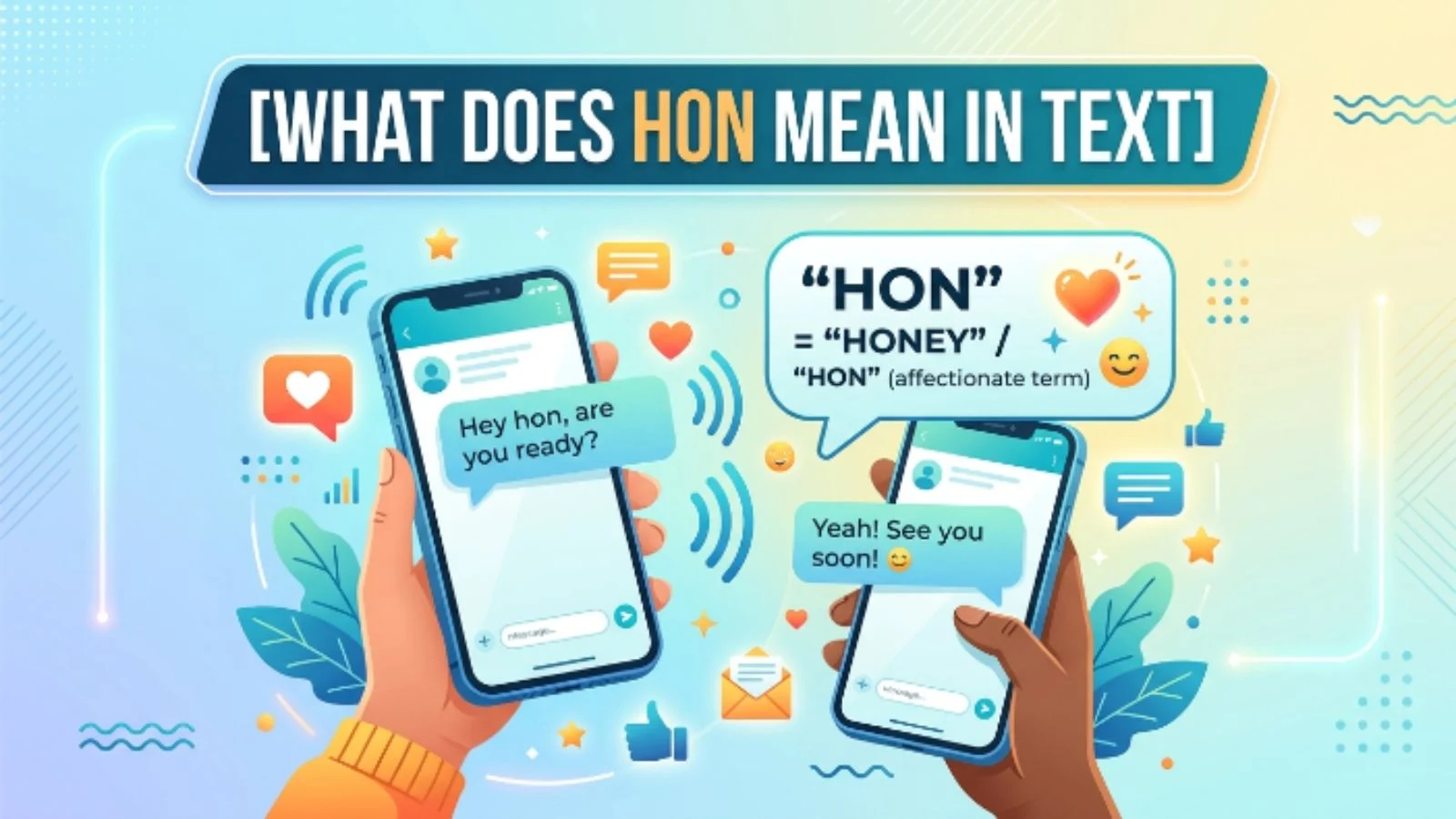
If you’ve ever opened a message and seen someone call you “hon,” you might have paused for a second. It feels warm, a little personal, and maybe even confusing if you’re not used to it.
Is it romantic? Is it friendly? Or is it just internet slang?
The truth is, “hon” is one of those short words that carries a lot of emotion depending on who is using it and how. In texting culture, small words like this can completely change the tone of a conversation.
Let’s break it down in a simple, human way so you never get confused again.
What Does Hon Mean in Text?
In texting, “hon” is a short form of “honey.”
It is usually used as a term of endearment, meaning someone is speaking to you in a friendly, caring, or affectionate way.
However, the meaning can shift depending on context:
- It can mean affection (romantic or close relationship)
- It can mean friendly warmth (like a kind tone)
- It can sometimes be sarcastic or casual depending on tone
So when someone says “hon,” they are usually trying to sound gentle, familiar, or emotionally soft.
Simple Meaning of “Hon” in Easy Words
In the simplest terms:
Hon = A short, sweet way of saying “honey” or “dear.”
Think of it like this:
- A friend saying “Don’t worry, hon” = caring and supportive
- A cashier saying “Have a good day, hon” = polite and friendly
- A partner saying “I miss you, hon” = romantic and affectionate
It’s not a formal word. It belongs to casual conversations, especially in texting or spoken English in certain regions.
Where Is “Hon” Used?
You’ll mostly see “hon” in informal communication. It appears in:
1. Text Messages
People use it to sound soft, caring, or friendly in chats.
2. Social Media Comments
You might see comments like:
- “You’ll be okay, hon”
- “Love this outfit, hon”
3. Everyday Conversations
Especially in spoken English in places like:
- The United States (older generation more commonly)
- The UK in friendly or casual speech
- Service industry conversations (shops, cafes, etc.)
4. Online Communities
It’s sometimes used in supportive or comforting online spaces.
Why Do People Use “Hon”?
People don’t use “hon” randomly. It usually has emotional intent behind it.
Here are the main reasons:
1. To Show Care or Affection
It softens the tone of a message:
- “Are you okay, hon?”
2. To Sound Friendly
It makes a conversation less formal and more human:
- “Take your time, hon.”
3. To Build Emotional Connection
It creates a feeling of closeness, even between strangers.
4. To Be Polite
Some people use it naturally as part of their speaking style.
Examples of “Hon” in Real Text Conversations
Let’s look at real-life style examples so you fully understand:
Example 1: Friendly Support
Person A: I had a bad day
Person B: It’s okay, hon. Tomorrow will be better
Meaning: Emotional support and kindness
Example 2: Romantic Tone
Person A: I miss you
Person B: I miss you too, hon
Meaning: Affection between partners
Example 3: Casual Politeness
“Here’s your receipt, hon”
Meaning: Friendly service interaction, no romantic meaning
Example 4: Online Chat
“You got this, hon. Don’t give up”
Meaning: Encouragement and positivity
“Hon” vs Similar Terms
Many people confuse “hon” with other similar slang or terms of endearment.
Here’s a simple comparison:
| Term | Meaning | Tone | Usage |
|---|---|---|---|
| Hon | Short for honey | Friendly / affectionate | Casual texting, speech |
| Hun | Similar to hon, modern slang | Friendly / casual | Very common in texting |
| Honey | Full form | More affectionate | Romantic or close relationships |
| Dear | Slightly formal | Polite / caring | Everyday speech |
| Babe | Romantic slang | Intimate | Partners mostly |
Key takeaway:
“Hon” sits in the middle—friendly, warm, but not always romantic.
When Should You Use “Hon”?
You can use “hon” when you want to sound:
- Friendly and warm
- Caring or supportive
- Casual and polite
- Slightly affectionate
But it’s important to match the situation.
Good situations:
- Talking to close friends
- Comforting someone
- Casual online chats
- Lighthearted conversations
Be careful using it:
- In professional or formal emails
- With someone who might find it too familiar
- In serious business communication
Common Misunderstandings About “Hon”
Many people misunderstand this small word. Let’s clear that up.
Misunderstanding 1: It always means romance
Not true. It can be friendly or polite too.
Misunderstanding 2: It’s modern slang
Actually, “hon” has been used for decades in spoken English.
Misunderstanding 3: It is rude or sarcastic
Sometimes tone matters, but in most cases, it is kind and gentle.
Misunderstanding 4: Only young people use it
Older generations often use it more naturally in speech.
Pro Tips for Understanding “Hon” in Texts
If you see “hon” in a message, here’s how to interpret it correctly:
- Look at the relationship with the person
- Check the overall tone of the conversation
- Notice if the message is supportive or casual
- Don’t assume romantic meaning immediately
- If unsure, read the full context before reacting
The meaning is less about the word itself and more about who said it and how they said it.
Final Thoughts
The phrase “hon” might look small, but it carries emotional weight in communication.
In most cases, what does hon mean in text comes down to one simple idea: it’s a soft, friendly way of calling someone “honey” or “dear.”
It can be caring, affectionate, polite, or just casual depending on the situation.
So next time someone texts you “hon,” don’t overthink it. Just look at the context—it will tell you everything you need to know.
FAQ About “Hon” in Text
1. Is “hon” romantic or friendly?
It can be both. It depends on the relationship and tone of the conversation.
2. Is “hon” the same as “hun”?
They are very similar. “Hun” is more modern texting slang, while “hon” is slightly older and more traditional.
3. Can I use “hon” with strangers?
Yes, but only in polite or casual settings. Avoid it in formal communication.
4. Is “hon” used in professional messages?
Generally no, unless the workplace has a very casual communication style.