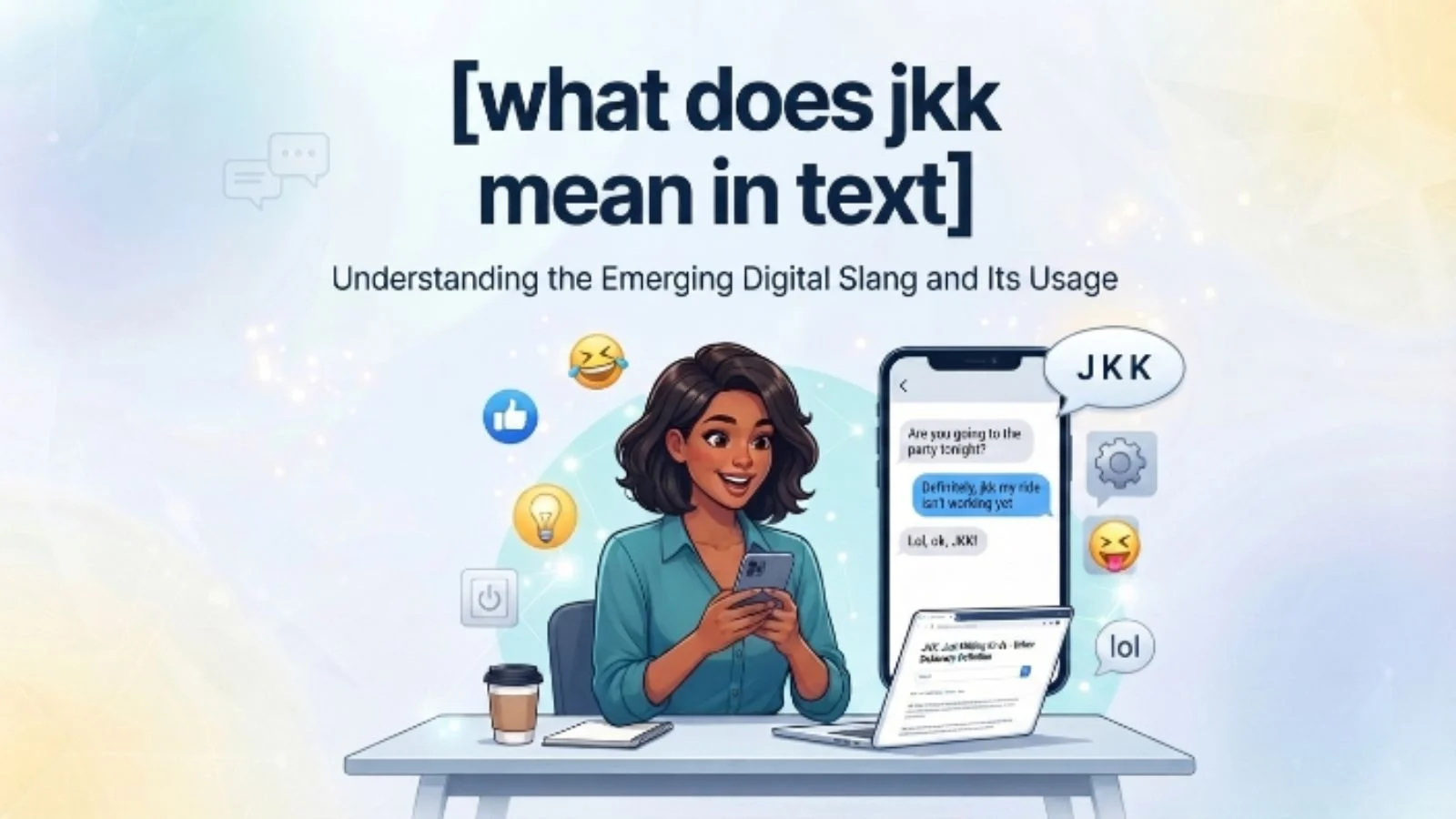
Have you ever received a text like “jkk” and wondered what the person actually meant? At first glance, it may look like a random typo or a strange abbreviation. But in texting and online conversations, JKK usually has a simple meaning: “just kidding.”
The extra K is often used for emphasis, humor, or a casual typing style. However, the exact meaning can sometimes depend on the context, the person using it, and the platform where you see it.
In this guide, you will learn exactly what does JKK mean in text, how people use it, what it sounds like in real conversations, and how it compares with similar expressions such as JK, LOL, and just kidding.
What Does JKK Mean in Text?
JKK usually means “just kidding” in text messages and online conversations.
People use it after saying something that may sound serious, surprising, teasing, or untrue to show that they were only joking.
Simple definition:
JKK = Just Kidding
For example:
“I’m never talking to you again… jkk.”
This means:
“I’m never talking to you again… just kidding.”
The additional K does not usually create a completely different meaning. It often makes the expression feel more casual, playful, or exaggerated.
What Is the Simple Meaning of JKK?
In simple words, JKK tells you that the person was joking.
Someone might say something dramatic or teasing and then add JKK to make it clear that they do not mean it seriously.
Example:
“You owe me $1,000 for eating my fries. JKK.”
The person is not seriously asking for $1,000. They are making a joke.
Another example:
“I’m deleting your number right now. JKK.”
The speaker is probably teasing the other person rather than actually deleting their number.
The meaning is similar to saying:
- “I’m joking.”
- “Just kidding.”
- “I’m only messing with you.”
- “I didn’t mean that seriously.”
Why Do People Type JKK Instead of JK?
The more common abbreviation is JK, which means “just kidding.”
So why do some people type JKK?
There is no single official reason, but the extra K can be used for several reasons:
1. To Add Emphasis
Some people use an extra letter to make the expression feel stronger.
“You’re so annoying jkkk”
The repeated letters make the message feel more playful and less serious.
2. To Sound More Casual
Online conversations often include repeated letters, shortened words, and informal spelling.
For example:
- “Okayyy”
- “Nooo”
- “Yesss”
- “Jkkk”
The extra letters can communicate emotion and personality.
3. It May Be a Typing Habit
Some people simply type JKK instead of JK because they prefer how it looks or because they have seen others use it.
In many cases, there is no deeper meaning behind the extra K.
4. It Can Make a Joke Feel Softer
If someone makes a potentially harsh joke, adding JKK may help show that they are not being serious.
For example:
“You are officially banned from my house. JKK.”
The abbreviation makes the statement sound less serious.
Where Is JKK Used?
You may see JKK in many types of digital communication.
Text Messages
Friends may use it when joking around in a private conversation.
“I’m telling your mom you ate the last cookie. JKK.”
Social Media
People may use it in comments, captions, or direct messages.
“I’m quitting social media forever… jkk.”
Snapchat
JKK can appear in casual messages between friends, especially after teasing or making a dramatic statement.
Users may use it in DMs or comments to show that a statement was only a joke.
TikTok
The abbreviation may appear in comments or messages when someone is joking about a video or situation.
Online Gaming Chats
Gamers may use JKK after teasing another player.
“You almost lost that match. JKK.”
The exact style may differ from person to person, but the basic meaning usually remains “just kidding.”
Why Do People Use JKK?
People use JKK because it is quick, casual, and easy to understand in informal conversations.
Here are some of the most common reasons.
To Show They Are Joking
This is the main reason.
“I’m never helping you again. JKK.”
The person wants to make sure you understand that they are not being completely serious.
To Tease Someone
Friends often use JKK after playful teasing.
“You really thought you could beat me? JKK.”
The statement may sound competitive, but the abbreviation signals that the person is joking.
To Make a Dramatic Statement
People sometimes exaggerate for humor.
“I waited five minutes for your reply. I’m officially heartbroken. JKK.”
The speaker is being dramatic for fun.
To Avoid Confusion
Text messages do not include facial expressions or tone of voice. A joke can sometimes be misunderstood.
Adding JKK can clarify the intended tone.
To Keep the Conversation Light
JKK can prevent a message from sounding too serious or aggressive.
For example:
“You are the worst friend ever. JKK.”
Without context, that could sound hurtful. With JKK, the person is showing that it is playful teasing.
Real-Life Examples of JKK in Text
Understanding examples is one of the easiest ways to learn how this abbreviation works.
Example 1: Friendly Teasing
Person A: You took the last slice of pizza.
Person B: It was calling my name.
Person A: I’m never speaking to you again. JKK.
Meaning: Person A is joking and not actually ending the friendship.
Example 2: Playful Threat
Person A: You forgot to send me the notes.
Person B: Sorry, I forgot.
Person A: I’m blocking you now. JKK.
Meaning: The person is joking about blocking their friend.
Example 3: A Dramatic Joke
Person A: Did you finish the assignment?
Person B: No.
Person A: My life is officially over. JKK.
Meaning: The person is exaggerating for humor.
Example 4: Teasing a Friend
Person A: I got an A on the test.
Person B: Wow, look at the genius. JKK.
Meaning: The person is teasing their friend but is probably being friendly.
Example 5: Correcting a Joke
Person A: I’m moving to another country tomorrow.
Person B: Seriously?
Person A: No, JKK.
Meaning: The original statement was not true. The person was only joking.
JKK vs JK: What Is the Difference?
The biggest difference is simply the number of letters.
| Term | Meaning | Typical Use |
|---|---|---|
| JK | Just kidding | Common and widely understood |
| JKK | Usually just kidding | Casual or emphasized version |
| JKKK | Usually just kidding | More playful or exaggerated |
| LOL | Laughing out loud | Shows amusement |
| J/K | Just kidding | Older texting style |
JK
JK is the standard abbreviation for “just kidding.”
“I hate your new haircut. JK!”
JKK
JKK generally has the same meaning but may feel more informal.
“I’m taking your phone. JKK.”
JKKK
Repeated letters can add extra emotion.
“You are so weird jkkk.”
The more letters someone adds, the more playful or exaggerated the message may feel. However, this is not a strict rule.
JKK vs LOL
These abbreviations do different jobs.
JKK tells you that the speaker was joking.
LOL shows that something is funny or amusing.
For example:
“I’m going to steal your snacks. JKK.”
This tells you the speaker is not serious.
“That video was so funny LOL.”
This shows that the person found something amusing.
Sometimes people use both:
“I’m taking all your fries, JKK LOL.”
This means the person is joking and finds the situation funny.
JKK vs LMAO
LMAO means “laughing my ass off” and is used to express strong amusement.
JKK means “just kidding.”
Example:
“I told my brother he had to clean the entire house. JKK.”
The person is saying the statement was a joke.
“LMAO, my brother actually believed me.”
The person is expressing laughter.
These abbreviations can appear together, but they do not mean the same thing.
When Should You Use JKK?
You can use JKK in casual conversations when you want to show that you were joking.
It works well when:
- Talking with close friends
- Messaging family members who understand your humor
- Chatting casually online
- Teasing someone playfully
- Making an exaggerated statement
- Clarifying that a comment was not serious
Example:
“I’m reporting you for eating my snacks. JKK.”
This is a natural use because the statement is clearly playful.
When Should You Avoid Using JKK?
Although JKK is common in casual texting, it is not appropriate for every situation.
Avoid using it in:
- Formal emails
- Job applications
- Professional reports
- Academic assignments
- Serious business conversations
- Important discussions involving real problems
For example, if you are speaking with a manager about an important workplace issue, writing “JKK” may appear immature or confusing.
Instead, use clear language such as:
“I was only joking.”
or
“I didn’t mean that seriously.”
Common Misunderstandings About JKK
Misunderstanding 1: JKK Has a Completely Different Meaning from JK
Usually, it does not.
In casual texting, JKK generally means the same thing as JK: “just kidding.”
The extra K may simply be a stylistic choice.
Misunderstanding 2: JKK Always Means the Person Is Being Friendly
Not necessarily.
The meaning depends on the conversation and the relationship between the people involved.
For example:
“You are so stupid, JKK.”
Some friends may use this playfully. However, the same message could feel insulting if sent by someone you barely know.
The surrounding context matters.
Misunderstanding 3: JKK Can Always Fix an Offensive Joke
It cannot.
Adding JKK after an offensive or hurtful comment does not automatically make the comment acceptable.
For example, saying something genuinely cruel and then adding “JKK” may still hurt someone.
A good rule is simple: think about how your message may make the other person feel before sending it.
Misunderstanding 4: JKK Is Always a Typo
Sometimes it may be a typo, but in many conversations, it is intentional.
If someone writes:
“I’m deleting your number jkk”
they most likely mean “just kidding.”
However, if the meaning is unclear, the conversation context should help you understand it.
How to Understand JKK From Context
The best way to interpret JKK is to look at the message before it.
Ask yourself:
- Was the person making an exaggerated statement?
- Were they teasing you?
- Does the message sound too dramatic to be serious?
- Is the conversation casual?
- Does the person usually joke in this way?
For example:
“I’m going to move to the moon tomorrow, JKK.”
The exaggerated statement clearly indicates humor.
But:
“I’m leaving this job tomorrow, JKK.”
could still be confusing if the person has recently talked about quitting. Context is important.
Pro Tips for Using JKK Naturally
Use It After the Joke
The most natural position is usually at the end of the sentence.
“I’m taking your seat. JKK.”
Do Not Overuse It
If you add JKK to every message, your conversations may become confusing.
Use it when you genuinely want to clarify that something was a joke.
Consider Your Relationship
Jokes between close friends may not work the same way with coworkers or strangers.
Before using JKK, think about whether the other person understands your humor.
Be Careful With Sensitive Topics
JKK is not a magic way to make a serious or offensive comment harmless.
If a topic is sensitive, choose your words carefully.
Pay Attention to Repeated Letters
Someone may write:
- JK
- JKK
- JKKK
- J/K
These usually communicate the same basic idea, although repeated letters can make the tone feel more playful or exaggerated.
Is JKK Still Common in Texting?
Yes, variations of JK continue to appear in casual digital conversations.
However, texting language changes quickly. Some people prefer writing the full phrase “just kidding,” while others use JK, JKK, lol, or other expressions.
The popularity of a specific abbreviation can also vary by age group, platform, and online community.
The most important thing is that JKK is generally understood as a casual way of saying “just kidding.”
Frequently Asked Questions About JKK
What does JKK mean in text messages?
JKK usually means “just kidding.” People use it after a joke, teasing comment, or exaggerated statement to show that they were not being serious.
Is JKK the same as JK?
Usually, yes. JK is the standard abbreviation for “just kidding,” while JKK is often a casual or emphasized variation. The extra K typically does not change the basic meaning.
What does JKK mean from a girl or guy?
The meaning is generally the same regardless of who sends it. A girl or guy using JKK is usually saying that they were joking or teasing.
The exact tone depends on the conversation and your relationship with that person.
Can JKK be used professionally?
It is best to avoid JKK in formal professional communication. In casual conversations with coworkers or people you know well, it may be acceptable, but clear language is safer in serious situations.
Final Thoughts
So, what does JKK mean in text? In most cases, it means “just kidding.” People use it to show that a previous statement was meant as a joke, tease, or playful exaggeration.
The extra K usually does not create a new definition. It is often just a casual texting style or a way to add emphasis.
If someone sends you a message ending in JKK, look at the context. If the previous statement sounded dramatic, teasing, or unrealistic, the person is probably telling you not to take it seriously.
When used appropriately, JKK is a quick and simple way to keep online conversations playful and clear.