Have you ever received a message with “OEM” and wondered what it actually meant? At first glance, it might look like just another internet abbreviation, but its meaning depends entirely on the conversation.
Most people know OEM as a technology or automotive term. However, when it appears in text messages, online chats, or social media, it can have different meanings based on context.
In this guide, you’ll learn what OEM means in text, where people use it, how to understand it correctly, and when you should (or shouldn’t) use it yourself.
What Does OEM Mean in Text?
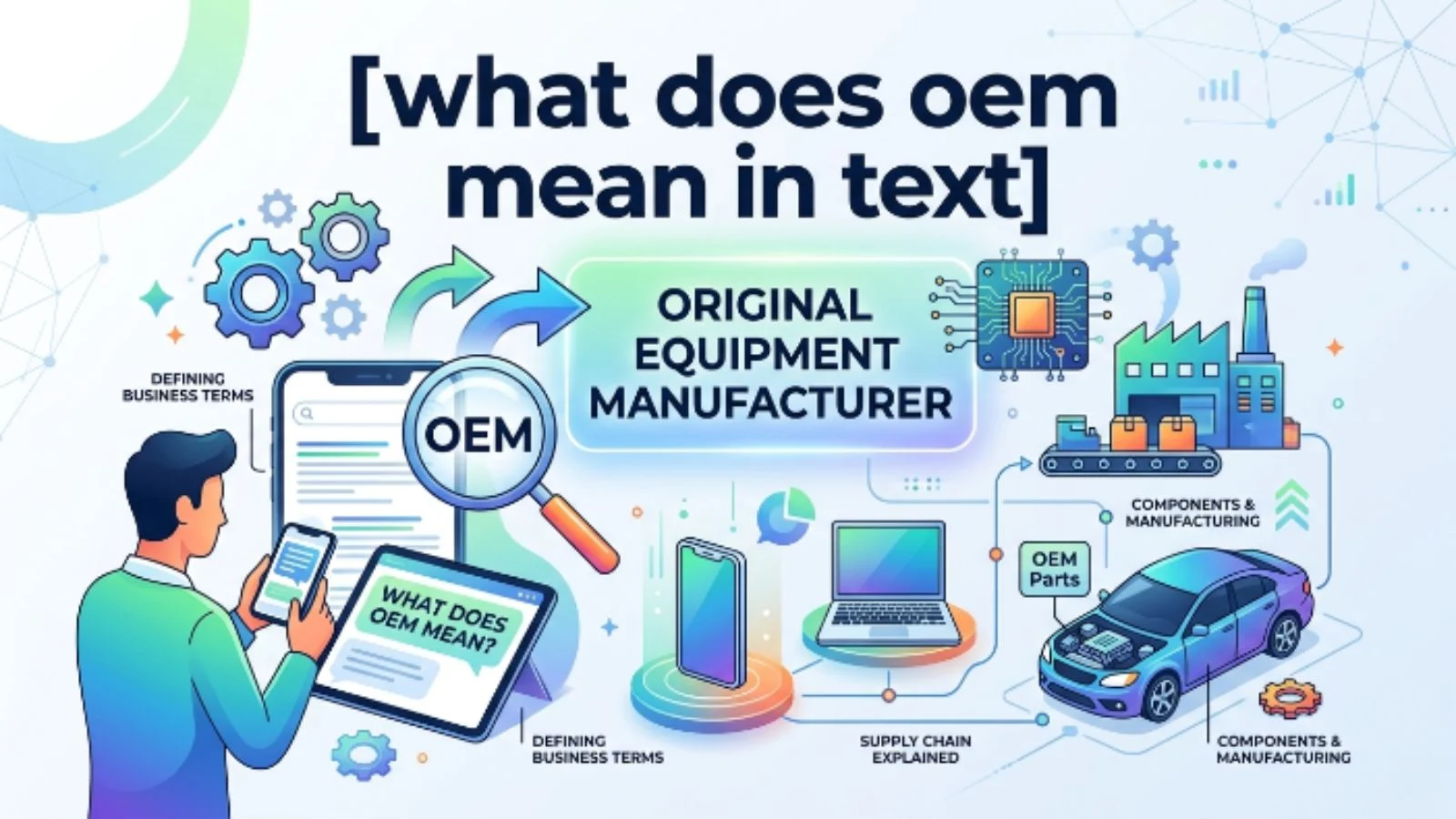
OEM most commonly stands for “Original Equipment Manufacturer.”
In everyday texting, OEM is not a popular internet slang abbreviation like LOL, BRB, or IMO. Instead, people usually use it when talking about:
- Cars
- Computer parts
- Electronics
- Mobile phones
- Gaming hardware
- Business products
- Replacement accessories
Featured Snippet Definition
OEM means “Original Equipment Manufacturer.” In text messages, it usually refers to an original company that manufactures products or parts used in another brand’s device or vehicle. The exact meaning depends on the conversation, especially if people are discussing technology, cars, or electronics.
Simple Meaning of OEM
In simple words, OEM refers to the original company that made a product or one of its parts.
Think of it like this:
If your phone screen breaks and you replace it with an OEM screen, it means the replacement was made by the same manufacturer that supplied the original screen.
So when someone texts:
“Only buy OEM parts.”
They simply mean:
“Buy genuine original parts instead of cheaper copies.”
It’s less about internet slang and more about talking about authentic products.
What Does OEM Mean in Text Messages?
When someone uses OEM in a text conversation, they’re usually talking about quality, compatibility, or genuine products.
For example:
Friend 1: Should I buy this battery?
Friend 2: Get the OEM one.
Meaning:
Buy the original manufacturer’s battery because it fits better and usually lasts longer.
Another example:
Alex: Is this charger original?
Sam: Nope. It’s not OEM.
Meaning:
The charger wasn’t made by the original manufacturer.
Where Is OEM Used?
You’ll commonly see OEM used in conversations involving products rather than casual chatting.
Common places include:
- Text messages
- Facebook Marketplace
- Reddit discussions
- Online shopping chats
- Car enthusiast forums
- Technology communities
- Gaming discussions
- WhatsApp conversations
- Product reviews
- Repair shops
People often mention OEM when discussing:
- Phone accessories
- Car replacement parts
- Laptop batteries
- Computer components
- Headphones
- Chargers
- Consoles
- Cameras
Why Do People Use OEM?
People use OEM because it quickly tells others they’re referring to original manufacturer products instead of aftermarket or counterfeit alternatives.
Some common reasons include:
- Talking about genuine replacement parts
- Comparing quality
- Discussing warranties
- Ensuring compatibility
- Avoiding fake products
- Recommending reliable components
Instead of writing:
“Buy the original manufacturer’s replacement part.”
People simply write:
“Buy OEM.”
It’s shorter and widely understood among people interested in technology or vehicles.
Real-Life Examples of OEM in Text
Let’s look at several practical examples.
Example 1
Text:
“I finally found an OEM battery.”
Meaning:
The person found a genuine battery made by the original manufacturer.
Example 2
Text:
“Don’t waste money on cheap copies. Buy OEM.”
Meaning:
Original products usually offer better quality and reliability.
Example 3
Text:
“These aren’t OEM wheels.”
Meaning:
The wheels were made by another company rather than the original vehicle manufacturer.
Example 4
Text:
“I’m only installing OEM parts.”
Meaning:
The person prefers authentic replacement components.
Example 5
Text:
“OEM headphones sound much better.”
Meaning:
The original manufacturer’s headphones often deliver better quality.
OEM in Different Situations
Technology
People often refer to:
- OEM chargers
- OEM keyboards
- OEM laptop batteries
- OEM screens
- OEM cables
Meaning:
Original accessories designed specifically for the device.
Automotive
OEM is extremely common in the automotive industry.
Examples include:
- OEM brakes
- OEM mirrors
- OEM headlights
- OEM tires
- OEM engine parts
These are parts designed to match the vehicle’s original specifications.
Gaming
Gamers may say:
“I bought an OEM controller.”
This means the controller comes from the original manufacturer instead of a third-party brand.
Business
Companies sometimes refer to OEM manufacturing.
Example:
A company designs a product while another manufacturer produces it under specific agreements.
OEM vs Similar Terms
| Term | Meaning | Common Use |
|---|---|---|
| OEM | Original Equipment Manufacturer | Genuine products or parts |
| Aftermarket | Made by another company | Alternative replacement parts |
| Generic | Non-branded product | Lower-cost replacements |
| Replica | Copy of the original | Appearance-focused products |
| Original | Genuine manufacturer item | Everyday conversations |
OEM vs Aftermarket Parts
Many people confuse these two.
OEM Parts
Advantages:
- Exact fit
- Reliable quality
- Better compatibility
- Manufacturer standards
- Often includes warranty
Possible downside:
- Usually more expensive.
Aftermarket Parts
Advantages:
- Lower cost
- More choices
- Easier to customize
Possible downside:
- Quality varies by brand.
- Compatibility isn’t always perfect.
Is OEM Internet Slang?
Not really.
Unlike abbreviations such as:
- LOL
- IDK
- SMH
- BRB
- IMO
OEM isn’t considered traditional internet slang.
Instead, it’s a technical abbreviation that frequently appears in online conversations involving products and repairs.
If someone sends:
“OEM only.”
They’re usually discussing product quality—not using casual texting slang.
When Should You Use OEM?
You should use OEM when discussing:
- Car repairs
- Phone repairs
- Computer upgrades
- Electronics
- Replacement accessories
- Original manufacturer products
- Genuine components
Examples:
- “Use OEM brake pads.”
- “This isn’t an OEM charger.”
- “I prefer OEM batteries.”
- “Always buy OEM screens.”
When Should You Avoid Using OEM?
Avoid using OEM when talking to people unfamiliar with technical terms.
Instead of saying:
“Buy OEM.”
You could say:
“Buy the original manufacturer’s part.”
This helps avoid confusion, especially for beginners.
Common Misunderstandings About OEM
Many people misunderstand what OEM actually means.
Misunderstanding 1
OEM means expensive.
Not necessarily.
Although OEM products often cost more, the term itself only refers to the original manufacturer.
Misunderstanding 2
OEM always means better quality.
Usually—but not always.
Some high-quality aftermarket brands perform just as well or even better depending on the product.
Misunderstanding 3
OEM means brand new.
Incorrect.
You can buy:
- New OEM parts
- Used OEM parts
- Refurbished OEM parts
The term describes the manufacturer, not the product’s condition.
Misunderstanding 4
OEM is common texting slang.
No.
Most casual texters rarely use it unless discussing technology, electronics, or vehicles.
Pro Tips for Understanding OEM
Keep these tips in mind:
- Always read the conversation’s context before assuming the meaning.
- OEM almost always refers to original manufacturers.
- Don’t confuse OEM with internet slang abbreviations.
- Check whether the discussion involves cars, electronics, or replacement parts.
- Remember that OEM focuses on authenticity rather than price.
- When shopping online, verify whether a seller is truly offering OEM products.
Why Context Matters
Imagine these two conversations.
Conversation 1
“I bought OEM brake pads.”
Clearly, the topic is car parts.
Conversation 2
“The laptop only supports OEM software.”
Now the discussion is about computer systems.
In both cases, OEM means Original Equipment Manufacturer, but the product being discussed changes.
Context helps you understand exactly what someone is referring to.
Final Thoughts
If you’ve been wondering what does OEM mean in text, the answer is usually straightforward.
OEM stands for Original Equipment Manufacturer. It refers to genuine products or parts made by the original manufacturer, especially in conversations about cars, electronics, computers, gaming equipment, and mobile devices.
Although OEM occasionally appears in text messages, it isn’t traditional internet slang. Instead, it’s a practical abbreviation used to describe authentic products that meet the original manufacturer’s standards.
Whenever you see OEM in a message, pay attention to the surrounding conversation. In most cases, you’ll find it’s about original parts, better compatibility, and trusted quality rather than a hidden slang meaning.
Frequently Asked Questions (FAQ)
What does OEM mean in text messages?
OEM usually stands for Original Equipment Manufacturer. It refers to genuine products or replacement parts made by the original manufacturer, particularly in discussions about electronics, vehicles, and technology.
Is OEM a slang term?
No. OEM is a technical abbreviation rather than internet slang. It is commonly used in conversations about products, repairs, and replacement components.
Is OEM better than aftermarket?
OEM products generally provide excellent compatibility and meet the manufacturer’s standards. However, some aftermarket products can also offer outstanding performance, depending on the brand and product quality.
Why do people say “OEM only”?
People use the phrase “OEM only” to recommend buying genuine manufacturer parts instead of third-party or generic alternatives, often for better fit, reliability, and performance.