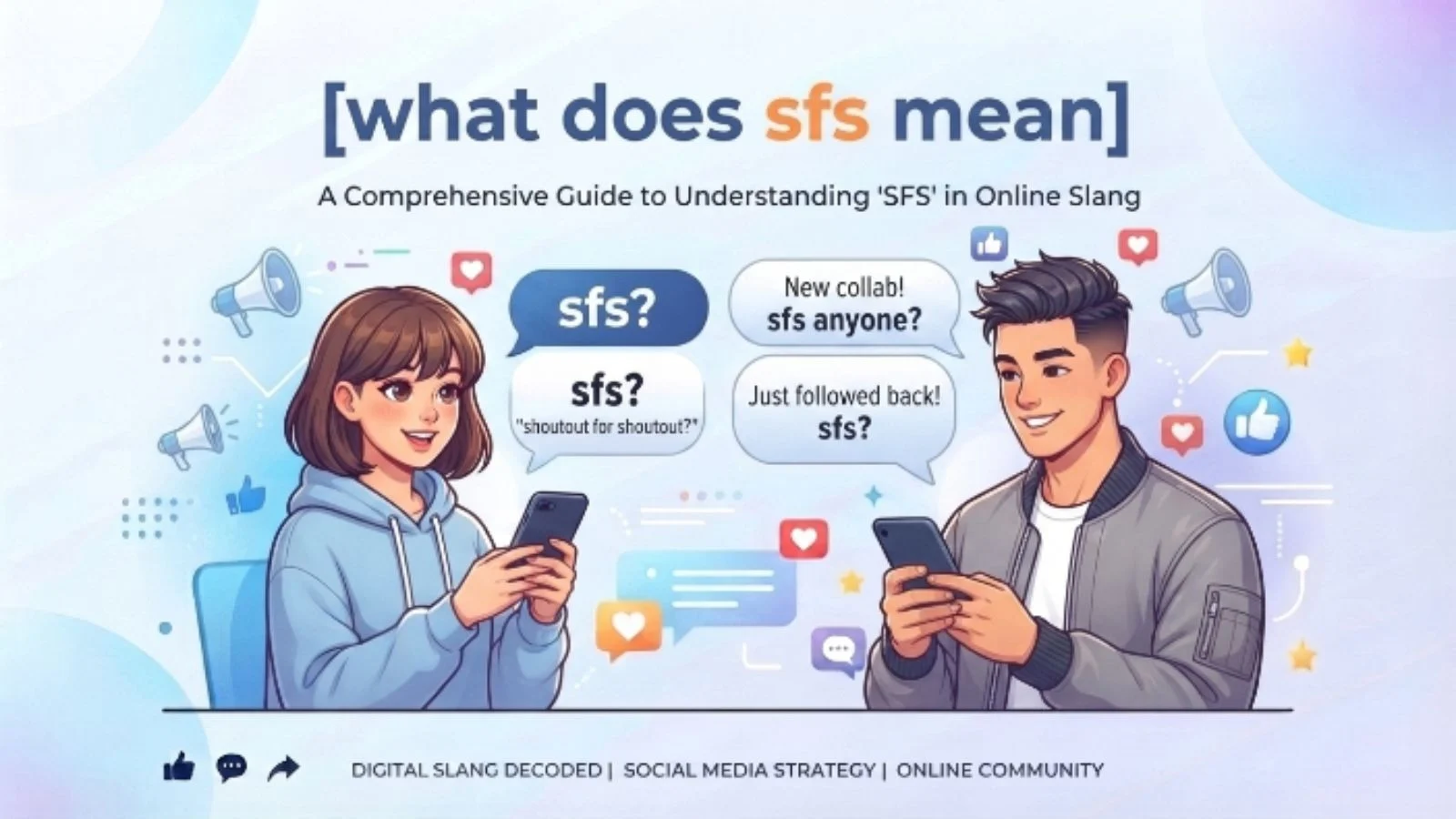
Have you ever received a message that simply said “SFS?” or noticed someone posting “#SFS” on Instagram or Snapchat? At first glance, it can be confusing because SFS has more than one meaning depending on where it’s used.
In most cases, SFS means “Shoutout for Shoutout.” People use it on social media to help each other gain more followers, views, or engagement. However, in texting and online conversations, SFS can also mean “Snap for Snap” or even represent other meanings in specific communities.
This guide explains what SFS means, where it’s used, how to reply to it, and when you should or shouldn’t use it.
What Does SFS Mean?
SFS usually stands for “Shoutout for Shoutout.”
It is a popular social media abbreviation where two users agree to promote each other’s accounts. One person gives the other a public mention or recommendation, and the other returns the favor.
Featured Snippet Definition
SFS means “Shoutout for Shoutout.” It is commonly used on Instagram, Snapchat, TikTok, and other social media platforms when two users agree to promote each other’s profiles to increase followers and engagement.
Simple Meaning of SFS
In simple words, SFS is an exchange of promotion.
Think of it like this:
“I’ll tell my followers about you if you tell your followers about me.”
It’s a simple way for creators, influencers, brands, and friends to help each other grow online.
Sometimes, especially on Snapchat, SFS may also mean “Snap for Snap,” where two users exchange snaps or promote each other’s Snapchat accounts.
Where Is SFS Used?
SFS appears on many social media platforms.
Instagram is where Shoutout for Shoutout became extremely popular.
Examples:
- “Anyone interested in SFS?”
- “DM me for SFS.”
- “#SFS”
Creators often share another account in their Stories or posts.
Snapchat
On Snapchat, SFS often means:
- Snap for Snap
- Sometimes Shoutout for Shoutout
Example:
“SFS tonight?”
This usually means someone wants to exchange snaps or promote each other’s Snapchat profiles.
TikTok
TikTok users may comment:
- “SFS?”
- “Anyone doing SFS?”
The goal is to help each other reach new audiences.
Although less common, some Facebook page owners use SFS to exchange page promotions.
X (Twitter)
Some users use SFS when promoting creators, businesses, or community pages.
Why Do People Use SFS?
People use SFS because it helps them grow faster online.
Common reasons include:
- Increase followers
- Gain profile visits
- Get more likes
- Build an audience
- Support friends
- Promote a new account
- Increase engagement
- Connect with similar creators
For small creators, SFS can be a free way to reach new people.
Real-Life Examples of SFS
Here are some common situations where you’ll see SFS.
Example 1
Person A:
“Anyone interested in SFS?”
Person B:
“Sure! Send me your profile.”
Meaning:
Both users agree to promote each other’s accounts.
Example 2
Instagram Story:
“Go follow @username. Amazing content! #SFS”
Meaning:
The account owner is giving someone a public shoutout.
Example 3
Snapchat Message:
“SFS later?”
Meaning:
The person wants to exchange snaps or Snapchat promotions.
Example 4
TikTok Comment:
“SFS?”
Meaning:
The commenter wants to exchange profile promotions.
Different Meanings of SFS
Although Shoutout for Shoutout is the most popular meaning, SFS can have other meanings depending on the context.
| Meaning | Where It’s Used |
|---|---|
| Shoutout for Shoutout | Instagram, TikTok, Facebook |
| Snap for Snap | Snapchat |
| Spam for Spam | Some online communities |
| Other technical meanings | Business or industry-specific conversations |
Always look at the conversation before deciding what SFS means.
SFS vs Similar Internet Terms
Many social media abbreviations sound similar.
| Term | Meaning | Purpose |
|---|---|---|
| SFS | Shoutout for Shoutout | Exchange promotions |
| F4F | Follow for Follow | Exchange followers |
| L4L | Like for Like | Exchange likes |
| C4C | Comment for Comment | Exchange comments |
| Sub4Sub | Subscribe for Subscribe | Grow YouTube subscribers |
The biggest difference is that SFS focuses on recommending another account, while the others focus on follows, likes, comments, or subscriptions.
When Should You Use SFS?
SFS works best when:
- You have a public account.
- You want to grow naturally.
- You collaborate with creators in the same niche.
- You trust the person you’re promoting.
- Both accounts offer valuable content.
Using SFS with accounts that share your audience often produces better results.
When Should You Avoid SFS?
Avoid using SFS if:
- The account looks fake.
- The content is inappropriate.
- You’re unsure whether the account is trustworthy.
- You only care about numbers instead of genuine engagement.
- The platform discourages engagement exchanges.
Growing a loyal audience is more valuable than gaining random followers.
How Do You Reply to SFS?
If someone messages:
“SFS?”
You can reply with:
- “Sure!”
- “Sounds good.”
- “Let’s do it.”
- “Send me your profile.”
- “I’m interested.”
If you’re not interested, simply say:
- “No thanks.”
- “Maybe another time.”
- “I’m not doing SFS right now.”
Being polite helps maintain positive relationships online.
Common Places You’ll See SFS
You may find SFS in:
- Instagram Stories
- Instagram captions
- Snapchat chats
- TikTok comments
- Direct messages
- Creator communities
- Social media groups
It usually appears when someone wants to collaborate.
Is SFS Good for Growing Your Account?
It depends.
SFS can help if:
- Your content is high quality.
- Your audience is interested in similar topics.
- You work with genuine creators.
However, it won’t guarantee long-term success.
People stay because of valuable content—not because of one shoutout.
Common Misunderstandings About SFS
Many people misunderstand what SFS means.
Mistake 1: Thinking It Always Means Snap for Snap
Not necessarily.
On Instagram, it almost always means Shoutout for Shoutout.
On Snapchat, it may mean Snap for Snap.
Always check the platform.
Mistake 2: Believing SFS Guarantees Followers
It doesn’t.
A shoutout may increase visibility, but people only follow accounts they genuinely enjoy.
Mistake 3: Using SFS Everywhere
Some communities don’t use this abbreviation often.
If your audience isn’t familiar with it, consider writing “Shoutout for Shoutout” instead.
Mistake 4: Promoting Anyone
Be careful.
Promoting low-quality or suspicious accounts can affect your own credibility.
Pro Tips for Using SFS
Here are some practical tips.
- Choose creators with similar interests.
- Check the quality of their content first.
- Focus on real engagement, not just follower numbers.
- Avoid spammy SFS requests.
- Build genuine relationships instead of one-time exchanges.
- Keep your promotions honest.
- Don’t overuse SFS in every post.
Quality collaborations almost always perform better than random exchanges.
Is SFS Still Popular?
Yes, but it’s not as popular as it was a few years ago.
Many creators now prefer:
- Genuine collaborations
- Creator partnerships
- Shared content
- Cross-promotions
- Community engagement
Still, SFS remains a common abbreviation, especially among smaller creators and new accounts.
Final Thoughts
SFS most commonly means “Shoutout for Shoutout.” It’s a simple way for social media users to promote one another and grow their audiences together. On Snapchat, it can also mean “Snap for Snap,” so the exact meaning depends on the platform and conversation.
If you decide to use SFS, focus on collaborating with trustworthy accounts that share your interests. A thoughtful recommendation is far more valuable than chasing follower numbers. When used wisely, SFS can help you build meaningful connections and introduce your content to new audiences.
Frequently Asked Questions
What does SFS mean in texting?
In most social media conversations, SFS means “Shoutout for Shoutout.” On Snapchat, it can also mean “Snap for Snap.” The meaning depends on the context.
What does SFS mean on Instagram?
On Instagram, SFS almost always means “Shoutout for Shoutout.” Two users agree to promote each other’s accounts through posts or Stories.
What does SFS mean on Snapchat?
On Snapchat, SFS often means “Snap for Snap,” where users exchange snaps or promote each other’s Snapchat profiles. Some users also use it to mean “Shoutout for Shoutout.”
Is SFS the same as Follow for Follow?
No. SFS is about exchanging promotions, while Follow for Follow (F4F) is simply an agreement to follow each other’s accounts.