We have all been there. You send a long, thoughtful text message to a friend, a partner, or a coworker. You are waiting for a real answer. Then, your phone buzzes. You look down, and all you see is a single word or a little text symbol: a shrug.
Suddenly, your mind starts racing. Are they mad at you? Are they just busy? Do they even care about what you just said?
Texting is amazing, but it has one massive flaw. You cannot see the other person’s face, and you cannot hear the tone of their voice. When someone drops a shrug into the conversation, it can feel like trying to crack a secret code.
If you are staring at your screen wondering what does shrug mean in text, you are not alone. Let us pull back the curtain on this digital mystery so you never have to guess what someone is thinking again.
What Does Shrug Mean in Text?
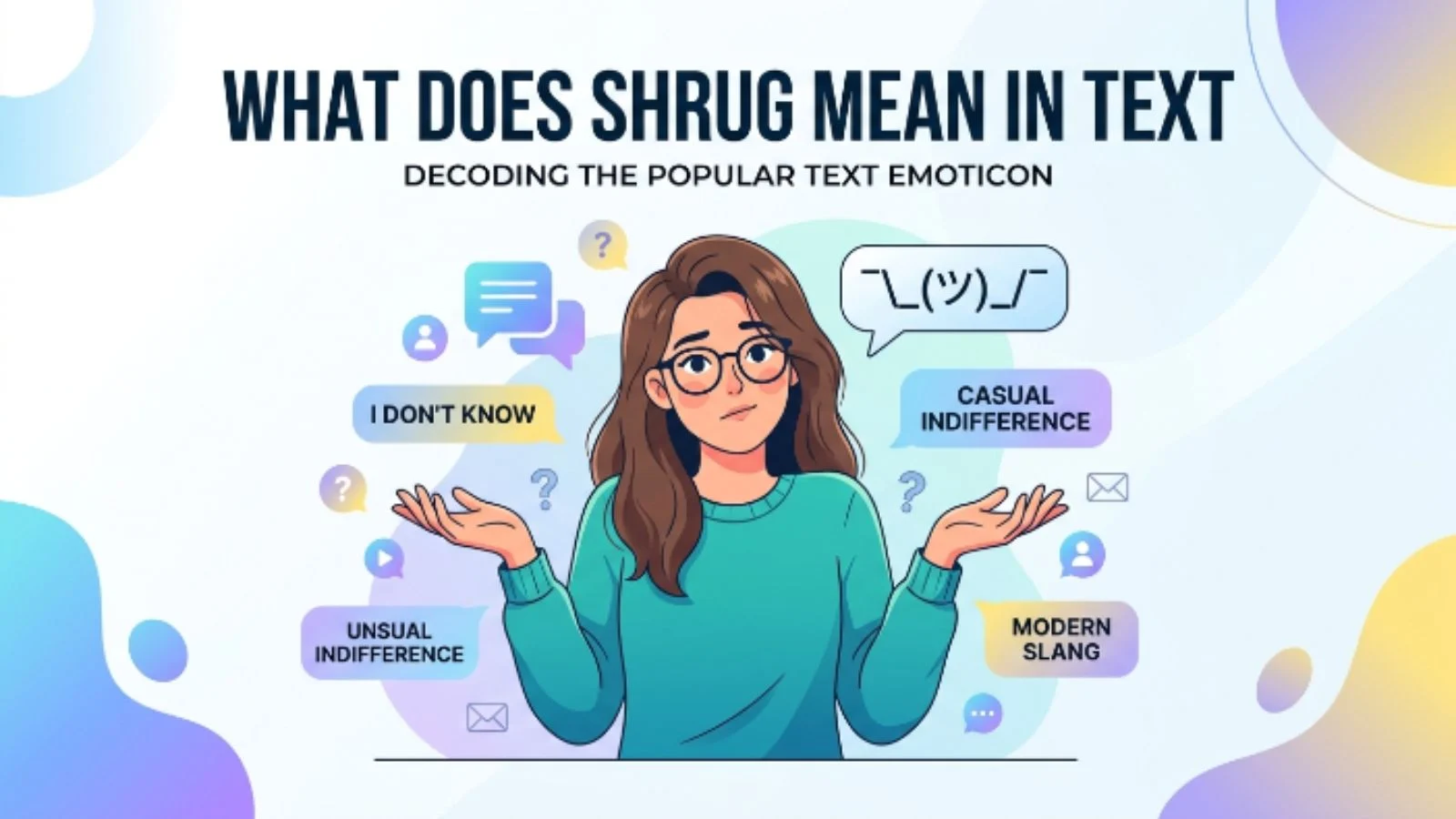
When someone says shrug or uses a shrugging symbol in a text message, they are digitally mimicking the real-world physical action of raising their shoulders. In everyday life, you shrug when you do not know the answer to a question or when you feel indifferent about a choice.
In the world of texting and social media, the shrug has evolved into a powerful piece of digital shorthand. It serves as a quick way to communicate a lack of knowledge, a lack of care, or a feeling of helplessness without having to type out a full, formal sentence.
The Simple Meaning of a Digital Shrug
To put it in the simplest terms possible, a shrug in a text message usually translates to one of three things:
- “I do not know.”
- “I do not care either way.”
- “There is nothing I can do about this situation.”
It is the ultimate neutral response. Depending on who you are texting and what you are talking about, it can range from a relaxed, carefree sign of agreement to a cold, dismissive brush-off. Understanding the hidden layers behind those little shoulders is the key to mastering modern digital communication.
Where Is It Used Across the Internet?
You will run into the shrug just about everywhere people type to each other. However, the way it looks changes depending on the platform and the app you are using.
Mobile Texting and Chat Apps
On Apple iMessage, WhatsApp, and Google Messages, people often type out the literal word shrug in asterisks or brackets, like *shrug* or [shrug]. Alternatively, they might use the standard built-in emoji keyboard to send the person shrugging icon.
Social Media Platforms
On TikTok, X (formerly Twitter), and Instagram, the shrug is a staple in comment sections. Users drop it to show they are opting out of an argument or to signal that a strange piece of news does not surprise them anymore.
Work Communication Tools
Yes, the shrug has even made its way into professional spaces like Slack and Microsoft Teams. In a work context, team members often use it to signal that a project direction is out of their hands or that they are waiting on someone else for an answer.
Why Do People Use the Shrug Instead of Words?
Typing takes effort, and human beings naturally look for shortcuts when communicating on screens. The shrug is popular because it packs an incredible amount of emotional context into a tiny space.
It Saves Time
Instead of typing out, “I have given this some thought, and honestly, I do not have a strong preference for either option you presented,” a user can just type *shrug*. Message sent, message received, time saved.
It Softens the Blow
Sometimes, telling someone “I do not care” sounds incredibly rude. Sending a shrug softens the edge of that indifference. It makes the response feel less like a harsh rejection and more like a casual, relaxed viewpoint.
It Embraces the Chaos
Life can be unpredictable. When something ridiculous happens, typing a shrug is a way of saying, “Well, the world is weird, and I am just riding the wave.” It helps people bond over shared confusion or helplessness.
Real-Life Examples of the Shrug in Action
To truly understand how this works in your daily life, let us look at a few common texting scenarios and break down what the shrug actually means in each context.
Scenario 1: The Undecided Dinner Partner
- You: “Do you want to get tacos or sushi tonight?”
- Them: “Shrug, you choose.”
- What it means: In this case, the shrug is totally harmless. They are genuinely happy with either choice and are passing the decision-making power over to you.
Scenario 2: The Workplace Roadblock
- You: “Did management ever approve our budget request for the new software?”
- Your Coworker:
*shrug*“They haven’t said a word to me.” - What it means: Here, the shrug represents shared helplessness. Your coworker is not being dismissive of you; they are expressing frustration with the lack of communication from the higher-ups.
Scenario 3: The Argument Cooler
- You: “I still think my favorite team is going to win the championship this weekend.”
- Your Friend: “Shrug, we will see what happens on Sunday.”
- What it means: Your friend is politely opting out of a debate. They disagree with you, but they do not want to start a full-blown argument over it, so they are using the shrug to drop the topic.
Shrug vs. Similar Digital Terms
It is easy to mix up the shrug with other pieces of internet slang. Let us look at how the shrug stacks up against other common digital expressions so you can use the right one at the right time.
| Digital Term | Core Meaning | Best Used For | Emotional Tone |
| Shrug | I do not know / I do not mind | Neutral indifference or confusion | Casual and relaxed |
| Idk | I do not know | Purely stating a lack of information | Direct and factual |
| Idc | I do not care | Expressing a lack of personal interest | Can border on rude |
| Whatever | It does not matter to me | Dismissing a topic or a statement | Often passive-aggressive |
| Meh | Underwhelming or uninspiring | Showing that something is mediocre | Bored or unimpressed |
When Should You Use It?
The shrug is a great tool, but it requires a bit of social awareness. It works beautifully in casual conversations with friends, family members, or peers who already understand your personality and your text style.
It is also incredibly useful when you want to keep a conversation moving forward without getting stuck on minor details. If a friend asks whether you prefer the blue or the green background for a casual party invite, a quick shrug lets them know you think both look great.
Common Misunderstandings and When It Goes Wrong
Because the shrug lacks vocal tone, it can easily backfire if you are not careful. Sending it to the wrong person or at the wrong time can cause unnecessary tension.
The Appearance of Attitude
If someone sends you a long, emotional text message about their feelings, replying with *shrug* can feel like a slap in the face. It tells the reader that you are completely cold to their emotional needs or that you cannot be bothered to engage with them.
Professional Danger Zones
Using a shrug with a client or your boss can come across as highly unprofessional. If your manager asks, “Why was this report filed late?” answering with a shrug looks like you do not take your responsibilities seriously. In those moments, skip the slang and use clear, professional words.
The Texting Power Dynamic
Sometimes, people use the shrug as a passive-aggressive weapon. If someone is upset with you, they might use it to show that they are shutting down the conversation and locking you out. Always pay attention to the overall mood of the conversation before you decide how to interpret it.
Pro Tips for Shrugging Like a Texting Expert
If you want to use this slang without causing misunderstandings, keep these quick tips in mind for your daily chats.
Context is King
Always look at the texts that came right before the shrug. If the conversation has been light and fun, the shrug is light and fun. If the conversation is tense, treat the shrug with a little more caution.
Pair it with Words
If you are worried that your shrug might sound too blunt, add a tiny bit of context to smooth things over. Typing “Shrug, I am cool with whatever you want to do!” takes away all the negative ambiguity.
Know Your Audience
Keep the text shrugs for your inner circle. Your best friends will know you are just being casual. Your new boss or a brand new date might mistake it for a lack of interest.
Final Thoughts
At the end of the day, a shrug in a text message is just a tool to mirror our natural body language on a digital screen. It is a quick, visual way to handle decisions, accept the unknown, or show a little casual indifference.
The next time you see a shrug pop up on your screen, do not panic. Take a breath, look at the context, and remember that the person on the other side is likely just looking for a quick, casual way to keep the conversation rolling.
Frequently Asked Questions
Is typing shrug passive-aggressive?
It can be, but it depends entirely on the situation. If it is used to answer a simple question about dinner choices, it is completely innocent. If it is used to avoid answering a serious question during a disagreement, it can absolutely be passive-aggressive.
What is the text symbol for a shrug?
The most famous traditional text symbol for a shrug is the Japanese kaomoji emoticon: ¯\_(ツ)_/¯. It combines a specific Japanese character with slashes and dashes to create a little stick figure lifting its hands in the air.
Can I use a shrug in a business email?
It is generally best to avoid it. Business communication requires clarity and accountability. Using internet slang like a shrug can look lazy or indifferent to colleagues, managers, or external clients.
What is the difference between shrug and meh?
A shrug usually means you do not know the answer or you genuinely do not mind which option is chosen. The word meh specifically means you find something boring, disappointing, or completely unimpressed.