Have you ever received a text that simply says “WTM?” and wondered what the person actually meant?
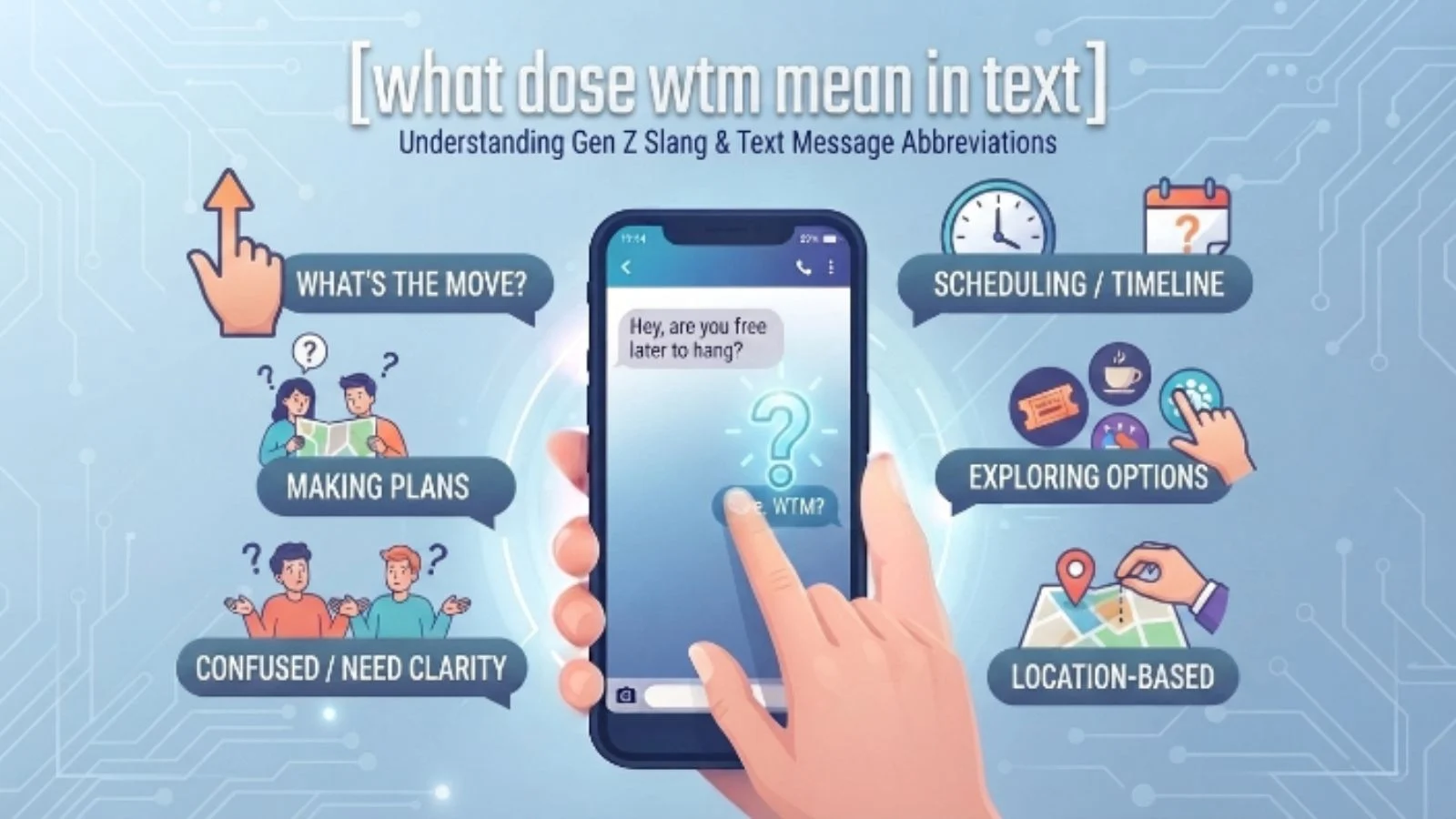
You are not alone. Texting abbreviations can be confusing because the same short form may have different meanings depending on the conversation. In most casual texting and social media conversations, WTM usually means “What’s the move?”
It is a quick way of asking about plans, activities, or what everyone should do next. But in some situations, WTM can have other meanings, so the context matters.
What Does WTM Mean in Text?
WTM most commonly means “What’s the move?”
People use it to ask:
- What are we doing?
- What are the plans?
- Where are we going?
- What should we do next?
- Is anything happening today?
For example:
“WTM tonight?”
This usually means:
“What’s the move tonight?” or “What are we doing tonight?”
The phrase is casual, friendly, and commonly used in text messages, group chats, and social media conversations.
WTM Meaning in Simple Words
In simple English, WTM is a quick way to ask about the plan.
Imagine your friends are talking about meeting up, but nobody has decided what to do. Someone might text:
“WTM?”
They are basically asking:
“So, what’s the plan?”
The expression can also suggest that the person is ready to do something and wants to know what is happening next.
Example
Person 1: “I’m free after 8.”
Person 2: “WTM?”
Meaning: “What are we going to do?”
The abbreviation makes the conversation shorter and more casual.
What Does “What’s the Move?” Really Mean?
The phrase “What’s the move?” does not usually refer to a physical movement.
Instead, “the move” means the plan, decision, or next action.
For example:
- “What’s the move for tonight?” means “What are we doing tonight?”
- “WTM after the game?” means “What are we doing after the game?”
- “WTM this weekend?” means “What are the plans this weekend?”
The exact meaning depends on the situation, but the main idea is usually the same: What should we do next?
Where Is WTM Used?
You may see WTM in many casual digital conversations.
Text Messages
Friends often use WTM when making plans.
“WTM after work?”
This means:
“What are we doing after work?”
Group Chats
WTM is especially common in group conversations.
“Everyone is free Saturday. WTM?”
Here, the person is asking the group to suggest or decide on a plan.
Social Media
You may see WTM in comments, direct messages, captions, and posts on social platforms.
For example:
“WTM this weekend?”
This could be an invitation for people to share their plans or make new ones.
Dating Conversations
Someone might also use WTM while talking to a romantic interest.
“You said you’re free tonight. WTM?”
In this case, the person may be asking what the two of them should do together.
Why Do People Use WTM?
There are several reasons people use this abbreviation.
1. It Saves Time
Typing “WTM?” is much faster than writing:
“What are we doing?”
In fast-moving conversations, short abbreviations are convenient.
2. It Sounds Casual
WTM feels relaxed and informal.
Instead of saying:
“What are your plans for this evening?”
someone may simply write:
“WTM tonight?”
That sounds more natural among friends.
3. It Shows Interest
When someone asks “WTM?”, they may be showing that they want to participate.
It can communicate:
“I’m available. What’s happening?”
4. It Helps Start Plans
Sometimes nobody wants to be the first person to suggest an activity.
A quick “WTM?” can get the conversation moving.
Real-Life Examples of WTM in Text
Here are some common examples.
Example 1: Making Weekend Plans
Text:
“WTM this weekend?”
Meaning:
“What are the plans this weekend?”
The person is asking whether there is anything fun happening.
Example 2: Making Evening Plans
Text:
“I’m done with work. WTM tonight?”
Meaning:
“What are we doing tonight?”
The sender is likely available and wants to make plans.
Example 3: Asking a Group
Text:
“The movie got cancelled. WTM now?”
Meaning:
“What should we do now?”
Here, WTM refers to the next plan after the original plan changed.
Example 4: Talking to a Friend
Text:
“I’m bored. WTM?”
Meaning:
“What should we do?”
This can be a casual way to suggest hanging out.
Example 5: After an Event
Text:
“The concert ends at 10. WTM after?”
Meaning:
“What are we doing after the concert?”
The person is asking about the next activity.
WTM in a Short Conversation
Here is how WTM might naturally appear in a chat:
Alex: “I’m free tonight.”
Sam: “Same here.”
Alex: “WTM?”
Sam: “Let’s grab food and watch a film.”
In this conversation, WTM means “What’s the move?” Sam is asking what they should do together.
WTM vs Similar Texting Expressions
WTM is similar to several other abbreviations, but they are not always exactly the same.
| Expression | Meaning | Typical Use |
|---|---|---|
| WTM | What’s the move? | Asking about plans |
| WYD | What are you doing? | Asking about someone’s current activity |
| WYA | Where are you at? | Asking someone’s location |
| WBU | What about you? | Returning a question |
| HBU | How about you? | Asking for the other person’s answer |
| LMK | Let me know | Requesting information later |
| WYG | What you got? | Asking what someone has available or planned |
WTM vs WYD
These two are often confused.
WYD? usually means:
“What are you doing right now?”
WTM? usually means:
“What is the plan?” or “What should we do?”
For example:
WYD? = “Are you watching TV?”
WTM? = “Should we go somewhere?”
WTM vs WYA
WYA means “Where you at?” or “Where are you?”
Example:
“WYA?”
The person wants to know your location.
WTM, on the other hand, usually asks about plans.
“WTM?”
The person wants to know what is happening or what should happen next.
Other Possible Meanings of WTM
Although “What’s the move?” is one of the most common meanings in casual texting, WTM can mean different things in other contexts.
The correct interpretation depends on the conversation.
“What’s the Matter?”
In some conversations, WTM may be used as an abbreviation for “What’s the matter?”
For example:
“You seem quiet today. WTM?”
In this context, the person may be asking:
“What’s the matter?”
However, this meaning is less common in casual modern texting than “What’s the move?”
“Whatever That Means”
In certain online conversations, WTM may occasionally be interpreted differently depending on the community or context.
This is why you should not automatically assume one meaning without reading the surrounding messages.
Professional or Technical Meanings
WTM may also be an abbreviation for a phrase, organisation, event, or technical term outside texting.
For example, a workplace, school, industry, or online community may use WTM as a specialised abbreviation.
If you see WTM in an email, report, or professional document, it may not mean “What’s the move?”
How Can You Tell Which Meaning Is Intended?
Context is the most important clue.
Ask yourself:
Is the Conversation About Plans?
If people are discussing meeting up, going out, or activities, WTM probably means:
“What’s the move?”
Example:
“Everyone is free tonight. WTM?”
Is Someone Upset or Acting Differently?
If the conversation is emotional, WTM could possibly mean:
“What’s the matter?”
Example:
“You’ve been quiet all day. WTM?”
Is It Used in a Workplace or Special Community?
If WTM appears in a business, academic, technical, or professional setting, it may have a specialised meaning.
Look at the surrounding words before interpreting it.
When Should You Use WTM?
You can use WTM when you are having a casual conversation with people who understand texting slang.
It works well when:
- You are asking about plans.
- You are talking to friends.
- You are chatting in a group.
- You want to know what happens next.
- You are making informal arrangements.
For example:
“WTM after class?”
“WTM for Friday night?”
“We’re all here. WTM?”
These messages sound natural in casual conversations.
When Should You Avoid Using WTM?
WTM is not ideal for every situation.
Avoid it in:
- Formal emails
- Job applications
- Professional reports
- Official school communication
- Important business messages
- Conversations with someone who may not understand slang
Instead of writing:
“WTM?”
in a professional situation, write:
“What are the plans for the meeting?”
or:
“What should we do next?”
Clear language is usually better in formal communication.
Common Misunderstandings About WTM
Misunderstanding 1: WTM Always Has One Meaning
Not necessarily.
Although “What’s the move?” is a common interpretation, abbreviations can have different meanings.
Always consider the context.
Misunderstanding 2: WTM Is the Same as WYD
They are related, but they are not identical.
WYD asks about what someone is doing.
WTM usually asks about a plan or next action.
Misunderstanding 3: WTM Is Always a Serious Question
Usually, no.
WTM is generally casual and conversational.
Someone might send it simply because they want to hang out or start making plans.
Misunderstanding 4: You Must Always Reply With a Full Sentence
Not at all.
If someone texts:
“WTM?”
you can respond casually:
“Food?”
“Movie?”
“Your place?”
“Not sure yet.”
The conversation can stay informal.
How to Reply When Someone Texts “WTM?”
Your reply depends on what you want to do.
If You Have a Plan
“Let’s grab dinner.”
If You Want to Suggest Something
“How about a movie?”
If You Are Not Sure
“I have no idea. Any suggestions?”
If You Are Busy
“I can’t do anything tonight, but I’m free tomorrow.”
If You Want More Details
“What are you thinking?”
These responses keep the conversation natural.
Pro Tips for Using WTM Correctly
1. Think About the Context
Before interpreting WTM, read the messages around it.
The conversation usually makes the intended meaning clear.
2. Use It in Informal Conversations
WTM is best for casual texting and social media.
It is not usually suitable for formal communication.
3. Add Extra Words When Necessary
If you want to make your meaning clearer, write:
“WTM tonight?”
instead of simply:
“WTM?”
The extra context helps prevent confusion.
4. Do Not Assume Everyone Knows Slang
Some people may not know what WTM means.
If someone seems confused, simply explain:
“I meant, what’s the plan?”
5. Pay Attention to Tone
WTM can sound enthusiastic, casual, or simply curious depending on the conversation.
For example:
“WTM? I’m ready to go!”
sounds excited.
“WTM tonight?”
sounds like a simple question about plans.
Is WTM a Positive or Negative Expression?
Most of the time, WTM is neutral or positive.
It usually shows that someone wants to know the plan or is interested in doing something.
For example:
“WTM this weekend?”
may suggest that the person wants to make plans.
The tone can change depending on the situation, but the abbreviation itself is generally not offensive.
Is WTM Still Used in Modern Texting?
Yes, WTM continues to appear in casual digital communication, especially when people are making plans or asking what happens next.
However, slang changes quickly. Different age groups, online communities, and regions may use abbreviations differently.
That is why the safest approach is always to consider the full conversation.
Frequently Asked Questions
What does WTM mean in text?
WTM most commonly means “What’s the move?” It is a casual way to ask about plans, activities, or what someone should do next.
Does WTM mean “What’s the matter”?
Sometimes, but this meaning depends on context. In casual conversations about plans, WTM usually means “What’s the move?”
What is the difference between WTM and WYD?
WYD usually means “What are you doing?” and asks about someone’s current activity. WTM usually means “What’s the move?” and asks about plans or the next action.
How should I reply to “WTM?”
You can suggest a plan, ask for ideas, or explain that you are unsure. For example: “Let’s get food,” “How about a movie?” or “Not sure. What do you want to do?”
Final Thoughts
So, what does WTM mean in text? In most casual conversations, it means “What’s the move?” In simple terms, someone is asking about the plan, what is happening next, or what everyone should do.
You may see WTM in text messages, group chats, social media conversations, and casual discussions with friends. The meaning can occasionally change, so always look at the surrounding context.
If someone sends you “WTM?”, they are probably asking one simple question:
“So, what’s the plan?”