Have you ever opened a message, Reddit post, or social media link and noticed the label NSFW? If you weren’t sure what it meant, you’re not alone.
The internet is full of abbreviations, and NSFW is one of the most common. But understanding it is important because it helps you avoid viewing content that may be inappropriate in certain places or situations.
In this guide, you’ll learn what NSFW means, where people use it, why it matters, and how to recognize it online. By the end, you’ll know exactly when and why people use this internet slang.
What Is NSFW Mean?
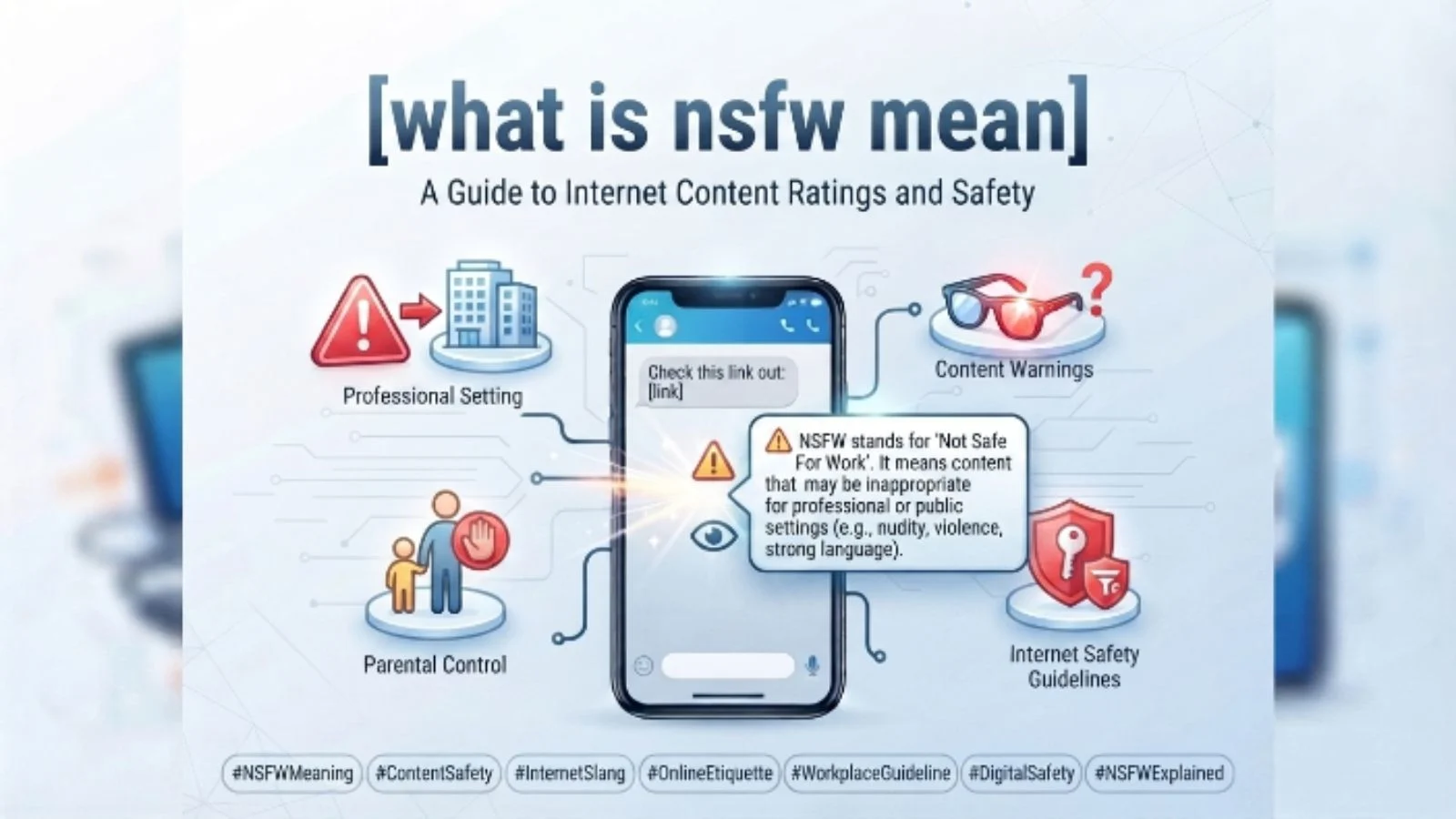
NSFW stands for “Not Safe For Work.”
It is a warning label used to tell people that a photo, video, article, audio clip, or other content may be inappropriate to view in public places, especially at work, school, or around children.
Featured Snippet Definition
NSFW means “Not Safe For Work.” It warns that content may contain nudity, sexual material, graphic violence, offensive language, or other sensitive material that is not suitable to open in public or professional settings.
Simple Meaning of NSFW
In simple words, NSFW means:
“Be careful before opening this because it may contain content you wouldn’t want others around you to see.”
The warning doesn’t always mean something illegal or harmful.
Instead, it simply tells viewers that the content could be:
- Adult content
- Graphic images
- Strong language
- Violent scenes
- Disturbing material
- Sensitive jokes or memes
Think of it as a digital warning sign before clicking.
What Does NSFW Include?
NSFW content can cover many different things depending on the website.
Common examples include:
- Adult images
- Sexual discussions
- Explicit videos
- Graphic violence
- Bloody accident photos
- Offensive memes
- Strong profanity
- Mature comics
- Disturbing medical images
Different websites may have different standards, but the purpose is always the same—warn the viewer before they open the content.
Where Is NSFW Used?
You’ll see NSFW across many websites and online communities.
Social Media
Many users add NSFW before sharing sensitive posts.
Examples include:
- X (formerly Twitter)
- Tumblr
- Discord
- Bluesky
Messaging Apps
Friends may send messages like:
“NSFW—don’t open this at work.”
This warns you before opening an image or video.
Online Forums
Communities discussing adult topics, graphic news, or mature humor often label posts as NSFW.
Workplace Chats
Sometimes coworkers use NSFW jokingly when sharing funny memes with strong language.
Someone may write:
“NSFW attachment.”
This warns that opening the file in an office could be embarrassing.
Why Do People Use NSFW?
People use NSFW for several important reasons.
1. To Warn Others
The biggest reason is simple.
It lets people know they should think before clicking.
2. To Show Respect
Not everyone wants to see mature content.
Adding NSFW gives people a choice.
3. To Follow Community Rules
Many websites require users to mark mature content.
This helps keep communities organized.
4. To Avoid Embarrassing Situations
Imagine opening an explicit image during a meeting.
The NSFW label helps prevent moments like that.
Real-Life Examples of NSFW
Let’s look at some everyday situations.
Example 1
Friend:
“Here’s that video… NSFW.”
Meaning:
The video probably contains adult humor or inappropriate language.
Example 2
Reddit Post:
“NSFW: Graphic injury photo.”
Meaning:
The image may be disturbing.
Example 3
Discord Message:
“Funny meme (NSFW).”
Meaning:
The meme might contain offensive jokes or explicit language.
Example 4
News Website
Headline:
“NSFW Images Included.”
Meaning:
The article contains graphic photos.
Why Is NSFW Important?
The internet has billions of users from different backgrounds.
Not everyone wants to see the same type of content.
NSFW warnings help people decide whether they’re comfortable viewing something.
They also help protect:
- Children
- Students
- Employees
- Public viewers
- Families
NSFW vs Similar Terms
| Term | Meaning | When It’s Used |
|---|---|---|
| NSFW | Not Safe For Work | Adult, graphic, or sensitive content |
| SFW | Safe For Work | Content suitable anywhere |
| CW | Content Warning | Warns about sensitive topics |
| TW | Trigger Warning | Warns about emotional or traumatic topics |
| 18+ | Adults Only | Age-restricted content |
| Spoiler | Reveals story details | Movies, games, TV shows |
NSFW vs SFW
People often confuse these two terms.
NSFW
Means the content may not be appropriate for public viewing.
Example:
- Adult meme
- Explicit video
- Graphic photo
SFW
Means the content is safe to view anywhere.
Example:
- Cute animal photos
- Office memes
- Educational articles
- Nature pictures
When Should You Use NSFW?
You should use NSFW whenever you’re sharing content that others may not expect.
Examples include:
- Adult jokes
- Explicit artwork
- Graphic medical photos
- Violent game screenshots
- Mature videos
- Offensive language
- Disturbing news images
Using the label shows consideration for your audience.
When Should You NOT Use NSFW?
Don’t use NSFW for normal content.
For example:
- Family photos
- Cooking videos
- School projects
- Sports highlights
- Travel pictures
- Educational diagrams
Adding unnecessary warnings can confuse readers.
Different Types of NSFW Content
Not every NSFW warning refers to the same thing.
Adult Content
The most common use.
Includes:
- Nudity
- Sexual material
- Adult comics
Graphic Violence
Some images show:
- Injuries
- Blood
- Crime scenes
These may receive an NSFW label.
Offensive Language
Some memes contain excessive profanity.
While not explicit, workplaces may still consider them inappropriate.
Disturbing Images
Medical procedures or surgeries are sometimes marked NSFW because many viewers find them unsettling.
Why Do Websites Use NSFW Labels?
Many websites encourage or require NSFW labels because they help:
- Protect younger audiences
- Respect workplace environments
- Improve user experience
- Let people choose what they want to view
- Reduce accidental exposure to sensitive material
Is NSFW Always Adult Content?
No.
This is one of the biggest misunderstandings.
NSFW can also describe:
- Graphic accidents
- Surgery videos
- Violent news footage
- Disturbing animal injuries
- Offensive jokes
The content isn’t always sexual.
It simply isn’t suitable for every situation.
Common Misunderstandings About NSFW
Myth 1: NSFW Always Means Porn
False.
It can also refer to graphic violence or disturbing images.
Myth 2: NSFW Means Illegal
False.
Many NSFW posts are legal but intended for adults or mature audiences.
Myth 3: Every Website Uses the Same Rules
False.
Each platform has its own definition of what qualifies as NSFW.
Myth 4: NSFW Is Only for Workplaces
False.
It also applies to schools, libraries, public transport, coffee shops, and anywhere others might see your screen.
Pro Tips for Using NSFW Correctly
Follow these simple guidelines:
- Always label mature content before sharing it.
- Respect community rules.
- Think about your audience.
- Avoid opening NSFW links in public places.
- Check your surroundings before clicking unfamiliar links.
- Don’t assume every NSFW post contains adult content.
- Use the warning honestly instead of as clickbait.
These habits help create a safer and more respectful online experience.
Why Has NSFW Become So Popular?
As social media has grown, people share more photos, videos, and memes than ever before.
A simple four-letter warning quickly tells users whether they should wait before opening something.
Because it’s short and easy to understand, NSFW has become a standard internet abbreviation across forums, chat apps, and social platforms.
Final Thoughts
If you’ve ever wondered what is NSFW mean, the answer is straightforward. NSFW stands for “Not Safe For Work,” and it’s used as a warning that content may not be appropriate to view in public, professional, or family-friendly settings.
Whether you’re browsing social media, chatting with friends, or reading online forums, understanding this abbreviation helps you make informed choices before clicking. It’s a simple label that promotes respect, protects viewers from unexpected content, and creates a better online experience for everyone.
Frequently Asked Questions
What is NSFW mean in texting?
In texting, NSFW warns that a message, image, video, or link contains content that may be inappropriate to open at work, school, or in public.
Is NSFW always about adult content?
No. NSFW can also refer to graphic violence, disturbing images, offensive language, or other mature material.
What is the opposite of NSFW?
The opposite is SFW, which stands for “Safe For Work.” It means the content is appropriate for public and professional settings.
Should I label my posts as NSFW?
Yes. If you’re sharing adult, graphic, or otherwise sensitive material, adding an NSFW warning helps others decide whether and when to view it.