Have you ever opened a message and seen someone type “WTM?” If you paused for a second wondering what it meant, you’re not alone.
Texting slang changes fast, and new abbreviations appear on social media almost every day. While some are easy to understand, others can have multiple meanings depending on the conversation. WTM is one of those abbreviations.
In this guide, you’ll learn the WTM meaning in text, when people use it, where you might see it, and how to reply naturally. By the end, you’ll understand exactly what someone means when they send WTM in a message.
What Does WTM Mean in Text?
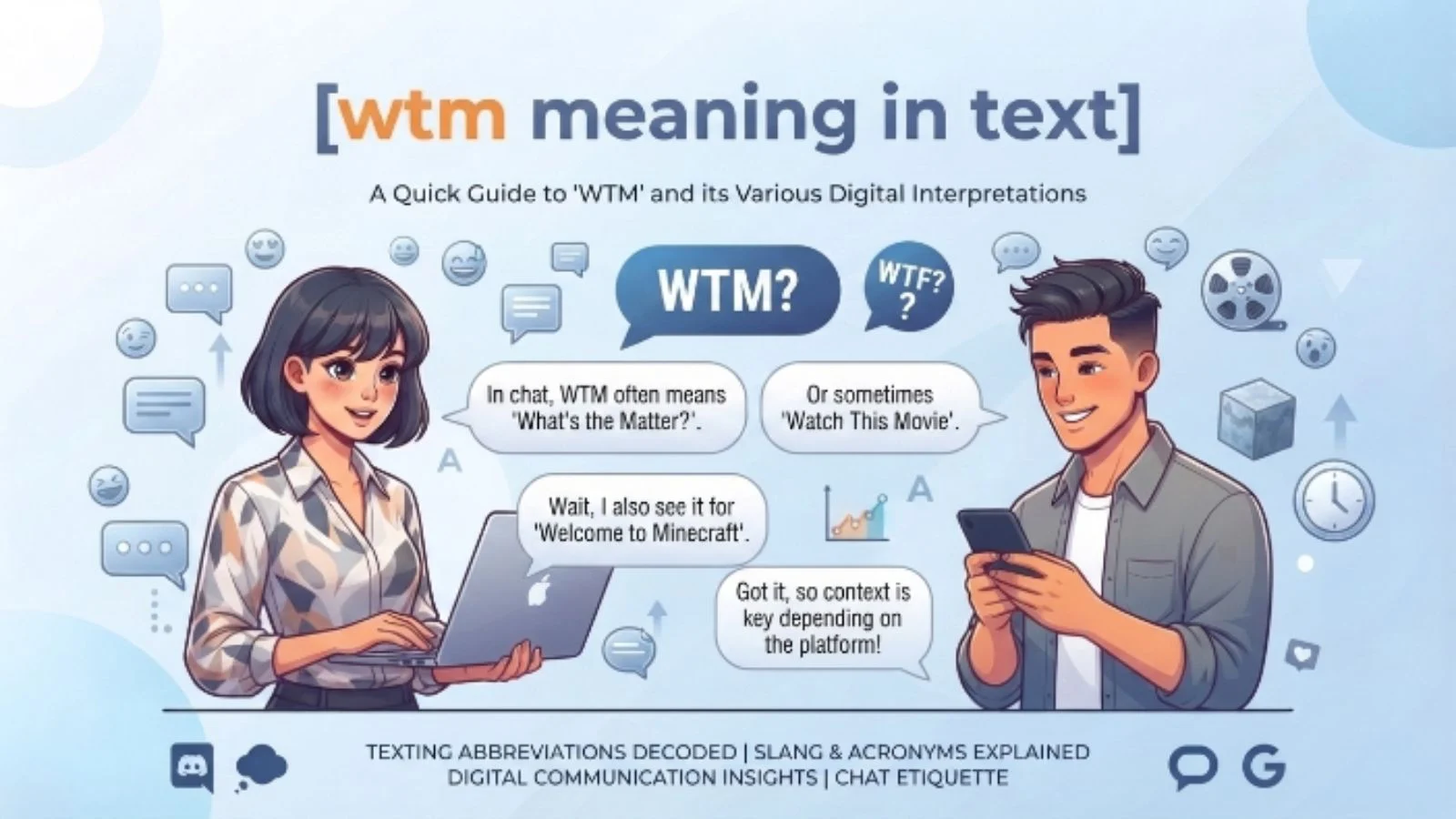
WTM usually stands for “What’s the Move?”
It is a casual way of asking:
- What are we doing?
- What’s the plan?
- Where are we going?
- What’s happening today?
People often use WTM when they want to make plans with friends or see what everyone is doing.
Featured Snippet Definition
WTM means “What’s the Move?” in text messages and on social media. People use it to ask about plans, activities, or what everyone is doing. It is commonly seen in casual conversations among friends.
Simple Meaning of WTM
In simple words, WTM is another way of saying:
“What’s the plan?”
Instead of typing an entire sentence, people shorten it to three letters.
For example:
Alex: WTM tonight?
Jordan: Thinking about grabbing pizza around 8.
Here, Alex is simply asking what everyone plans to do tonight.
What Else Can WTM Mean?
Although “What’s the Move?” is the most common meaning, WTM can have other meanings depending on the conversation.
Some less common meanings include:
- What’s the Matter?
- Whatever That Means
- What’s the Message? (rare)
The correct meaning depends on the context.
For example:
Friend: You seem upset.
You: WTM?
Here, it could mean “What’s the matter?”
However, in texting and social media, “What’s the Move?” is by far the most popular interpretation.
Where Is WTM Used?
You’ll commonly find WTM on many online platforms.
Text Messages
Friends often use it when making plans.
Example:
WTM after school?
Snapchat
Snapchat users send WTM to see who’s free to hang out.
Example:
WTM later?
People use it in DMs or Stories.
Example:
Anyone free tonight? WTM?
TikTok
TikTok comments often include WTM when people are discussing weekend activities.
Example:
WTM this Friday?
Discord
Gaming communities sometimes use WTM before playing together.
Example:
WTM after this match?
Group Chats
This is one of the most common places to see WTM.
Example:
WTM everyone? Movie or bowling?
Why Do People Use WTM?
People like internet slang because it saves time and feels casual.
Here are the main reasons people use WTM:
It Saves Time
Typing three letters is much faster than writing:
“What’s everyone doing tonight?”
It Sounds Friendly
WTM feels relaxed and conversational.
It Starts Conversations
Instead of making plans yourself, you invite others to share ideas.
It Fits Social Media Culture
Modern texting is full of abbreviations like:
- WTM
- WYD
- WYA
- LMK
- BRB
WTM naturally fits this style.
Real-Life Examples of WTM
Below are common conversations where WTM appears.
Example 1
Emma: WTM tonight?
Sophia: Let’s watch the new movie.
Explanation
Emma wants to know everyone’s plans for the evening.
Example 2
Jake: WTM this weekend?
Ryan: I’m thinking about hiking.
Explanation
Jake is asking what Ryan plans to do during the weekend.
Example 3
Chris: WTM after work?
Taylor: Coffee sounds good.
Explanation
Chris wants to make plans after work.
Example 4
Friend: WTM tomorrow?
You: I’m free after lunch.
Explanation
You’re sharing your availability for the next day.
Example 5
Group Chat
Alex: WTM?
Ben: Bowling?
Emma: I’m in.
Explanation
One simple message starts the planning process.
WTM vs Similar Texting Terms
| Abbreviation | Meaning | When It’s Used |
|---|---|---|
| WTM | What’s the Move? | Asking about plans |
| WYD | What Are You Doing? | Asking someone’s current activity |
| WYA | Where You At? | Asking someone’s location |
| LMK | Let Me Know | Requesting an update |
| HMU | Hit Me Up | Asking someone to contact you |
| BRB | Be Right Back | Leaving briefly |
Quick Difference
WTM focuses on future plans.
WYD asks what someone is doing right now.
WYA asks where someone currently is.
When Should You Use WTM?
WTM works best in casual conversations.
Good situations include:
- Asking friends about weekend plans
- Making evening plans
- Starting a group discussion
- Looking for something fun to do
- Planning after school or work
- Chatting on Snapchat or Instagram
Examples:
- WTM after class?
- WTM tonight?
- WTM this weekend?
- WTM after dinner?
- WTM tomorrow?
When You Should Avoid Using WTM
Although WTM is common, it isn’t suitable everywhere.
Avoid using it in:
- Job applications
- Business emails
- Academic writing
- Professional meetings
- Formal customer service conversations
Instead, write the full sentence:
“What are the plans?”
or
“What would you like to do?”
How to Reply to WTM
If someone texts WTM, you have several natural ways to answer.
If You Have Plans
“I’m going to the mall.”
If You’re Free
“I’m free. What do you have in mind?”
If You Want Suggestions
“I don’t know yet. Any ideas?”
If You’re Busy
“I’m working tonight.”
If You Want to Hang Out
“Let’s grab dinner.”
Common Misunderstandings About WTM
Many people misunderstand this abbreviation.
Mistake 1: Thinking It Has Only One Meaning
WTM can mean different things depending on context.
Most of the time, however, it means “What’s the Move?”
Mistake 2: Using It in Professional Messages
Internet slang doesn’t belong in formal communication.
Mistake 3: Assuming Everyone Knows It
Older family members or coworkers may not recognize WTM.
Mistake 4: Confusing WTM with WYD
These abbreviations ask different questions.
WTM asks about plans.
WYD asks about current activities.
Pro Tips for Using WTM Correctly
Follow these simple tips to sound natural.
Use It With Friends
WTM is designed for casual conversations.
Keep the Conversation Going
Instead of replying with one word, suggest an activity.
Example:
WTM?
Let’s go for coffee.
Consider the Context
If someone seems upset, WTM might mean “What’s the matter?” rather than “What’s the move?”
Always read the previous messages first.
Don’t Overuse Slang
Using too many abbreviations can make messages confusing.
Mix normal sentences with texting slang for better communication.
Is WTM Popular in 2026?
Yes. WTM remains a popular abbreviation across texting apps and social media because it is short, easy to type, and useful for making plans.
You’ll frequently see it among teenagers, college students, young adults, gaming communities, and friend groups. While trends change over time, WTM continues to be widely understood in casual online conversations.
Different Ways to Say WTM
If you don’t want to use WTM, you can say:
- What’s the plan?
- What’s everyone doing?
- Any plans today?
- What’s going on?
- Anyone doing anything tonight?
- What are we doing later?
- What’s happening?
- Got any plans?
These phrases communicate the same idea without using an abbreviation.
Final Thoughts
If you’ve ever wondered about the WTM meaning in text, the answer is usually simple: “What’s the Move?” It’s a friendly way to ask about plans, activities, or what people want to do next.
Whether you’re chatting with friends, using Snapchat, Instagram, TikTok, or texting in a group chat, WTM helps start conversations and organize plans quickly. Just remember that it works best in casual settings and should generally be avoided in professional communication.
Once you understand the context, you’ll know exactly how to use WTM confidently in everyday conversations.
Frequently Asked Questions
What does WTM mean in text messages?
WTM usually means “What’s the Move?” It asks about plans or activities with friends.
Is WTM the same as WYD?
No. WTM asks about future plans, while WYD asks what someone is currently doing.
Can WTM mean something else?
Yes. In some conversations, WTM may mean “What’s the Matter?” or another phrase, but “What’s the Move?” is the most common meaning in texting.
Is WTM considered rude?
No. WTM is a casual and friendly abbreviation. It is appropriate for conversations with friends but not for formal or professional communication.