If you have ever received a text message filled with small digital symbols and wondered what they mean, you are not alone.
Emojis are small pictures or icons people use in text messages, social media posts, emails, and online chats. They help show emotions, reactions, ideas, and feelings that can be difficult to express through words alone.
In simple words, emojis add emotion and personality to digital conversations.
For example:
- A smiling face often shows happiness.
- A heart often shows love or affection.
- A thumbs-up often means agreement or approval.
- A laughing face usually means something is funny.
Today, emojis are a major part of online communication. People of all ages use them to make messages feel more friendly, clear, and expressive.
Definition of Emojis in Simple Words
An emoji is a small digital image or symbol used in electronic communication to express emotions, actions, objects, places, or ideas.
They act like visual shortcuts.
Instead of writing:
“I am very happy today.”
Someone might simply send a smiling face.
Instead of writing:
“I agree with you.”
They may send a thumbs-up symbol.
This makes communication faster and often more engaging.
The Origin and History of Emojis
Where Did Emojis Come From?
The word emoji comes from Japanese.
- “E” means picture.
- “Moji” means character.
Together, the word means “picture character.”
Many people confuse emojis with emoticons.
Emojis vs. Emoticons
Emoticons are made using keyboard characters.
Examples:
- 🙂
- 🙁
- 😉
Emojis are actual digital images.
They became popular in Japan during the late 1990s and later spread worldwide.
How Emojis Became Popular
Several factors helped emojis grow:
- Smartphones became common.
- Social media platforms expanded.
- Messaging apps encouraged visual communication.
- Younger users adopted emoji culture quickly.
Today, emojis are available on nearly every smartphone, computer, and messaging platform.
Why People Use Emojis in Text Messages
People use emojis for many reasons.
To Show Emotion
Text messages can sometimes seem cold or confusing.
Adding an emoji helps show the sender’s mood.
Example:
“I was joking.”
Without an emoji, the message may sound serious.
With a playful emoji, the meaning becomes clearer.
To Save Time
A single emoji can replace several words.
Example:
A thumbs-up can mean:
- Okay
- Sounds good
- I agree
- Approved
To Make Conversations Friendlier
Emojis often make messages feel warmer and more personal.
To Add Personality
Different people use different emojis to express their unique communication style.
Most Common Emoji Meanings in Text
Below are some of the most common emoji categories and their meanings.
Happy Face Emojis
Usually represent:
- Happiness
- Kindness
- Positivity
- Excitement
Example:
“Got the job!”
Meaning: The sender feels happy and excited.
Laughing Emojis
Usually mean:
- Something is funny
- The sender is laughing
- A joke was made
Example:
“That story was hilarious.”
Meaning: The sender found the story very funny.
Heart Emojis
Usually represent:
- Love
- Friendship
- Appreciation
- Support
Example:
“Thank you for helping me.”
Meaning: The sender appreciates the other person.
Thumbs-Up Emojis
Usually mean:
- Yes
- Agreement
- Approval
- Confirmation
Example:
“Meet at 5 PM?”
Meaning: The sender agrees.
Sad Face Emojis
Usually show:
- Sadness
- Disappointment
- Sympathy
- Regret
Example:
“I missed the concert.”
Meaning: The sender feels disappointed.
Thinking Emojis
Usually express:
- Curiosity
- Doubt
- Confusion
- Deep thinking
Example:
“Are you sure that’s correct?”
Meaning: The sender is questioning something.
Fire Emojis
Often mean:
- Excellent
- Amazing
- Attractive
- Trending
Example:
“Your new design looks great.”
Meaning: The sender thinks the design is impressive.
Clapping Emojis
Usually mean:
- Congratulations
- Celebration
- Appreciation
- Recognition
Example:
“You passed the exam.”
Meaning: The sender is celebrating the achievement.
Emoji Meanings Table
| Emoji Category | Common Meaning | Usage Context |
|---|---|---|
| Smiling Face | Happiness | Friendly chats |
| Laughing Face | Humor | Jokes and funny stories |
| Heart | Love and care | Relationships and friendships |
| Thumbs-Up | Agreement | Approvals and confirmations |
| Sad Face | Disappointment | Bad news or sympathy |
| Thinking Face | Questioning | Confusion or curiosity |
| Fire | Excellent | Compliments and praise |
| Clapping Hands | Celebration | Success and achievements |
Real-Life Emoji Examples in Text Messages
Example 1
Person A: “I got an A on my test.”
Person B: “That’s awesome!”
Explanation:
The reply shows excitement and congratulations.
Example 2
Person A: “I’ll be there in 10 minutes.”
Person B: “Okay.”
Explanation:
The response confirms the message was received.
Example 3
Person A: “I can’t stop laughing at that video.”
Person B: “Me too.”
Explanation:
Both people find the video funny.
Example 4
Person A: “Thank you for helping me today.”
Person B: “You’re welcome.”
Explanation:
The conversation shows gratitude and kindness.
Example 5
Person A: “I failed my driving test.”
Person B: “I’m sorry to hear that.”
Explanation:
The response shows sympathy and support.
How Emoji Meanings Change Based on Context
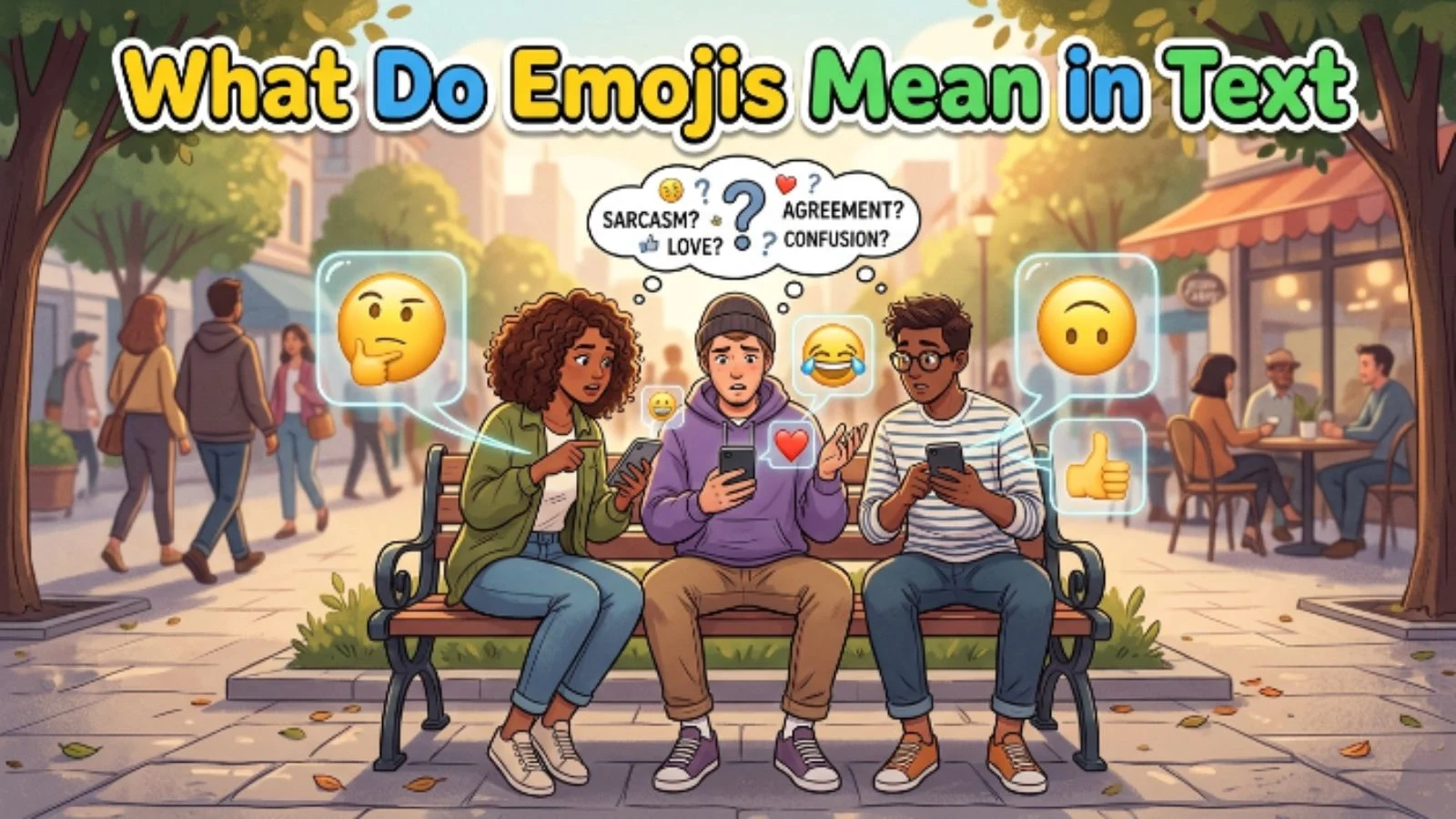
One important thing to remember is that emojis do not always have a single meaning.
Context matters.
Example
A heart may mean:
- Romantic love
- Family love
- Friendship
- Gratitude
The meaning depends on:
- Who sent it
- Who received it
- The conversation topic
The same emoji can mean different things in different situations.
Personality Traits Associated with Emoji Usage
Researchers have found that emoji use can sometimes reflect communication styles.
People Who Use Many Emojis
They may appear:
- Friendly
- Social
- Expressive
- Outgoing
People Who Use Few Emojis
They may appear:
- Formal
- Professional
- Direct
- Reserved
Frequent Heart Users
Often seem:
- Caring
- Supportive
- Affectionate
Frequent Humor Emoji Users
Often seem:
- Playful
- Funny
- Relaxed
These are general observations and not strict rules.
Emoji Use in Different Situations
Friends
Friends often use emojis casually and frequently.
Examples include:
- Happy faces
- Hearts
- Laughing symbols
Family
Family members may use emojis to show:
- Love
- Support
- Encouragement
Dating and Relationships
Emojis are commonly used to express:
- Affection
- Flirting
- Interest
- Emotional connection
Workplace Communication
Professional communication usually uses fewer emojis.
Common workplace choices include:
- Thumbs-up
- Smiling face
- Celebration symbols
Too many emojis can appear unprofessional in some business settings.
Common Emoji Misconceptions
Many people misunderstand emoji meanings.
Mistake 1: Assuming Every Emoji Means the Same Thing
Different people interpret emojis differently.
Always consider the context.
Mistake 2: Using Too Many Emojis
A message packed with emojis may become confusing.
Clear communication is still important.
Mistake 3: Ignoring Age Differences
Younger and older users sometimes interpret emojis differently.
An emoji that seems harmless to one group may have a different meaning to another.
Mistake 4: Assuming Global Meanings
Emoji meanings can vary between cultures and countries.
What feels normal in one culture may seem unusual in another.
Modern Emoji Trends in 2026
Emoji communication continues to evolve.
More Emotional Expression
People increasingly use emojis to express subtle emotions.
Mixed Emoji Combinations
Many users combine multiple emojis to create more detailed messages.
Professional Emoji Usage
Workplaces are becoming more comfortable with limited emoji use.
Cross-Platform Communication
People expect emojis to work consistently across apps and devices.
Visual Communication Growth
Younger generations often blend text, images, GIFs, and emojis together.
Benefits of Using Emojis
Using emojis correctly can offer several benefits.
Better Communication
They help clarify emotions.
Faster Messaging
One emoji can communicate a complete reaction.
Stronger Connections
They can make conversations feel more personal.
Increased Engagement
Messages with emojis often feel more interesting and friendly.
When You Should Avoid Emojis
Although useful, emojis are not always appropriate.
Avoid excessive emoji use in:
- Formal business proposals
- Legal documents
- Academic papers
- Serious professional communication
- Sensitive discussions
In these situations, clear written language is usually best.
Tips for Understanding Emoji Meanings
If you are unsure about an emoji:
Read the Entire Conversation
Context often reveals the intended meaning.
Consider the Sender
Different people use emojis differently.
Look for Patterns
Many users repeatedly use certain emojis in similar ways.
Ask for Clarification
If the meaning is unclear, simply ask.
Clear communication is always better than guessing.
Frequently Asked Questions
What do emojis mean in text messages?
Emojis are digital symbols that help express emotions, reactions, ideas, or feelings in written conversations.
Why do people use emojis when texting?
People use emojis to make messages more expressive, friendly, and easier to understand.
Do emojis have the same meaning for everyone?
No. Meanings can vary based on age, culture, platform, and conversation context.
Are emojis professional?
Some emojis are acceptable in casual workplace communication, but excessive use can appear unprofessional.
What is the difference between emojis and emoticons?
Emoticons use keyboard characters like “:)” while emojis are graphical symbols built into devices.
Can emojis replace words?
Sometimes. A single emoji can communicate a reaction or emotion that would otherwise require several words.
Why do emoji meanings change over time?
Language and online culture evolve. As people create new trends, emoji meanings can shift or expand.
Conclusion
Understanding what emojis mean in text messages can make online communication easier, clearer, and more enjoyable. Emojis help people express emotions, reactions, humor, appreciation, and personality in ways that plain text often cannot. While many emojis have common meanings, context always plays an important role. The same symbol can mean different things depending on the situation and the people involved. By learning common emoji meanings, recognizing modern usage trends, and avoiding common misunderstandings, you can communicate more confidently in today’s digital world. Keep exploring new emoji meanings and pay attention to how people use them in everyday conversations to become a more effective communicator.