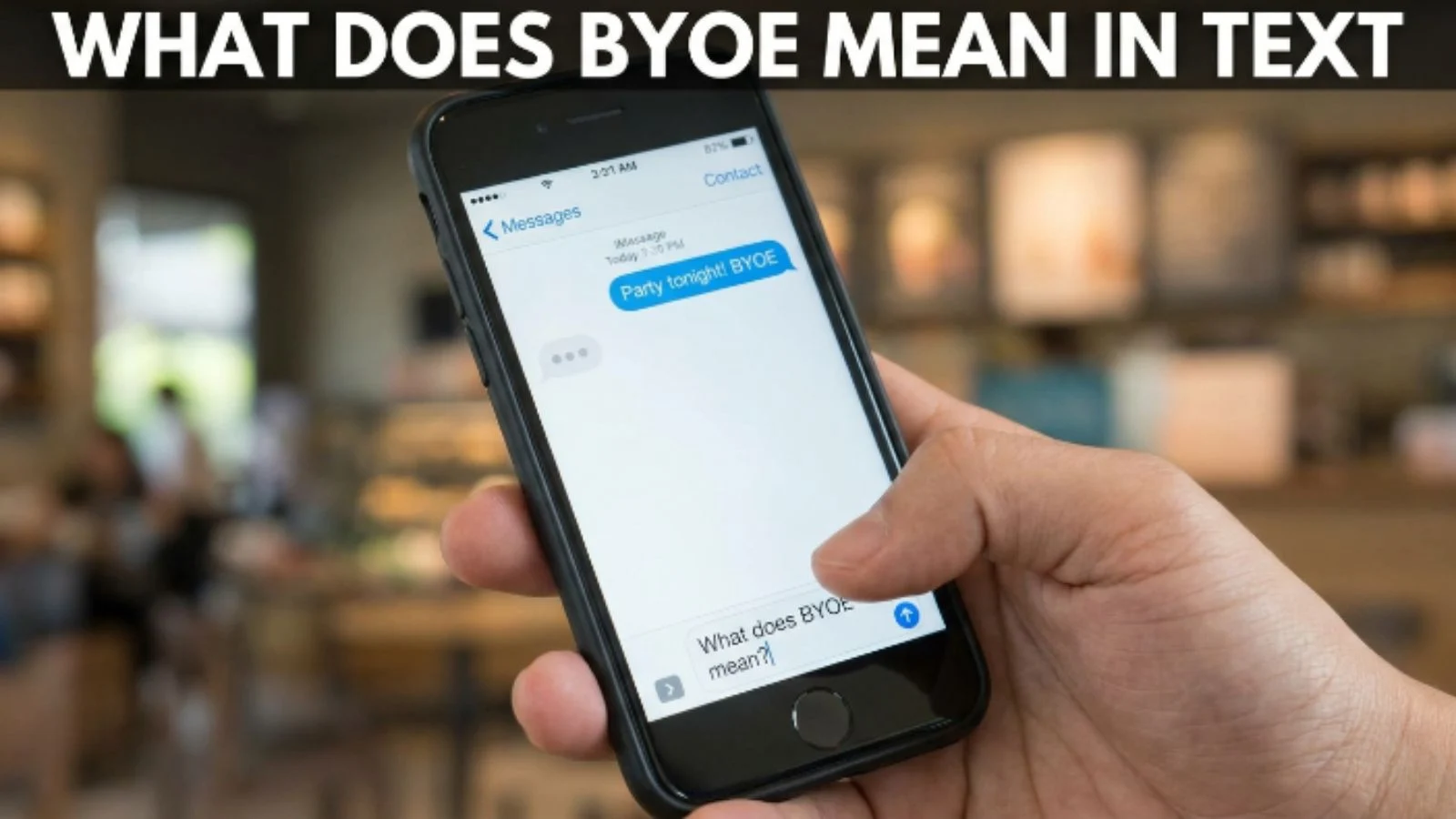
If you received a message containing BYOE and wondered what it means, you’re not alone. Internet slang and texting abbreviations change quickly, and new users often find them confusing.
In texting, social media, group chats, emails, and online invitations, BYOE usually stands for “Bring Your Own Everything.”
It is a phrase used when people are invited to an event and are expected to bring whatever they need instead of relying on the host to provide it.
For example, if someone texts:
“We’re having a beach party this weekend. BYOE!”
They mean that guests should bring their own food, drinks, chairs, towels, sunscreen, and anything else they may need.
The phrase is an expanded version of the more common abbreviation BYOB, which means “Bring Your Own Beverage” or “Bring Your Own Beer.”
As social gatherings became more casual and personalized, BYOE became popular because it covers more than just drinks.
In this guide, you’ll learn exactly what BYOE means, where it came from, how people use it, real-life examples, common mistakes, and how it is used in 2026.
BYOE Meaning in Simple Words
BYOE = Bring Your Own Everything
It means:
- Bring your own food
- Bring your own drinks
- Bring your own supplies
- Bring your own equipment
- Bring anything you might need
The host may provide a location or basic setup, but guests are responsible for their own items.
Simple Definition
BYOE is a casual way of telling people to come prepared and bring their own necessities.
What Does BYOE Mean in Text Messages?
In texting, BYOE is often used when planning:
- Parties
- Picnics
- Barbecues
- Beach trips
- Camping adventures
- Outdoor events
- Community gatherings
- Workplace social events
Example
Text:
“Movie night at my place tonight. BYOE.”
Meaning:
Everyone should bring their own snacks, drinks, blankets, or anything they want during the movie.
Explanation:
The host is not supplying everything, so guests should come prepared.
The Full Form of BYOE
| Abbreviation | Full Form |
|---|---|
| BYOE | Bring Your Own Everything |
The phrase focuses on self-sufficiency and preparation.
Instead of expecting the organizer to provide all supplies, attendees take responsibility for their own needs.
Origin and History of BYOE
BYOE developed from a family of similar abbreviations.
Early Related Terms
Before BYOE became common, people frequently used:
| Term | Meaning |
|---|---|
| BYOB | Bring Your Own Beverage |
| BYOD | Bring Your Own Device |
| BYOF | Bring Your Own Food |
| BYOC | Bring Your Own Chair |
| BYOT | Bring Your Own Towel |
Over time, people began combining all these ideas into one phrase:
Bring Your Own Everything.
This eliminated the need to list every item individually.
Growth of BYOE
The term gained popularity because:
- Outdoor gatherings increased
- Informal events became more common
- People preferred personalized items
- Social media invitations spread quickly
By the early 2020s, BYOE appeared regularly in:
- Facebook event pages
- Group chats
- Community meetups
- Workplace gatherings
- Camping groups
By 2026, it remains a widely recognized invitation phrase.
How BYOE Is Used Today
The meaning can vary slightly depending on context.
Social Events
Most commonly, BYOE means guests bring all personal supplies.
Example:
“Community picnic tomorrow. BYOE.”
Explanation:
Attendees should bring their own food, drinks, and picnic gear.
Outdoor Activities
For camping or hiking trips, BYOE means bringing all necessary equipment.
Example:
“Weekend camping trip is BYOE.”
Explanation:
Everyone should pack their own tent, food, and supplies.
Work Events
Some workplace events use BYOE informally.
Example:
“Friday rooftop lunch is BYOE.”
Explanation:
Employees should bring their own lunch and drinks.
Virtual Gatherings
Even online events may use BYOE humorously.
Example:
“Virtual game night. BYOE snacks.”
Explanation:
Participants should have their own refreshments ready.
Real-Life BYOE Text Examples
Example 1
Text:
“Beach day tomorrow. BYOE.”
Meaning:
Bring whatever you need for the beach.
Explanation:
This may include food, drinks, sunscreen, towels, and chairs.
Example 2
Text:
“Family barbecue starts at 5 PM. BYOE.”
Meaning:
Guests bring their own food and drinks.
Explanation:
The host may only provide the location and grill.
Example 3
Text:
“Outdoor movie night. BYOE blankets.”
Meaning:
Bring your own blankets.
Explanation:
People should bring items that help them stay comfortable.
Example 4
Text:
“Camping trip this weekend. BYOE.”
Meaning:
Bring all necessary camping equipment.
Explanation:
Each person is responsible for their own gear.
Example 5
Text:
“Community event at the park. BYOE.”
Meaning:
Attendees should come prepared.
Explanation:
Food, drinks, and personal supplies may not be provided.
Short Dialogues Using BYOE
Dialogue 1
Alex: Are drinks provided?
Sam: Nope, it’s BYOE.
Alex: Got it. I’ll bring my own.
Explanation:
Sam tells Alex that everyone is responsible for their own refreshments.
Dialogue 2
Emma: What should I bring to the picnic?
Lily: It’s BYOE.
Emma: I’ll pack food and drinks.
Explanation:
Emma understands she must bring her own supplies.
Dialogue 3
Jake: Does the campsite provide equipment?
Ryan: No, it’s BYOE.
Jake: Thanks for letting me know.
Explanation:
Jake learns that he needs to bring his own camping gear.
Dialogue 4
Sophia: Will there be snacks?
Noah: Maybe, but it’s BYOE.
Sophia: I’ll bring some just in case.
Explanation:
Sophia decides not to rely on others.
Personality Traits Associated With BYOE Users
People who use or appreciate BYOE events often display certain characteristics.
Independent
They prefer taking responsibility for their own needs.
Prepared
They like planning ahead.
Practical
They understand that sharing responsibility makes events easier.
Flexible
They adapt easily to casual event arrangements.
Community-Minded
Everyone contributes rather than expecting one person to do all the work.
Why People Use BYOE
There are several reasons why the term remains popular.
Reduces Host Expenses
Hosts do not need to purchase everything.
Encourages Personal Preferences
People can bring exactly what they like.
Simplifies Planning
Organizers spend less time coordinating supplies.
Promotes Fairness
Everyone shares responsibility.
Makes Large Events Easier
Managing hundreds of guests becomes more practical.
BYOE on Social Media
The abbreviation appears frequently on:
- Instagram captions
- Facebook events
- WhatsApp groups
- Messenger chats
- Discord servers
- Telegram groups
- Community pages
Example Social Media Post
“Sunset gathering at the lake this Saturday. BYOE and enjoy the evening.”
Explanation:
Participants should bring whatever they need for comfort and enjoyment.
BYOE in Different Situations
At a Picnic
Bring:
- Food
- Drinks
- Plates
- Napkins
- Chairs
At the Beach
Bring:
- Sunscreen
- Towels
- Water
- Snacks
- Beach chairs
At a Camping Trip
Bring:
- Tent
- Sleeping bag
- Food
- Water
- Flashlight
At a Community Event
Bring:
- Personal snacks
- Water bottle
- Chair
- Sun protection
Common Misconceptions About BYOE
Many people misunderstand the phrase.
Mistake 1: Thinking It Only Means Drinks
Some assume BYOE is the same as BYOB.
Reality:
BYOE covers all necessary items.
Mistake 2: Assuming the Host Provides Nothing
Sometimes hosts still provide basic supplies.
Reality:
BYOE simply encourages guests to bring their own essentials.
Mistake 3: Bringing Only One Item
People may bring just a drink.
Reality:
The phrase suggests broader preparation.
Mistake 4: Assuming It Is Formal
BYOE is usually casual and friendly.
Reality:
It is most common among friends, families, and community groups.
Similar Texting Abbreviations
BYOB
Bring Your Own Beverage.
BYOD
Bring Your Own Device.
BYOF
Bring Your Own Food.
BYOC
Bring Your Own Chair.
BYOT
Bring Your Own Towel.
BYOG
Bring Your Own Gear.
These abbreviations are closely related to BYOE.
BYOE vs BYOB
| Feature | BYOE | BYOB |
|---|---|---|
| Meaning | Bring Your Own Everything | Bring Your Own Beverage |
| Scope | Broad | Limited |
| Supplies Included | Food, drinks, gear, equipment | Drinks only |
| Common Events | Camping, picnics, beach trips | Parties and dinners |
| Responsibility | High | Low |
BYOE requires more preparation than BYOB.
Modern BYOE Usage in 2026
The term continues evolving.
Today, people use BYOE for:
Remote Meetups
“Online trivia night. BYOE snacks.”
Fitness Groups
“Morning workout in the park. BYOE water bottle.”
Creator Events
“Photography walk this weekend. BYOE camera.”
Gaming Meetups
“Retro gaming night. BYOE controller.”
Study Groups
“Library session tonight. BYOE materials.”
Modern users often add humor by pairing BYOE with specific activities.
When You Should Use BYOE
Use BYOE when:
- Planning a casual event
- Inviting friends to outdoor activities
- Organizing group gatherings
- Hosting community events
- Arranging camping trips
- Coordinating picnics
Example
“Saturday bonfire at the lake. BYOE.”
This quickly tells everyone to come prepared.
When You Should Not Use BYOE
Avoid using BYOE when:
- Formal business events are involved
- Wedding invitations are being sent
- Professional conferences require clear instructions
- Guests are expected to be fully hosted
In formal settings, detailed instructions are usually better.
How to Respond to BYOE
If someone sends BYOE, you can respond with:
- “Sounds good.”
- “What should I bring?”
- “I’ll bring my own supplies.”
- “Got it.”
- “Thanks for the heads-up.”
These responses show that you understand the expectation.
FAQs About BYOE
What does BYOE stand for in text?
BYOE stands for Bring Your Own Everything. It tells attendees to bring whatever supplies or items they need.
Is BYOE the same as BYOB?
No. BYOB only refers to beverages, while BYOE includes food, drinks, equipment, and other necessities.
Is BYOE rude?
No. It is usually a practical and friendly way to organize events and share responsibility.
Where is BYOE commonly used?
It is commonly used in text messages, social media posts, event invitations, group chats, camping trips, picnics, and outdoor gatherings.
Can BYOE be used jokingly?
Yes. People often use it humorously for virtual events or casual gatherings.
What should I bring to a BYOE event?
Bring anything you may personally need, such as food, drinks, chairs, equipment, or supplies relevant to the event.
Is BYOE still popular in 2026?
Yes. BYOE remains widely used in online invitations, community events, outdoor activities, and social gatherings.
Conclusion
Understanding what BYOE means in text can help you avoid confusion when receiving invitations, social media posts, or group chat messages. The abbreviation stands for “Bring Your Own Everything,” meaning participants are expected to bring whatever supplies, food, drinks, equipment, or personal items they need. It evolved from popular terms like BYOB and has become a convenient way to communicate shared responsibility at casual events. Whether you’re attending a picnic, camping trip, beach outing, or community gathering, seeing BYOE means it’s best to come prepared. As digital communication continues to evolve in 2026, knowing common abbreviations like BYOE helps you communicate confidently and understand modern online conversations more effectively.