Have you ever been reading a text message and come across the letters IMF? If so, you might have felt a bit confused. Today, people use many short terms when they type on their mobile phones. These short terms are called text abbreviations or acronyms. They help people type much faster. However, if you do not know the secret meaning behind the letters, you can easily get mixed up.
In this comprehensive guide, we will look at exactly what IMF means in text messages and on social media platforms. We will explain everything using very simple language. You will see real-life examples, explore the history of the term, and learn how to avoid common mistakes. By the end of this article, you will be an expert on using this term.
The Short Answer: What Does IMF Mean?
In digital communication, the letters IMF usually stand for one of three major phrases. The true meaning depends completely on who is sending the message and the topic they are discussing.
Here are the three most common definitions that you will see online:
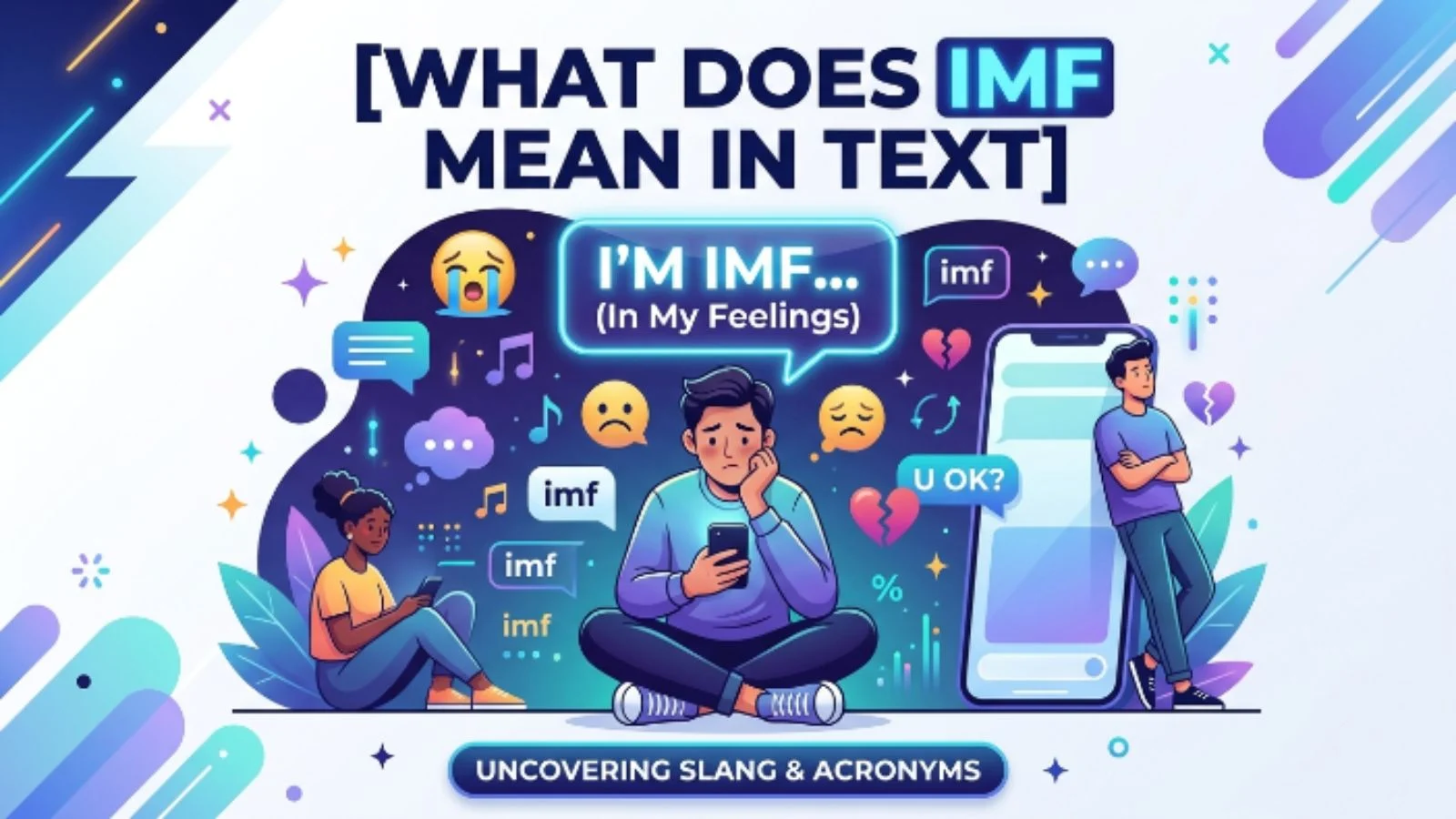
- In My Feelings: This is a very common piece of internet slang. People use it when they are feeling highly emotional, sad, romantic, or thoughtful.
- International Monetary Fund: This is a huge global organization that deals with money, global banks, and international economics.
- Impossible Mission Force: This is a fictional top-secret spy agency from the famous movie series named Mission Impossible.
Most of the time, young people use the first meaning when chatting with their friends on apps like TikTok, Instagram, and WhatsApp. Business professionals, news reporters, and university students use the second meaning. Movie fans use the third meaning. Let us look closely at each definition so you can understand them perfectly.
Meaning 1: In My Feelings (Social Media Slang)
This is by far the most common version of the abbreviation you will encounter in casual text messages. When a person is experiencing a surge of deep emotions, they say they are IMF.
The Origin and History
The phrase “in my feelings” has been used in spoken language for many years, especially in hip-hop culture. However, it became a massive global phenomenon around 2018 when the famous musical artist Drake released a hit song titled “In My Feelings.”
After the song went viral, people started shortening the long phrase to IMF in their text messages to save time. By 2026, it has become a standard emotional shortcut used in daily texting, video captions, and online blog comments.
Real-Life Chat Examples
Here are some short dialogues to show you exactly how friends use this emotional shortcut on their phones.
Example A:
Jessie: I just watched that old movie about the lonely dog again.
Taylor: Oh no, that movie always puts me completely IMF too.
Explanation for beginners: Taylor uses the term to say that the sad dog movie makes them feel highly emotional and tearful.
Example B:
Jordan: Listening to these slow, romantic songs on a rainy evening.
Morgan: You are definitely IMF tonight, my friend!
Explanation for beginners: Morgan uses the abbreviation to point out that Jordan is in a sentimental and deeply thoughtful mood because of the music and weather.
Example C:
Chris: I really miss our old school friends and the fun times we had.
Pat: Stop, you are going to get me all IMF during my lunch break.
Explanation for beginners: Pat uses the acronym to tell Chris that thinking about old memories is making them feel nostalgic and sad.
Usage Context and Personality Traits
People who use this version of the slang are typically open about their emotions. They are often expressive, empathetic, and highly active on social media. You will find this term in casual group chats, late-night text conversations, and captions on lifestyle videos.
Meaning 2: International Monetary Fund (Finance and News)
If you are reading a text message about global news, politics, or university finance homework, the letters mean something completely different. In this world, they stand for the International Monetary Fund.
What is the International Monetary Fund?
This is a real-world organization made up of 190 countries. It works to foster global monetary cooperation, secure financial stability, and reduce poverty around the world. It provides loans to nations that are facing major economic crises.
The Origin and History
The organization was created in July 1944 during a famous conference called the Bretton Woods Conference. Because the full name is quite long, people in banking, government, and journalism have used the short term for decades. When economists text each other or share quick updates, they always use the short three-letter form.
Real-Life Chat Examples
Here is how students and professionals text about this financial institution.
Example A:
Professor: Remember to read the new economic report from the IMF before class tomorrow.
Student: I will download the official global banking document from their website tonight.
Explanation for beginners: The professor uses the shortcut to tell the student to read a financial document published by the international money organization.
Example B:
Alex: Why is the value of the currency changing so much on the news?
Ryan: The IMF just announced a brand new loan package for that country.
Explanation for beginners: Ryan uses the term to explain that the global monetary group is giving financial aid to a specific nation.
Example C:
Nisha: Do you know who works to keep the global banking system stable?
Sam: Yes, that is one of the main jobs of the IMF.
Explanation for beginners: Sam uses the three letters to name the global institution that looks after international financial stability.
Usage Context and Personality Traits
The people who write this version are usually professionals, economic journalists, professors, and mature adults. The tone of these text messages is always serious, informative, and professional. You will see it used in work emails, news alerts, and academic group chats.
Meaning 3: Impossible Mission Force (Pop Culture)
The third meaning belongs entirely to the world of movies, entertainment, and pop culture. If you are texting a friend about action films, the letters stand for the Impossible Mission Force.
What is the Impossible Mission Force?
This is a fake, fictional spy organization from the popular Mission Impossible television shows and movies starring the actor Tom Cruise. In the films, the main characters work for this secret agency to save the world from dangerous villains.
The Origin and History
The term was invented by Hollywood writers in the 1960s for the original Mission Impossible television series. Over the decades, as the movie franchise grew into a multi-billion dollar success, the term became famous worldwide. Fans of the movies use the short term when discussing plotlines, characters, and action scenes via text message.
Real-Life Chat Examples
Here are examples of how movie fans use this entertainment shortcut.
Example A:
Liam: The main character just jumped off a massive mountain on a motorcycle!
Noah: That is exactly what you expect from a top agent of the IMF!
Explanation for beginners: Noah uses the shortcut to refer to the elite fictional spy group that the movie character belongs to.
Example B:
Emma: Is the secret spy agency in this film supposed to be the CIA?
Lucas: No, in this specific movie universe, they work for the IMF.
Explanation for beginners: Lucas explains to Emma that the movie characters belong to the fictional spy force rather than a real-world government agency.
Usage Context and Personality Traits
The individuals who use this definition are movie buffs, pop culture fans, and gamers. The tone is always playful, excited, and casual. It is most commonly seen in online movie review forums, entertainment threads, and direct texts between film enthusiasts.
Quick Comparison Table
To help you view and compare these definitions at a single glance, we have created a helpful table underneath. It maps out the three definitions side by side.
| The Term | What It Stands For | Main Target Audience | Typical Texting Environment |
| IMF | In My Feelings | Teenagers and Gen Z | Instagram, TikTok, personal group chats |
| IMF | International Monetary Fund | Economists, students, adults | News feeds, work emails, study groups |
| IMF | Impossible Mission Force | Movie fans, pop culture lovers | Entertainment blogs, cinema group texts |
Common Mistakes and Misconceptions
Because this single abbreviation has three vastly different meanings, people often make funny or confusing errors. Let us look at the most common slip-ups so you can avoid making them yourself.
Misinterpreting Financial News
A major mistake happens when a young person sees a headline like “The IMF is worried about global inflation” and thinks it means a global leader is feeling sad or emotional. In reality, the headline is talking about a serious global banking institution, not human emotions.
Using Slang in Professional Work Emails
If you are sending an email to your office boss or a university teacher, do not type, “I am feeling very IMF today.” Your boss might think you are trying to talk about international banking policies. This can lead to a highly awkward misunderstanding. Always write out your sentences fully when speaking to superiors.
Typos and Similar Text Terms
Sometimes people confuse this term with other common internet shortcuts that look very similar. Here is a small list of acronyms that are close in spelling but mean completely different things:
- IMO: This stands for In My Opinion.
- IMO: This can also stand for the International Maritime Organization in shipping.
- IFY: This stands for I Feel You (meaning I understand you).
- IRL: This stands for In Real Life.
Be sure to double-check the middle letter before you hit the send button on your phone.
How to Determine the Correct Meaning in a Text
If a friend or coworker sends you a message containing this acronym, you do not have to guess the meaning blindly. You can easily solve the puzzle by looking at the context of the conversation. Use these three simple rules to find the answer.
Check the Topic of Conversation
Look at the surrounding words in the chat. If the text mentions things like music, crying, crushes, relationships, or sadness, the person is talking about being In My Feelings. If the message mentions money, inflation, interest rates, or governments, it is the International Monetary Fund. If it mentions stunts, spy devices, or movies, it is the Impossible Mission Force.
Analyze the Time of Day
While this is not a strict law, it is a very helpful hint. Slang terms like “In My Feelings” are often sent during late-night chats when people are relaxing and talking about personal topics. Financial and professional texts are almost always sent during day-time school or business hours.
Observe the Typing Style
Look at how the rest of the text message is formatted. If the message does not use capital letters, lacks punctuation, and uses informal words, it is definitely the social media slang. If the text is perfectly capitalized and uses proper grammar, it is highly likely to be the financial organization.
Modern Examples Updated for 2026
Language continues to change as we move through the year 2026. Today, the slang version has evolved slightly. On short-video platforms, creators use the term to describe a specific style of background music. If a video uses a soft, slow piano track, the comment section will often say, “This audio clip puts me straight into IMF mode.”
In the business world, the economic term is also highly active in 2026 due to ongoing discussions about digital currencies, electronic banking, and global trade shifts. Therefore, you are likely to see both versions appearing on your phone screens quite frequently.
Frequently Asked Questions
1. Is IMF a rude or inappropriate word?
No, it is a completely safe and clean term. None of its meanings involve bad language, insults, or inappropriate concepts. You can use it freely in any conversation without worrying about offending anyone.
2. Can I use the slang version of IMF with my parents?
You can use it if your parents understand modern internet culture. However, if they are older or do not use social media, they might get confused and think you are talking about international bank news. It is usually best to explain it to them first.
3. Why do people love using text abbreviations so much?
People love them because typing out full sentences on small mobile screens can be slow and tiring. Abbreviations allow people to convey complex feelings or long organizational titles in just a fraction of a second.
4. Is In My Feelings only used when a person is sad?
No, it can be used for any strong emotion. You can use it when you feel deeply touched by a kind action, when you feel intensely romantic, or when you feel incredibly nostalgic about old times with your family.
5. How do you pronounce IMF when speaking out loud?
When speaking out loud, you always pronounce it by saying each individual letter clearly. You say it as “I-M-F.” You do not try to pronounce it as a single word.
6. Is the Impossible Mission Force a real government group?
No, it is entirely fake. It was created by movie writers in Hollywood for entertainment purposes. The real foreign intelligence agency in the United States is called the CIA, while in the United Kingdom, it is called MI6.
7. Does IMF have any meaning in the medical world?
Yes, in medical text books, it can sometimes stand for Intermaxillary Fixation, which is a surgical procedure used to wire a broken jaw together. However, this is a highly specific term used only by doctors and dentists.
Conclusion
Mastering modern text shortcuts is a fantastic way to improve your digital communication skills. Whether you are comforting a close friend who is deeply In My Feelings, reviewing a school report about the International Monetary Fund, or chatting about the latest action movie involving the Impossible Mission Force, you now have all the tools you need to understand this acronym completely.
If you want to keep expanding your vocabulary and stay updated on the latest online trends, please take a look at our other simple language guides. Learning about modern communication can make your everyday digital conversations much smoother and more enjoyable.