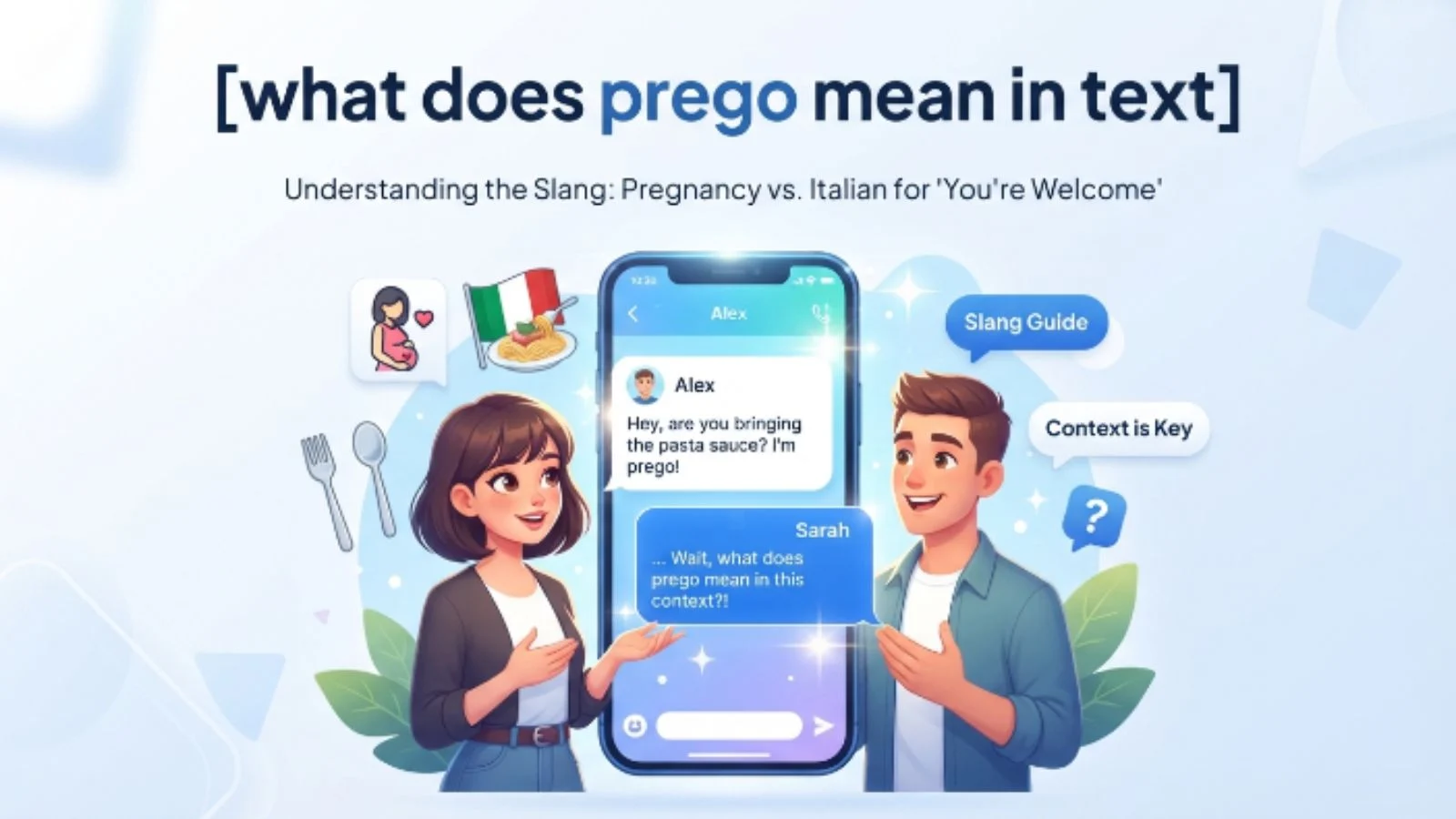
Have you ever received a message saying “prego” and wondered what it actually meant? At first glance, it might look like a typo, slang, or even a random word. But depending on the conversation, “prego” can have different meanings.
In most text conversations, prego is an Italian word that means “you’re welcome,” “please,” or “go ahead.” However, in informal English texting, some people also use “prego” as short slang for “pregnant.”
The correct meaning depends entirely on the context of the conversation.
In this guide, you’ll learn exactly what “prego” means in text, where it’s used, why people use it, examples, common misunderstandings, and when you should use it yourself.
What Does Prego Mean in Text?
Quick Answer
Prego most commonly means:
- “You’re welcome.”
- “Please.”
- “Go ahead.”
These meanings come directly from the Italian language.
In some English text conversations, especially on social media, “prego” may also be used as shorthand for “pregnant,” although this usage is much less common.
Featured Snippet Definition
Prego in text usually refers to the Italian word meaning “you’re welcome,” “please,” or “go ahead.” In some informal English conversations, people may also use prego as a casual abbreviation for pregnant, but the intended meaning depends on the context.
Simple Meaning of Prego
In simple words, prego is a polite word.
Imagine these conversations:
Person A: “Thanks for helping me.”
Person B: “Prego.”
Here, it simply means:
“You’re welcome.”
Another example:
Someone asks you to enter a room.
You reply:
“Prego.”
Here it means:
“Please, come in.”
So instead of having only one meaning, prego changes depending on the situation.
Where Is Prego Used?
You might see prego on many online platforms and messaging apps.
Common places include:
- Instagram DMs
- Facebook Messenger
- Snapchat
- TikTok comments
- Discord
- Telegram
- Online gaming chats
- Language-learning communities
- Conversations with Italian speakers
Sometimes people use it because they speak Italian.
Other times they simply enjoy using foreign words in casual conversations.
Why Do People Use Prego?
There are several reasons people type prego instead of using English words.
1. They’re Speaking Italian
This is the most common reason.
Italian speakers naturally reply with prego instead of saying “you’re welcome.”
Example:
Friend: Thanks!
You: Prego!
2. They Want to Sound Friendly
Many people enjoy using international expressions.
Words like:
- Ciao
- Bonjour
- Gracias
- Prego
have become familiar worldwide.
3. They’re Learning Italian
Language learners often practice everyday words while texting friends.
Since prego is one of the first Italian words beginners learn, they frequently use it in conversations.
4. They Mean “Pregnant”
In some informal chats, someone might write:
“She’s prego.”
Here, prego simply means:
Pregnant.
This slang is far less common than the Italian meaning, but it still appears online.
Examples of Prego in Text
Understanding examples makes the meaning much easier.
Example 1
Alex: Thanks for explaining that.
Emma: Prego!
Meaning: You’re welcome.
Example 2
Guest: Can I sit here?
Host: Prego.
Meaning: Please, go ahead.
Example 3
Friend: Thanks for dinner.
You: Prego.
Meaning: You’re welcome.
Example 4
Friend 1: Did you hear about Sarah?
Friend 2: Yeah, she’s prego.
Meaning: Sarah is pregnant.
Example 5
Tourist: Thank you!
Italian Waiter: Prego.
Meaning: You’re welcome.
What Does Prego Mean in Italian?
The word prego comes from the Italian verb pregare, which originally means to pray or to ask politely.
Over time, it became a versatile everyday expression.
Depending on the conversation, Italians use it to mean:
- You’re welcome
- Please
- Go ahead
- Come in
- After you
- Don’t mention it
Because of these many meanings, context is very important.
Prego vs Similar Terms
| Word | Meaning | Common Use |
|---|---|---|
| Prego | You’re welcome, please, go ahead | Italian conversations |
| Grazie | Thank you | Showing appreciation |
| Ciao | Hello or goodbye | Greeting friends |
| Per favore | Please | Making polite requests |
| Pregnant | Expecting a baby | English |
| Prego (slang) | Pregnant | Informal English texting |
How Do You Know Which Meaning Is Correct?
The surrounding conversation tells you everything.
If someone thanks you:
“Prego” means:
You’re welcome.
If someone is inviting you:
“Prego” means:
Please, come in.
If people are discussing a pregnancy:
“Prego” usually means:
Pregnant.
Always read the entire conversation before assuming the meaning.
When Should You Use Prego?
You can use prego in several situations.
Use it when:
- Someone thanks you.
- You’re speaking with Italian friends.
- You’re practicing Italian.
- You’re inviting someone politely.
- You’re saying “after you.”
Examples:
- Prego, come inside.
- Prego, take your seat.
- Prego, you’re welcome.
When Should You Avoid Using Prego?
Avoid using it when:
- The other person won’t understand Italian.
- The conversation could become confusing.
- You’re writing formal English documents.
- You actually mean “pregnant” but the context isn’t clear.
If your audience only speaks English, saying “you’re welcome” is usually clearer.
Is Prego Popular on Social Media?
Yes, but mostly among:
- Italian users
- Travel communities
- Language learners
- Cultural pages
- Food lovers
- International friend groups
Occasionally, you’ll also see it used jokingly as slang for pregnant, especially in memes or casual chats.
Common Misunderstandings About Prego
Many people misunderstand this word.
Misunderstanding 1
Prego always means pregnant.
Not true.
Its primary meaning is “you’re welcome” in Italian.
Misunderstanding 2
Prego is an English slang word.
Not exactly.
It originated in Italian and later appeared in some English conversations.
Misunderstanding 3
It only has one meaning.
Incorrect.
Depending on the situation, prego can mean:
- You’re welcome
- Please
- Go ahead
- Come in
- Pregnant (slang)
Misunderstanding 4
Everyone understands prego.
Many English speakers have never heard the word.
If clarity matters, it’s often better to use plain English.
Real-Life Situations Where You Might See Prego
At an Italian Restaurant
Customer:
“Thank you!”
Waiter:
“Prego.”
Meaning:
You’re welcome.
While Traveling in Italy
Tourist:
“Grazie!”
Local:
“Prego.”
Meaning:
You’re welcome.
In a Family Chat
Friend:
“Did you hear? Emily is prego.”
Meaning:
Emily is pregnant.
During Language Practice
Student:
“Thank you!”
Teacher:
“Prego.”
Meaning:
You’re welcome.
Why Context Matters
Many text abbreviations have multiple meanings, and prego is no exception.
For example:
“I appreciate your help.”
“Prego!”
This clearly means:
You’re welcome.
Now compare that with:
“My cousin is prego.”
Here, it obviously refers to pregnancy.
Reading just one word without context can lead to confusion.
Pro Tips for Using Prego
Keep these tips in mind before using the word.
- Know your audience. Not everyone understands Italian.
- Use it naturally. Don’t force it into every conversation.
- Check the context before assuming it means pregnant.
- Use “you’re welcome” if you want everyone to understand.
- Remember that the Italian meaning is much more common than the slang meaning.
- Avoid using it in professional emails unless you’re communicating in Italian.
Following these tips helps prevent misunderstandings.
Final Thoughts
So, what does prego mean in text?
In most cases, prego is the Italian word for “you’re welcome,” “please,” or “go ahead.” It is widely used in everyday Italian conversations and often appears in text messages, travel chats, and language-learning discussions.
In some informal English conversations, prego can also mean pregnant, but this usage is much less common and depends entirely on context.
Whenever you see the word in a message, look at the surrounding conversation before deciding what it means. Doing so will help you understand the sender’s intent and avoid unnecessary confusion.
Frequently Asked Questions
Does prego always mean pregnant?
No. Its most common meaning is the Italian expression “you’re welcome.” It only means pregnant in certain informal English conversations.
Is prego an English word?
No. It is an Italian word that has become familiar in many English-speaking communities through travel, culture, and social media.
Can I say prego instead of you’re welcome?
Yes, if you’re speaking Italian or talking with people who understand the word. Otherwise, “you’re welcome” is usually the clearer choice.
Why do people text prego?
People use prego because they speak Italian, are learning the language, enjoy using international expressions, or occasionally use it as casual slang for pregnant.