Have you ever received a message that says “SFS?” and wondered what the person actually means?
Texting abbreviations can be confusing because the same three letters can have different meanings depending on the conversation. SFS is one of those abbreviations. You may see it in text messages, Snapchat conversations, Instagram comments, TikTok messages, or other social media platforms.
So, what does SFS mean in text?
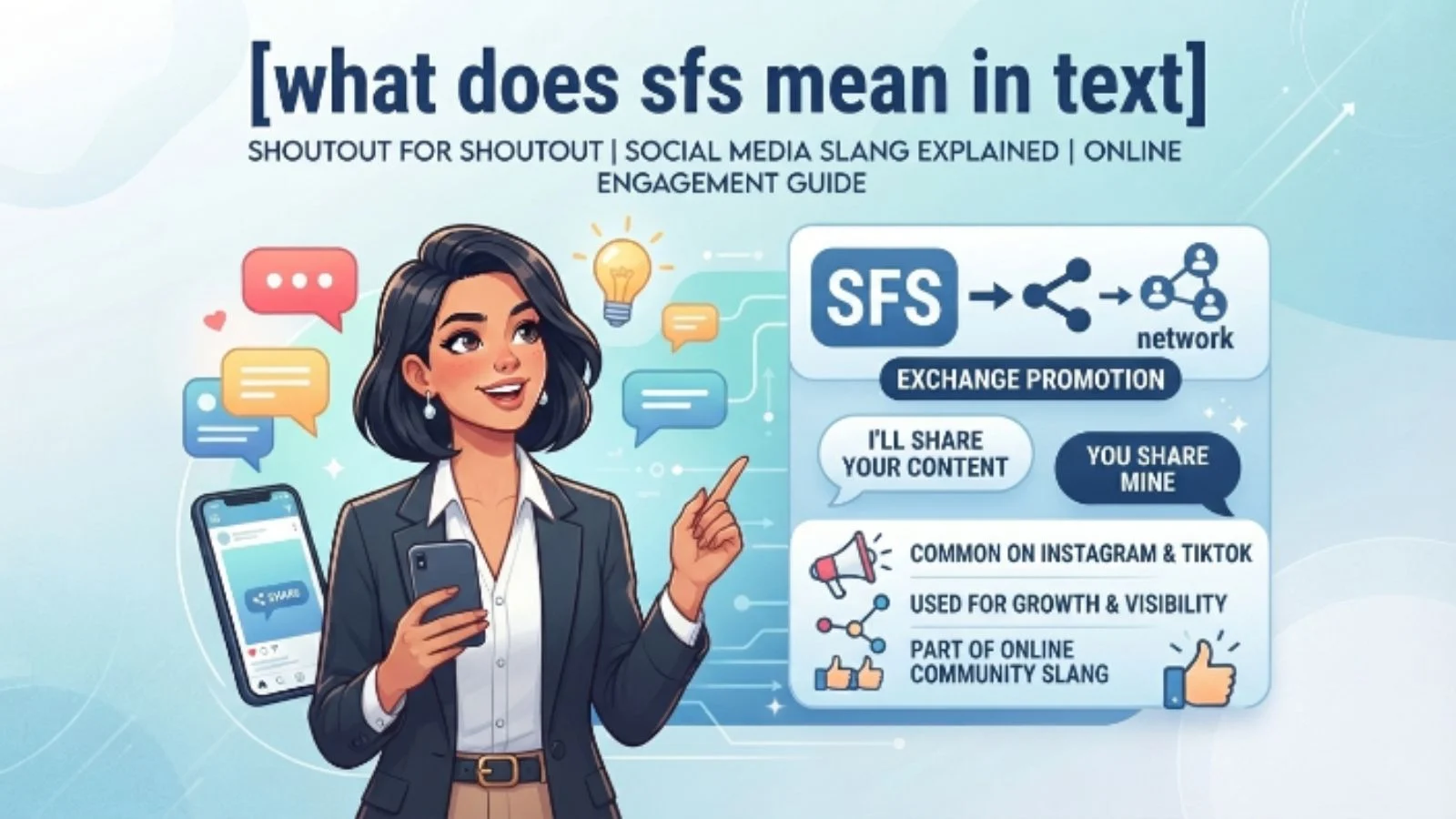
In most casual online conversations, SFS means “Shoutout for Shoutout.” It is commonly used when two people agree to promote or mention each other on social media to help increase followers, views, or engagement.
However, SFS can have other meanings depending on the context. Understanding the conversation around it is the best way to know exactly what someone means.
Let’s break it down clearly.
What Does SFS Mean in Text?
SFS usually means “Shoutout for Shoutout” in texting and social media.
It describes an arrangement where two people promote each other’s social media accounts. For example, one person may post the other person’s profile and ask their followers to check it out. In return, the other person does the same.
Simple definition
SFS means “Shoutout for Shoutout.” It is an informal way of asking someone to promote each other’s social media accounts.
You might see someone send:
“SFS?”
They are usually asking:
“Do you want to promote each other?”
For example:
Person A: SFS?
Person B: Sure, send me your story post.
This means both people are agreeing to give each other a social media shoutout.
What Does SFS Mean on Snapchat?
On Snapchat, SFS commonly means “Shoutout for Shoutout.”
Snapchat users may use the abbreviation when they want to exchange promotions. One person might share another user’s Snapchat username with their friends or followers.
For example:
“Anyone want to do SFS?”
This can mean:
“Does anyone want to promote each other’s Snapchat accounts?”
SFS may be especially useful for people trying to increase their Snapchat audience.
Someone might post:
“SFS with active users only.”
Here, the person is saying that they are interested in exchanging shoutouts with people who regularly use Snapchat and interact with their audience.
What Does SFS Mean on Instagram?
On Instagram, SFS can also mean “Shoutout for Shoutout.”
It usually involves two users promoting one another through Stories, posts, or other content.
For example:
“DM me for SFS.”
This means:
“Send me a direct message if you want to exchange shoutouts.”
A person may share another account and write something like:
“Follow @username for great photography.”
The other person then shares their account in return.
This can help both accounts reach a new audience.
What Does SFS Mean on TikTok?
SFS can appear on TikTok as well, although other terms such as collaborations, reposts, and promotional exchanges may be more common.
When someone writes “SFS?” on TikTok, they may be asking about exchanging promotional support.
For example:
“SFS? I have 10K followers.”
The person may be looking for another creator interested in promoting each other’s accounts.
The exact meaning still depends on the conversation.
Why Do People Use SFS?
There are several reasons someone might ask for an SFS.
1. To Gain Followers
The biggest reason is audience growth.
If two people have different followers, they can introduce their audiences to each other.
For example, a small fashion account might partner with another fashion creator. Each person recommends the other account, potentially bringing new followers.
2. To Increase Engagement
SFS can also help increase likes, comments, views, and profile visits.
When another person introduces your account to their followers, some of those users may interact with your content.
3. To Discover New Accounts
SFS is not always about gaining followers.
Sometimes people use it simply to discover accounts that share similar interests.
A person who enjoys fitness, photography, gaming, fashion, or travel might participate in SFS with accounts in the same niche.
4. To Support Other Creators
An SFS arrangement can also be a simple way to support another creator.
Instead of competing for attention, two users can help each other reach new audiences.
Real-Life Examples of SFS in Text
Understanding examples makes this abbreviation much easier.
Example 1: A Direct Message
Alex: SFS?
Sam: Sure. Send me your username.
Meaning: Alex is asking Sam if they want to exchange social media shoutouts.
Example 2: Instagram Story
“SFS with @jordan. Go follow them!”
Meaning: The person is promoting Jordan’s account as part of a shoutout exchange.
Example 3: Snapchat
“Who wants to SFS?”
Meaning: The person is looking for people who want to exchange Snapchat promotions.
Example 4: TikTok
“Anyone interested in SFS? DM me.”
Meaning: The user wants people to contact them privately about exchanging promotional support.
Example 5: A Casual Conversation
You: How did you get so many new followers?
Friend: I did SFS with a few creators.
Meaning: The friend gained exposure by exchanging shoutouts with other accounts.
SFS vs Similar Terms
SFS can be confused with several other social media expressions.
| Term | Meaning | Common Use |
|---|---|---|
| SFS | Shoutout for Shoutout | Exchanging promotions |
| Shoutout | Publicly mentioning or promoting someone | Social media promotion |
| Follow for Follow (F4F) | Following each other | Growing follower counts |
| Like for Like (L4L) | Liking each other’s content | Increasing likes |
| Share for Share (S4S) | Sharing each other’s content | Increasing reach |
| Collab | Working together on content | Creator partnerships |
Although these terms are related, they are not exactly the same.
SFS specifically focuses on exchanging shoutouts or promotions.
Other Meanings of SFS
While “Shoutout for Shoutout” is one of the most common meanings on social media, SFS can mean different things in other contexts.
For example, in some professional, technical, or organizational conversations, SFS may be an abbreviation for a completely different phrase.
That is why you should not automatically assume that SFS means “Shoutout for Shoutout” every time you see it.
The surrounding words usually provide the clue.
If someone sends:
“SFS on Instagram?”
the social media meaning is obvious.
But if someone uses SFS in a professional discussion, it may have another definition.
How Do You Know Which Meaning Someone Intended?
Look at the context.
Ask yourself:
- Is the conversation about Instagram, Snapchat, or TikTok?
- Is the person talking about followers?
- Did they mention promotion or a shoutout?
- Did they ask you to share their account?
- Are you talking about social media growth?
If the answer to these questions is yes, SFS probably means “Shoutout for Shoutout.”
If the conversation has nothing to do with social media, consider other possible meanings.
When Should You Use SFS?
You can use SFS when you are talking casually with someone about social media promotion.
It works well in:
- Direct messages
- Snapchat chats
- Instagram Stories
- TikTok conversations
- Creator communities
- Social media groups
- Casual conversations with friends
For example:
“Want to do SFS?”
is a short and natural way to ask someone if they want to exchange promotions.
You can also write:
“DM me if you’re interested in SFS.”
This is useful when you want to find other accounts interested in promotional exchanges.
When Should You Avoid Using SFS?
SFS is informal internet slang, so it may not be appropriate in every situation.
Avoid using it in formal emails, business reports, academic assignments, or professional documents unless the audience already understands the abbreviation.
Instead of writing:
“Can we do SFS?”
in a professional setting, you could say:
“Would you be interested in a social media promotion exchange?”
That sounds clearer and more professional.
Common Misunderstandings About SFS
Misunderstanding 1: SFS Always Means One Thing
Not necessarily.
Although “Shoutout for Shoutout” is a common social media meaning, SFS can represent other phrases in different contexts.
Always consider the conversation.
Misunderstanding 2: SFS Means Follow for Follow
These expressions are related, but they are different.
Follow for Follow, often written as F4F, means two people agree to follow each other.
SFS generally involves promoting or giving a shoutout to each other.
A shoutout may lead to a follow, but the two terms are not identical.
Misunderstanding 3: Every SFS Is Guaranteed to Bring Followers
Not necessarily.
An SFS can expose your account to another audience, but those people are not required to follow you.
The results depend on factors such as the audience, content quality, account relevance, and how the promotion is presented.
Misunderstanding 4: SFS Is Always a Formal Partnership
No.
Most SFS arrangements are informal agreements between social media users.
A simple Story mention between two small creators can qualify as SFS without being a formal business partnership.
Pro Tips for Using SFS
If you participate in SFS, a few simple practices can make the experience better.
Choose Relevant Accounts
Try to work with accounts that have audiences interested in similar topics.
For example, a fitness account may get more value from an SFS with another fitness creator than with an unrelated account.
Check the Account First
Before agreeing to an SFS, look at the other person’s profile.
Make sure the account appears genuine and that its content is appropriate for your audience.
Be Clear About the Agreement
If you’re arranging an SFS, make sure both people understand what they are expected to post.
For example, you can agree on:
- When the shoutout will be posted
- How long it will stay active
- What content will be shared
- Whether both people will post the same type of promotion
Clear communication prevents misunderstandings.
Don’t Rely Only on SFS
SFS can be useful, but it should not be your entire social media strategy.
High-quality content, genuine engagement, consistency, and a clear niche are usually more important for long-term audience growth.
How to Reply When Someone Says “SFS?”
Your response depends on whether you are interested.
If you want to participate, you can say:
“Sure, what’s your username?”
Or:
“Yes, let’s do it.”
If you need more information:
“Sure. What kind of shoutout are you thinking?”
If you are not interested, you can politely say:
“Thanks, but I’ll pass for now.”
You do not have to agree simply because someone asks.
Is SFS Still Used in 2026?
Yes, SFS can still be understood in social media conversations in 2026, particularly when users are discussing account promotion and audience growth.
However, slang changes quickly. Different platforms, communities, and age groups may prefer different expressions.
That means the safest approach is to consider the context rather than assuming every abbreviation has one universal definition.
Frequently Asked Questions
What does SFS mean in text messages?
In casual texting, especially when the conversation involves social media, SFS usually means “Shoutout for Shoutout.” It means two people agree to promote or mention each other’s accounts.
What does SFS mean on Snapchat?
On Snapchat, SFS commonly means “Shoutout for Shoutout.” Someone asking “SFS?” is usually asking whether you want to exchange Snapchat promotions.
Is SFS the same as F4F?
No. SFS means “Shoutout for Shoutout,” while F4F means “Follow for Follow.” SFS focuses on exchanging promotional mentions, whereas F4F involves following each other’s accounts.
Can SFS have another meaning?
Yes. SFS can have different meanings depending on the context. However, when it appears in a social media conversation about followers, promotion, or accounts, “Shoutout for Shoutout” is a likely interpretation.
Final Thoughts
So, what does SFS mean in text?
In social media conversations, SFS most commonly means “Shoutout for Shoutout.” It is an informal way for two people to promote each other’s accounts, often to reach new followers and increase engagement.
You may see SFS on Snapchat, Instagram, TikTok, or in direct messages. It is especially common among creators and users who are interested in growing their online audience.
Just remember that context matters. If someone says “SFS?” while talking about social media, they are probably asking about an exchange of shoutouts. But if SFS appears in a completely different type of conversation, it could have another meaning.
Understanding the context will help you interpret the abbreviation correctly and respond naturally.