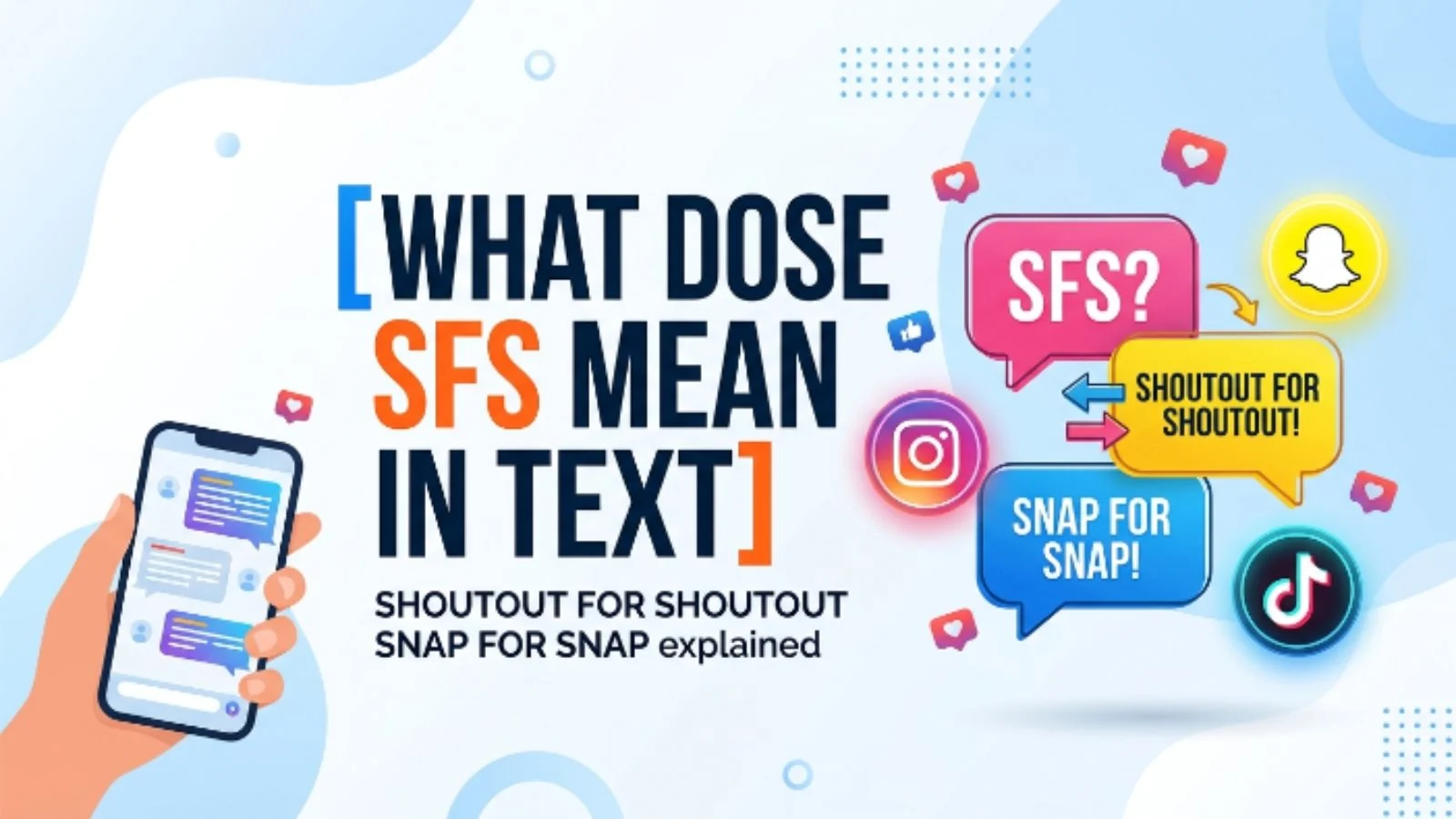
Have you ever received a message that simply said “SFS?” and wondered what it meant?
You’re not alone.
Texting and social media are filled with abbreviations that can be confusing, especially when the same acronym has multiple meanings. One term that often leaves people scratching their heads is SFS.
The good news? Once you understand the context, it’s actually very easy to figure out.
In this guide, you’ll learn exactly what does SFS mean in text, where it’s used, why people use it, and how to respond when someone sends it to you.
What Does SFS Mean in Text?
SFS most commonly means “Shoutout for Shoutout.”
It is a popular social media and texting abbreviation used when two people agree to promote each other. One person gives a shoutout to another account, and the other person returns the favor.
Quick Definition
SFS = Shoutout for Shoutout
In simple words, it means:
“I’ll promote you if you promote me.”
This abbreviation is especially common on social media platforms where users want to grow their audience.
Simple Meaning of SFS
Let’s make it even easier.
Imagine you have a social media account and want more followers. You message another creator and say:
“SFS?”
You’re basically asking:
“Would you like to give me a shoutout, and I’ll give you one back?”
Both people benefit because they get exposure to a new audience.
That’s why SFS is often associated with social media growth and networking.
Where Is SFS Used?
SFS is most commonly seen on:
- Snapchat
- TikTok
- X (formerly Twitter)
- Messenger
- Discord
- Text messages
Although it started mainly on social media, many people now use it in regular chats as well.
Instagram is one of the biggest places where SFS is used.
Example:
- User A posts User B’s profile in their story.
- User B shares User A’s profile in return.
This exchange is called an SFS.
Snapchat
On Snapchat, users often post:
“Anyone want SFS?”
This means they are looking for people willing to exchange shoutouts.
TikTok
TikTok creators sometimes use SFS to help each other gain followers and views.
Why Do People Use SFS?
There are several reasons why SFS remains popular.
1. Gain More Followers
The biggest reason is audience growth.
When another person recommends your account, their followers may decide to follow you too.
2. Increase Visibility
SFS helps people reach audiences they may not normally reach.
3. Build Connections
Creators often use SFS to connect with others in the same niche.
4. Promote Content
Whether it’s a business page, personal account, or creator profile, SFS can help increase exposure.
5. Support Friends
Sometimes people use SFS simply to support their friends online.
Real-Life Examples of SFS in Text
Understanding examples makes the meaning much clearer.
Example 1
Person A: “Hey, SFS?”
Person B: “Sure!”
Meaning:
Person A is asking for a shoutout exchange, and Person B agrees.
Example 2
Instagram Story:
“Doing SFS all day. DM me.”
Meaning:
The user is looking for people who want to exchange shoutouts.
Example 3
Snapchat Message:
“SFS tonight?”
Meaning:
The sender wants to promote each other’s accounts later that day.
Example 4
TikTok Comment:
“SFS anyone?”
Meaning:
The commenter is searching for creators interested in mutual promotion.
SFS vs Similar Terms
Many abbreviations look similar to SFS, but they have different meanings.
| Term | Meaning | Usage |
|---|---|---|
| SFS | Shoutout for Shoutout | Mutual promotion |
| F4F | Follow for Follow | Exchange followers |
| L4L | Like for Like | Exchange likes |
| C4C | Comment for Comment | Exchange comments |
| Sub4Sub | Subscribe for Subscribe | YouTube growth strategy |
Key Difference
SFS focuses on promotion through shoutouts.
The others focus on specific actions such as follows, likes, comments, or subscriptions.
Can SFS Mean Something Else?
Yes.
Although Shoutout for Shoutout is the most common meaning, SFS can occasionally have other meanings depending on the conversation.
Some alternative meanings include:
- Snap for Snap
- Spam for Spam
- Story for Story
However, when discussing texting and social media, Shoutout for Shoutout is usually the intended meaning.
Always look at the context before assuming.
When Should You Use SFS?
You can use SFS when:
- You want to grow your social media account.
- You want to collaborate with another creator.
- You are promoting a business page.
- You want mutual exposure.
- You want to support friends online.
Good Example
“Would you like to do SFS today?”
This sounds friendly and clear.
Less Effective Example
“SFS NOW.”
This can sound demanding or spammy.
How to Respond to SFS
If someone sends you “SFS?”, you have several options.
If You Want to Participate
You can reply:
- “Sure!”
- “I’m interested.”
- “Let’s do it.”
- “Sounds good.”
If You Are Unsure
You can ask:
- “What kind of SFS?”
- “How does it work?”
- “Can you explain?”
If You’re Not Interested
You can politely say:
- “No thanks.”
- “Maybe another time.”
- “I’m not doing shoutouts right now.”
Common Misunderstandings About SFS
Many people misunderstand this abbreviation.
Mistake #1: Thinking It Means a Follow
SFS is not exactly the same as F4F.
A shoutout is different from simply following someone.
Mistake #2: Assuming One Meaning Everywhere
SFS can have different meanings in different communities.
Always consider the platform and context.
Mistake #3: Using It Excessively
Constantly asking for SFS can annoy followers and make your account appear spammy.
Mistake #4: Expecting Instant Growth
An SFS may help visibility, but it does not guarantee followers or engagement.
Pro Tips for Using SFS Effectively
If you’re using SFS on social media, keep these tips in mind.
Choose Relevant Accounts
Work with people who have similar interests or audiences.
Be Genuine
Don’t treat every interaction as a growth opportunity.
Build real connections.
Avoid Spam
Posting “SFS” repeatedly can turn people away.
Offer Value
People are more likely to engage if your profile contains useful or entertaining content.
Keep It Professional
If you’re promoting a business account, make sure your profile looks trustworthy before requesting shoutouts.
Is SFS Still Popular?
Yes, although social media trends constantly change.
Many creators still use SFS as a simple way to:
- Reach new audiences
- Network with creators
- Promote content
- Build communities
However, quality content remains more important than shoutout exchanges alone.
Final Thoughts
If you’ve been wondering what does SFS mean in text, the answer is simple:
SFS usually stands for “Shoutout for Shoutout.”
It’s a popular abbreviation used on social media and in messages when two people agree to promote each other. While it can occasionally have other meanings, this is by far the most common one.
The next time someone messages you “SFS?”, you’ll know exactly what they’re asking.
Frequently Asked Questions (FAQ)
What does SFS mean in texting?
SFS usually means Shoutout for Shoutout, where two people agree to promote each other’s accounts.
What does SFS mean on Snapchat?
On Snapchat, SFS often means Shoutout for Shoutout or sometimes Snap for Snap, depending on the context.
Is SFS the same as F4F?
No. SFS means exchanging shoutouts, while F4F means Follow for Follow.
Is SFS good for growing followers?
It can help increase visibility and attract new followers, but it works best when combined with quality content and genuine engagement.