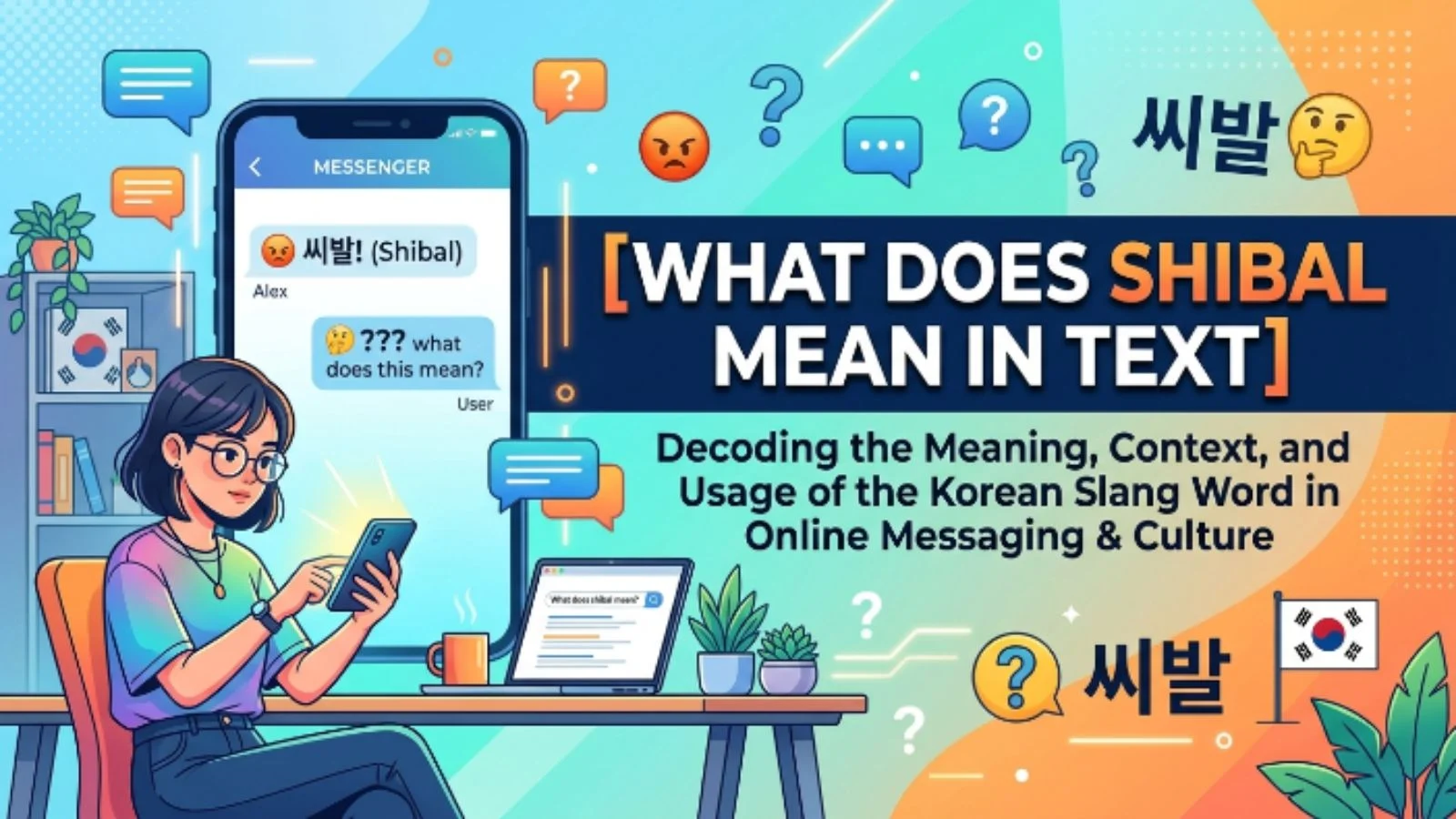
Have you ever been chatting with someone online and suddenly received the word “shibal”? Maybe you saw it in a gaming chat, a TikTok comment, a Korean drama subtitle, or on social media and wondered what it actually means.
At first glance, it looks like a harmless word. However, shibal is actually a Korean swear word that carries a strong meaning. Depending on the situation, it can express anger, frustration, surprise, or disappointment. Because of its popularity in Korean entertainment and internet culture, many people use it without fully understanding what it means.
In this guide, you’ll learn exactly what does shibal mean in text, where it comes from, when people use it, when you should avoid it, and how to understand it in online conversations.
What Does Shibal Mean in Text?
Shibal (also spelled ssibal, sibal, or shibbal) is a Romanized spelling of the Korean profanity 씨발.
Simple Definition
In text, shibal is a Korean swear word that people use to express:
- Anger
- Frustration
- Annoyance
- Shock
- Extreme disappointment
It is roughly similar to English curse words like:
- “Damn!”
- “Hell!”
- A stronger profanity depending on context
Although English translations vary, the original Korean word is considered offensive.
Featured Snippet Answer
What does shibal mean in text?
Shibal is a Romanized Korean swear word used to express anger, frustration, annoyance, or surprise. While some people use it casually online, it is considered a strong profanity in Korean and should be used carefully.
Simple Meaning of Shibal
Think of shibal as an emotional reaction.
Instead of calmly explaining how they feel, someone might type shibal when something goes wrong.
For example:
- They lose a game.
- Their phone crashes.
- Someone spoils a movie.
- They make a mistake.
Rather than writing a full sentence, they simply type:
“Shibal.”
That single word tells others they’re upset or frustrated.
The exact meaning changes depending on the conversation.
For example:
- “Damn!”
- “Seriously?”
- “Why did this happen?”
- “This is so frustrating.”
Where Did Shibal Come From?
The word comes from the Korean language.
Its original spelling is:
씨발
When Korean words are written using the English alphabet, different spellings appear, including:
- Shibal
- Ssibal
- Sibal
- Shibbal
They all refer to the same Korean profanity.
As Korean pop culture became popular around the world through:
- K-dramas
- K-pop
- Korean movies
- Korean gaming communities
- Social media
more international users began recognizing and typing the word online.
Where Is Shibal Used?
You may see shibal across many online platforms.
Gaming
Gamers often type it after:
- Losing a match
- Missing an important shot
- Lagging during gameplay
- Getting eliminated
Example:
Player A:
“I died again.”
Player B:
“Shibal.”
Explanation: The player is expressing frustration after losing.
Text Messages
Friends who know Korean slang may use it while joking or complaining.
Example:
“My laptop deleted everything.”
“Shibal…”
Explanation: The speaker is upset because they lost important work.
Social Media
You’ll often find it in:
- TikTok comments
- Instagram captions
- X (formerly Twitter)
- Facebook posts
- YouTube comments
Sometimes users write it simply because they heard it in a Korean drama.
K-Dramas
Many viewers first hear the word during emotional scenes.
For example:
- Someone gets betrayed.
- A character loses money.
- An argument becomes heated.
The character may shout “Shibal!” to express intense emotion.
Online Forums
People discussing games, movies, or stressful situations may use the word casually, especially if they’re familiar with Korean internet culture.
Why Do People Use Shibal?
There are several reasons.
1. To Express Frustration
This is the most common reason.
Example:
“My computer crashed before I saved.”
“Shibal.”
The speaker feels frustrated.
2. To Show Anger
Someone may use it after being insulted or treated unfairly.
Example:
“He lied to everyone.”
“Shibal.”
The word expresses anger.
3. To React to Bad Luck
Unexpected problems often trigger emotional words.
Example:
“I missed the last train.”
“Shibal.”
The speaker is disappointed.
4. Because of Korean Pop Culture
Many international fans hear the word in Korean entertainment and start using it without knowing how offensive it is.
This is especially common among younger internet users.
Real-Life Examples of Shibal in Text
Here are some realistic conversations.
Example 1
Friend:
“I forgot my wallet.”
Friend:
“Shibal.”
Meaning: They’re frustrated with themselves.
Example 2
Player:
“We lost in overtime.”
Reply:
“Shibal.”
Meaning: The player is disappointed after losing.
Example 3
Person:
“My internet disconnected during the exam.”
Friend:
“Shibal…that’s terrible.”
Meaning: Expressing sympathy mixed with frustration.
Example 4
Person:
“I accidentally deleted my project.”
Reply:
“Shibal.”
Meaning: Reacting to an unfortunate mistake.
What Does Shibal Express?
Depending on context, it can communicate different emotions.
| Situation | Meaning |
|---|---|
| Lost a game | Frustration |
| Bad news | Shock |
| Made a mistake | Regret |
| Something unfair happened | Anger |
| Unexpected problem | Annoyance |
| Terrible luck | Disappointment |
Notice that the emotion changes, even though the word stays the same.
Shibal vs Similar Internet Terms
Many slang words express emotions, but they are not equally offensive.
| Term | Meaning | Offensive? |
|---|---|---|
| Shibal | Korean profanity expressing anger or frustration | Yes |
| Damn | Mild English exclamation | Mild |
| Ugh | Annoyance | No |
| Bruh | Surprise or disbelief | No |
| OMG | Surprise or excitement | No |
| SMH | Disappointment | No |
Unlike many internet abbreviations, shibal is considered a swear word, so it should be used with caution.
When Should You Use Shibal?
For most people, the safest answer is:
Use it sparingly—or avoid using it altogether.
Although you may see it online, remember that native Korean speakers often view it as a strong profanity.
It may be acceptable only when:
- You’re quoting dialogue.
- You’re discussing Korean language or slang.
- You’re explaining its meaning.
- You’re among close friends who understand the context.
In professional conversations, school settings, workplaces, or with people you don’t know well, it is better to avoid using it.
Final Thoughts
By now, you should have a clear understanding of what does shibal mean in text and why it’s important to use the word carefully.
Shibal is a strong Korean swear word that expresses emotions like anger, frustration, annoyance, or shock. While you may see it frequently in Korean dramas, online games, social media comments, or memes, that doesn’t mean it’s suitable for everyday conversations.
If you’re a fan of Korean culture or learning the language, recognizing this word can help you better understand conversations and entertainment. However, it’s usually best to avoid using it yourself unless you fully understand the cultural context and the people you’re speaking with.
The internet is full of slang words borrowed from different languages, but not all of them are friendly expressions. Knowing their meaning helps you communicate more confidently, avoid misunderstandings, and show respect for other cultures.
In short:
- Shibal is a Korean profanity, not a texting abbreviation.
- It is commonly used to express strong frustration, anger, or surprise.
- It often appears in gaming, social media, and Korean entertainment.
- Most learners should understand it rather than use it in conversations.
Learning the meaning behind internet slang makes online communication easier and helps you avoid accidentally using offensive language.
Frequently Asked Questions (FAQs)
What does shibal mean in text messages?
In text messages, shibal is a Korean swear word used to express anger, frustration, disappointment, or shock. It is considered offensive and should be used with caution.
Is shibal a texting abbreviation?
No. Shibal is not an acronym or abbreviation. It is a Korean profanity that people sometimes type in text messages, online chats, and social media.
Is shibal a bad word?
Yes. Shibal is generally considered a vulgar or offensive word in Korean. Although some close friends may use it casually, it is not appropriate for formal or respectful conversations.
Why do people say shibal in Korean dramas?
Characters often use shibal in dramas or movies to show strong emotions such as anger, stress, frustration, or disbelief. Like English profanity in films, it helps portray realistic emotional reactions.
Can non-Korean speakers use shibal?
While anyone can learn what it means, it’s usually better not to use it unless you fully understand the cultural context. Since it is a swear word, using it incorrectly may offend native Korean speakers.
Is shibal stronger than “damn”?
In many situations, yes. Although translations vary depending on context, shibal is generally stronger than “damn” and is closer to stronger English profanity.
What are other spellings of shibal?
Because Korean words are written using a different alphabet, you may see several spellings online, including:
- Shibal
- Ssibal
- Sibal
- Ssi-bal
These spellings usually refer to the same Korean swear word.
Key Takeaways
- Shibal means a strong Korean swear word.
- It expresses anger, frustration, annoyance, stress, or surprise.
- It is commonly seen in gaming, social media, Korean dramas, and online chats.
- It is not a texting acronym.
- The word is considered offensive, so it’s best to avoid using it in formal or respectful conversations.
- Understanding the word helps you interpret Korean content more accurately without accidentally misusing it.