Have you ever seen the word “mean” in a text message and wondered what the person was actually trying to say?
The word mean can be confusing because it has several different meanings in English. In a text message, its meaning usually depends on the sentence, the conversation, and the tone of the person using it.
Someone might ask, “What do you mean?” They could say, “I didn’t mean to hurt you.” Or they might write, “That was mean.” In each example, the word “mean” has a different meaning.
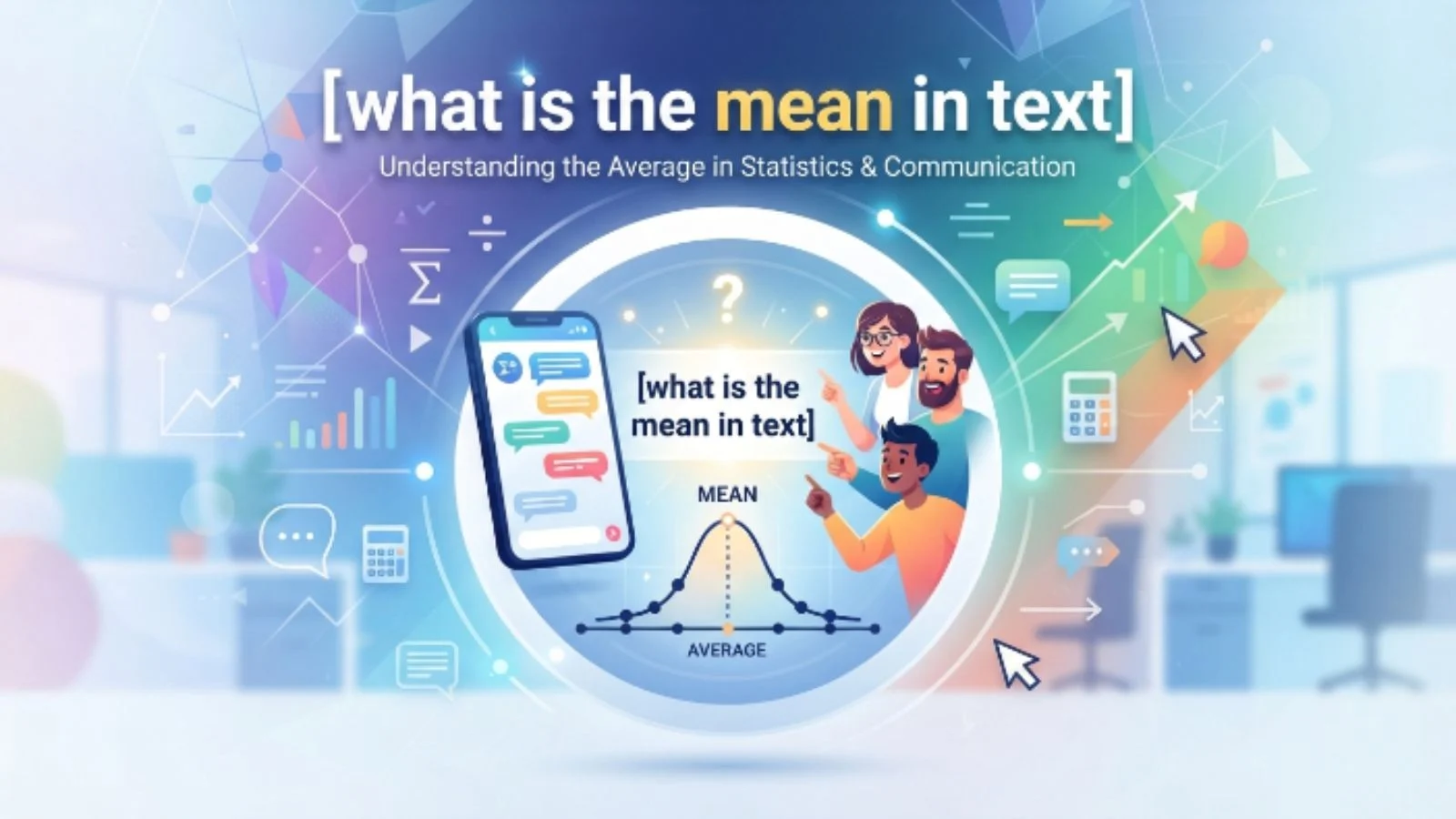
So, what is the mean in text? In this guide, you will learn the most common meanings of mean in texting and online conversations, along with real-life examples and simple explanations.
What Does “Mean” Mean in Text?
In text messages, “mean” usually means to intend something, refer to something, or describe someone as unkind.
The exact meaning depends on how the word is used.
Here are the most common meanings:
| Use of “Mean” | Simple Meaning | Example |
|---|---|---|
| To intend | To have a purpose or intention | “I didn’t mean to ignore you.” |
| To ask for clarification | To ask what someone is saying | “What do you mean?” |
| To refer to something | To explain the meaning of something | “What does this message mean?” |
| Unkind or hurtful | Not nice or cruel | “That was mean.” |
| Average | A mathematical average | “The mean score was 85.” |
In everyday texting, the first four meanings are much more common than the mathematical meaning.
Simple Meaning of “Mean” in Text
The simplest way to understand mean is this:
“Mean” can describe what someone intends, what something represents, or behavior that is unkind.
For example:
“I mean it.”
This means:
“I am serious about what I am saying.”
Another example is:
“What do you mean?”
This means:
“Can you explain what you are saying?”
And:
“Why are you being mean?”
This means:
“Why are you acting in an unkind or hurtful way?”
The same word can have different meanings, so always look at the surrounding words.
The Most Common Meaning: “Mean” as “Intend”
One of the most common ways people use mean in text is to talk about intention.
When someone says “I mean”, they are often explaining what they intended to say.
Example:
Person A: You sounded angry earlier.
Person B: I didn’t mean to sound angry.
Here, “mean” means intend.
The person is saying that sounding angry was not their intention.
More Examples
“I didn’t mean to leave you on read.”
This means the person did not intentionally ignore your message.
“I mean what I said.”
This means the person is serious and truly believes what they said.
“I didn’t mean it like that.”
This means the person wants to clarify that their words were misunderstood.
This use is especially common during arguments, misunderstandings, and emotional conversations.
“What Do You Mean?” in Text
One of the most common phrases containing the word mean is:
“What do you mean?”
People use this phrase when they do not understand something or want more information.
Example:
Person A: Maybe we should stop talking.
Person B: What do you mean?
Here, the person wants clarification.
They may be asking:
- Are you angry?
- Do you want to end the friendship?
- Are you joking?
- What exactly are you trying to say?
The tone can change depending on the conversation.
“What do you mean?” Can Sound Different
“What do you mean?”
This can be a normal question.
“What do you mean??”
This may show confusion, surprise, or concern.
“What do you mean by that?”
This can sound more serious or suspicious, especially during an argument.
Therefore, punctuation and context can affect the emotional meaning.
“I Mean” in Text Messages
People also use “I mean” as a conversational phrase.
It can help someone correct, clarify, or expand on what they just said.
Example:
“That movie was okay. I mean, the ending was actually pretty good.”
Here, “I mean” introduces a correction or additional thought.
Another example:
“I mean, you could come if you want.”
This might sound casual, uncertain, or slightly hesitant.
The phrase does not always have a deep meaning. Sometimes it is simply part of natural conversation.
“I Didn’t Mean To” Meaning in Text
The phrase “I didn’t mean to” usually means:
“I did not intend to do that.”
Example:
“I didn’t mean to hurt your feelings.”
The person is saying that hurting your feelings was not their intention.
“I didn’t mean to ignore you.”
This means the person claims that ignoring you was not deliberate.
“Sorry, I didn’t mean to make you uncomfortable.”
This is often used as an apology.
However, the meaning can depend on the situation. Sometimes a person may genuinely apologize, while other times they may be trying to defend their actions.
“That Was Mean” Meaning in Text
Another common use of mean is to describe unkind behavior.
When someone says:
“That was mean.”
They usually mean:
“That was rude, hurtful, or unkind.”
Example:
Person A: I told everyone about your secret.
Person B: That was mean.
In this situation, the word mean describes behavior that caused emotional harm or was not considerate.
Other Examples
- “Why are you being mean to me?”
- “That comment was really mean.”
- “I was just joking. I didn’t mean to be mean.”
The word can describe both serious cruelty and smaller acts of rudeness.
“Mean” in Casual Internet Conversations
Online, people often use mean in a very casual way.
For example:
“Stop being mean.”
This could be serious, playful, or teasing.
The meaning depends on the relationship between the people.
Example 1: Serious
Friend: You are useless. Nobody wants you here.
You: Why are you being mean?
Here, the word is serious because the comment is genuinely hurtful.
Example 2: Playful
Friend: I ate the last slice of pizza.
You: That’s so mean.
Here, the person is probably joking.
The situation and tone are important when interpreting the word.
Why Do People Use “Mean” in Text?
People use the word mean for several reasons.
1. To Explain Their Intention
Someone may want to explain what they really intended.
“I didn’t mean that.”
This can help correct a misunderstanding.
2. To Ask for Clarification
A person may not understand another person’s message.
“What do you mean?”
This asks the other person to explain.
3. To Describe Hurtful Behavior
Someone may use mean to describe rude or unkind behavior.
“That was really mean.”
4. To Make a Statement More Serious
“I mean it.”
This tells the other person that the speaker is serious.
5. To Correct Something
“I mean, not Friday. I meant Saturday.”
Here, the person is correcting their previous statement.
Real-Life Text Examples of “Mean”
Understanding examples makes the word much easier.
Example 1: Asking for Clarification
Text:
“You should probably find someone else.”
Reply:
“What do you mean?”
Explanation:
The person is asking the sender to explain their message more clearly.
Example 2: Explaining Intention
Text:
“Sorry, I didn’t mean to upset you.”
Explanation:
The sender is saying that upsetting the other person was not intentional.
Example 3: Showing Seriousness
Text:
“I mean it. Please don’t call me again.”
Explanation:
The person is emphasizing that they are serious.
Example 4: Describing Unkind Behavior
Text:
“You told everyone about my private message. That was mean.”
Explanation:
The speaker believes the other person’s behavior was hurtful or unkind.
Example 5: Correcting a Statement
Text:
“I mean, I wanted to say Monday, not Sunday.”
Explanation:
The person is correcting what they previously said.
“Mean” vs. Similar Words
The word mean can sometimes be confused with other words.
| Word or Phrase | Meaning | Example |
|---|---|---|
| Mean | Intend or be unkind | “I didn’t mean to hurt you.” |
| Intend | Plan or want to do something | “I intended to call you.” |
| Say | Speak words | “What did you say?” |
| Explain | Make something clear | “Can you explain?” |
| Rude | Not polite | “That message was rude.” |
| Hurtful | Causing emotional pain | “Those words were hurtful.” |
Although these words can be related, they are not always interchangeable.
For example:
“What do you mean?”
is not exactly the same as:
“What did you say?”
The first asks about the meaning or intention behind the words. The second asks about the actual words spoken.
When Should You Use “Mean” in Text?
You can use mean in many everyday situations.
Use It When You Want to Explain Your Intention
“I didn’t mean to make you feel ignored.”
Use It When You Need Clarification
“What do you mean by that?”
Use It When You Want to Show You Are Serious
“I mean it.”
Use It When Someone Is Being Unkind
“That was mean.”
Use It When Correcting Yourself
“I mean Tuesday, not Wednesday.”
These are all natural and common uses.
Common Misunderstandings About “Mean”
Because mean has multiple meanings, people sometimes misunderstand it in text.
Misunderstanding 1: Assuming “Mean” Always Means “Unkind”
Many people think the word mean always means rude or cruel.
That is not true.
In the sentence:
“I didn’t mean to call you late.”
the word means intend, not unkind.
Misunderstanding 2: Taking “What Do You Mean?” as an Attack
The phrase “What do you mean?” can be completely neutral.
However, in an argument, it may sound defensive or confrontational.
The tone depends on the conversation.
Misunderstanding 3: Confusing “I Mean It” With “I Am Being Mean”
These phrases are completely different.
“I mean it” means:
“I am serious.”
“I am being mean” means:
“I am acting in an unkind way.”
The words look similar, but the meanings are different.
Misunderstanding 4: Ignoring Context
A single word cannot always be understood without the full message.
For example:
“That was mean.”
could be a serious complaint or a playful joke.
The relationship, situation, and previous messages all matter.
How Tone Changes the Meaning of “Mean”
Text messages do not always show facial expressions or voice tone.
That is why the same phrase can have different meanings.
Serious Tone
“I mean it. Don’t contact me again.”
This sounds firm and serious.
Confused Tone
“What do you mean?”
The person wants an explanation.
Playful Tone
“You ate all the cookies? That’s mean.”
This may be a joke.
Apologetic Tone
“I didn’t mean to hurt you.”
This expresses regret or an attempt to explain an action.
When reading a text, consider the full conversation rather than focusing on one word.
Pro Tips for Understanding “Mean” in Text
Here are some useful tips for understanding the word correctly.
Look at the Words Around It
The sentence usually reveals the meaning.
- “I didn’t mean to” = did not intend
- “What do you mean?” = asking for clarification
- “That was mean” = unkind behavior
- “I mean it” = serious statement
Consider the Conversation
Was the person joking, arguing, apologizing, or explaining something?
The context can completely change the meaning.
Pay Attention to Punctuation
Compare:
“What do you mean?”
with:
“What do you mean?!”
The second may show stronger emotion, confusion, or anger.
Do Not Assume the Worst
A short text message can sometimes sound harsher than intended.
If you are unsure, ask:
“Do you mean that seriously?”
or:
“Can you explain what you mean?”
This can prevent unnecessary misunderstandings.
Is “Mean” a Slang Word?
No, mean is not generally considered slang.
It is a standard English word that people use in everyday speech, texting, social media, and formal communication.
However, its casual use in phrases such as “I mean”, “What do you mean?”, and “That’s mean” is very common in informal conversations.
The word can also appear in formal writing, depending on the meaning.
Frequently Asked Questions
What does “mean” mean in a text message?
In a text message, mean can mean intend, refer to, or be unkind. The exact meaning depends on the sentence and context.
What does “I mean it” mean in texting?
“I mean it” means “I am serious” or “I truly intend what I am saying.”
What does “What do you mean?” mean in a text?
It usually means “Can you explain what you are saying?” It can show confusion, curiosity, surprise, or sometimes frustration.
What does “That was mean” mean?
“That was mean” means the speaker thinks someone behaved in a rude, unkind, or hurtful way. Sometimes it can also be used playfully between friends.
Final Thoughts
The word mean can have several meanings in text messages, which is why it can sometimes be confusing. It may describe someone’s intention, ask for clarification, show seriousness, or describe behavior that is unkind.
The easiest way to understand it is to look at the complete sentence and the situation surrounding it. “I didn’t mean to” usually talks about intention, while “What do you mean?” asks for clarification. “That was mean” usually describes hurtful behavior, and “I mean it” shows that someone is serious.
Once you understand these common uses, you can quickly figure out what mean means in almost any text conversation.