Have you ever received the same message over and over again or had someone flood your inbox with random texts? If so, you’ve probably experienced spamming.
But what does spamming mean in text, and why do people keep talking about it on social media, messaging apps, and online communities?
The word spamming is much more than simply sending lots of messages. Depending on the situation, it can mean repeatedly sending unwanted texts, promoting something excessively, or annoying others by flooding conversations.
In this guide, you’ll learn exactly what spamming means in text, when people use the term, how to recognize spam messages, and how to avoid being labeled as a spammer yourself.
What Does Spamming Mean in Text?
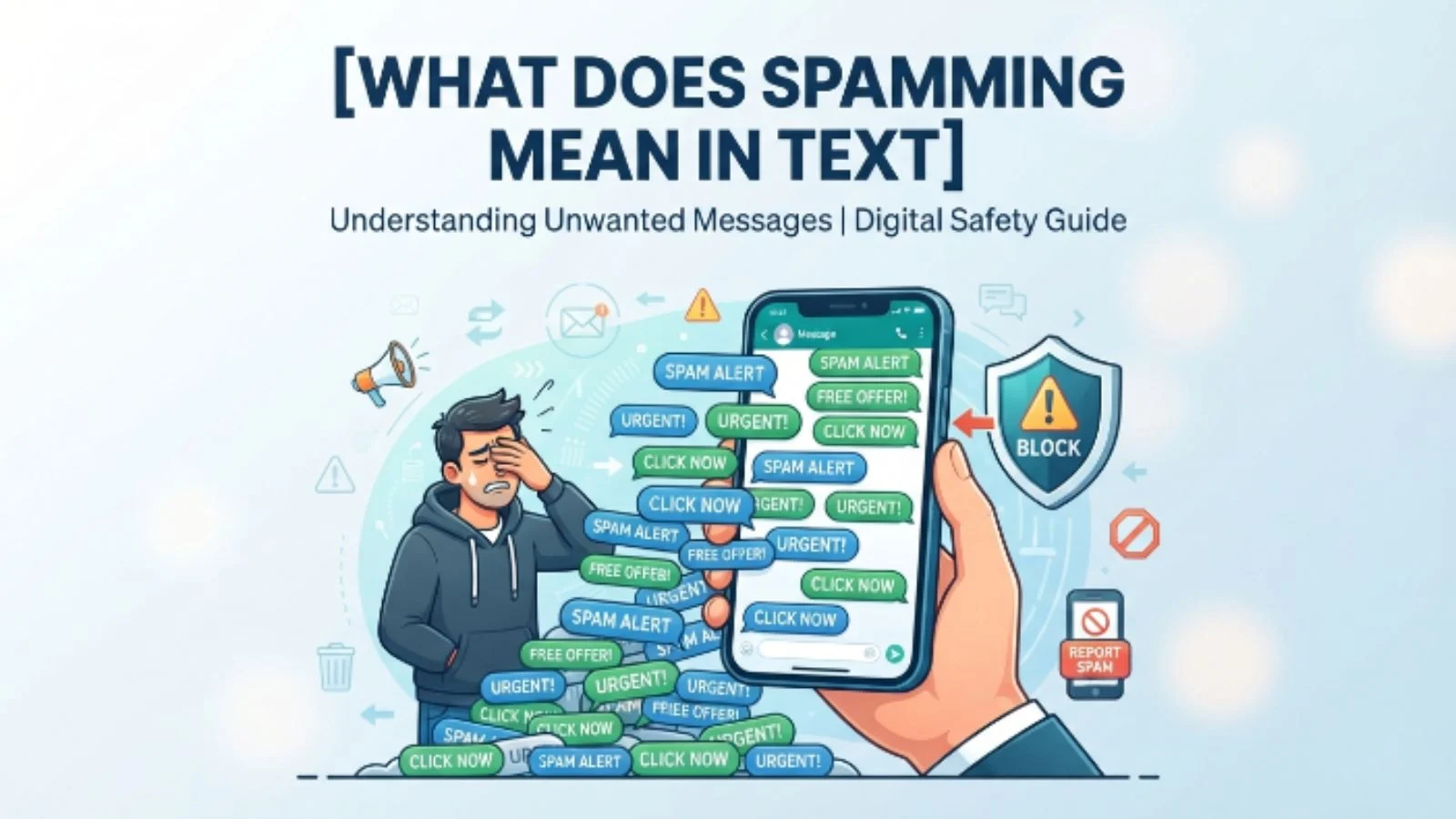
Spamming in text means sending unwanted, repetitive, or excessive messages to another person or group.
It usually refers to messages that are:
- Repeated multiple times
- Unwanted or irrelevant
- Sent too frequently
- Annoying or disruptive
Quick Definition
Spamming in text means repeatedly sending messages that the receiver did not ask for or does not want, often to advertise something, get attention, or simply annoy people.
The term is commonly used in texting, group chats, social media, gaming, and online communities.
Simple Meaning of Spamming
In simple words, spamming means sending too many messages.
Imagine your friend sends:
- “Hello”
- “Hello”
- “Hello”
- “Hello”
- “Reply!”
- “Reply!”
- “Reply!”
Even if the messages aren’t harmful, this behavior is considered spamming because it overwhelms the conversation.
Sometimes spam messages are advertisements.
For example:
“Buy this product now!”
sent to hundreds or thousands of people is also spam.
The key idea is that spam is unwanted communication.
Where Is Spamming Used?
The word spamming is used almost everywhere people communicate online.
Text Messages (SMS)
People may spam someone by:
- Sending dozens of messages in a row
- Repeatedly asking the same question
- Flooding someone’s phone
Example:
“Are you there? Are you there? Are you there?”
On WhatsApp, spamming often includes:
- Forwarding the same message repeatedly
- Sending chain messages
- Posting promotional links in multiple chats
Facebook Messenger
Users may call it spam when someone:
- Sends repeated promotions
- Shares fake giveaways
- Floods inboxes with identical messages
Spam on Instagram includes:
- Repeating the same comment
- Sending promotional DMs
- Posting identical replies everywhere
Snapchat
People may spam snaps or chats by sending dozens of messages without waiting for a reply.
Discord
Discord servers often remove users who:
- Repeat messages
- Advertise continuously
- Flood channels with emojis or text
Online Games
In gaming, spamming can mean:
- Repeating the same chat message
- Constantly inviting players
- Advertising clans repeatedly
Sometimes gamers also use “spam” to describe repeatedly using the same attack or move.
Email spam is probably the oldest form of spam.
Examples include:
- Promotional emails
- Fake lottery messages
- Scam offers
- Phishing emails
Why Do People Use Spamming?
Not everyone who spams has the same goal.
Here are the most common reasons.
Advertising
Businesses or individuals sometimes send mass messages to promote:
- Products
- Services
- Websites
- Events
Unfortunately, many do it without permission.
Getting Attention
Some people repeatedly text because they want someone to notice them.
For example:
“Hey.”
“Hey!”
“HEY!!”
This is considered message spam.
Trolling
Internet trolls sometimes spam chats simply to annoy other people.
Scams
Scammers send spam messages hoping someone will:
- Click a link
- Share personal information
- Send money
Bots
Many spam messages are sent automatically by bots instead of real people.
Examples of Spamming in Text
Let’s look at some real-life examples.
Example 1
Person A:
“Hey.”
“Hey.”
“Hey.”
“Reply!”
“Reply!”
Meaning
Person A is spamming because they’re sending too many messages without waiting.
Example 2
“I just won $5,000! Click here now!”
Meaning
This is promotional spam and could also be a scam.
Example 3
“Subscribe to my YouTube channel!”
posted under hundreds of different comments.
Meaning
This is comment spam.
Example 4
“Buy followers now!”
sent to random Instagram users.
Meaning
This is marketing spam.
Example 5
A friend sends 50 funny memes in one minute.
Meaning
Some people jokingly call this spam, even if it’s harmless.
What Does “Stop Spamming Me” Mean?
If someone says:
“Stop spamming me.”
They usually mean:
- Stop sending so many messages.
- Stop repeating yourself.
- Give me time to respond.
- Stop flooding my inbox.
It doesn’t always mean they’re angry.
Sometimes they’re simply asking for fewer messages.
What Does “Don’t Spam the Chat” Mean?
You’ll often see this in:
- Live streams
- Discord servers
- Twitch chats
- YouTube live chat
- Gaming communities
It means:
- Don’t repeat the same message.
- Don’t flood the chat.
- Don’t interrupt conversations.
Many communities automatically mute users who spam.
Is Spamming Always Bad?
Not always.
Sometimes friends jokingly say:
“I’m going to spam your phone with birthday messages!”
In this case, it’s playful.
However, in most online communities, spamming is considered rude because it distracts others and makes conversations harder to follow.
What Counts as Spam?
Something is usually considered spam if it is:
- Unwanted
- Repeated
- Sent too often
- Irrelevant
- Promotional without permission
- Sent to many people at once
The more unwanted a message is, the more likely people will call it spam.
What Does Spammer Mean?
A spammer is someone who sends spam messages.
For example:
- Someone sending hundreds of advertisements
- A bot flooding comments
- A person repeatedly texting the same message
Example:
“He’s a spammer.”
This means the person constantly sends unwanted messages.
Spamming vs Similar Terms
| Term | Meaning | Difference |
|---|---|---|
| Spamming | Sending too many unwanted messages | Focuses on excessive messaging |
| Flooding | Filling a chat with many messages quickly | Usually happens in live chats |
| Harassment | Repeatedly targeting someone to upset them | More serious and intentional |
| Advertising | Promoting something | Only becomes spam when it’s unwanted or excessive |
| Scamming | Trying to steal money or information | Spam may be part of a scam, but not all spam is fraudulent |
Why Is Spamming a Problem?
Spamming creates several issues.
It can:
- Waste people’s time
- Hide important conversations
- Make chats difficult to read
- Spread scams
- Increase cybersecurity risks
- Annoy friends and community members
Many apps now automatically detect spam to improve the user experience.
How Can You Recognize Spam Messages?
Watch for these warning signs:
- The same message appears repeatedly.
- The sender urges you to click a suspicious link.
- The message promises unrealistic rewards.
- You receive messages from unknown numbers.
- The content feels unrelated to your conversation.
- The sender pressures you to act immediately.
If something seems suspicious, avoid clicking links or sharing personal information.
How to Avoid Being Seen as a Spammer
No one wants to be ignored or blocked because of excessive messaging.
Follow these simple tips:
Wait for Replies
Give the other person time to respond before sending another message.
Avoid Repeating Yourself
If you’ve already asked a question, wait instead of sending it multiple times.
Don’t Send Mass Promotions
Only share promotional content with people who have agreed to receive it.
Respect Group Chats
Stay on topic and avoid flooding conversations.
Think Before You Send
Ask yourself whether your message adds value or simply creates unnecessary noise.
When Should You Use the Word “Spamming”?
Use spamming when someone is:
- Sending excessive texts
- Posting repeated comments
- Flooding chats
- Sending unwanted advertisements
- Repeating identical messages
Example:
“Please stop spamming the group chat.”
Example:
“That account keeps spamming promotional links.”
Common Misunderstandings About Spamming
Many people misunderstand what spam actually means.
Myth 1: Sending Two Messages Is Spam
Not necessarily.
Two follow-up messages are usually normal.
Spam involves excessive or unwanted repetition.
Myth 2: Every Advertisement Is Spam
False.
Marketing becomes spam only when it’s unsolicited or repeatedly sent without permission.
Myth 3: Friends Can Never Spam
Even friends can spam if they flood your phone with dozens of unnecessary messages.
Myth 4: Spam Is Always Dangerous
Not always.
Some spam is simply annoying, while other spam may involve scams or phishing attempts.
Pro Tips for Using the Word Correctly
Keep these tips in mind:
- Use spam as a noun: “That message is spam.”
- Use spamming as a verb: “He is spamming the chat.”
- Use spammer for the person sending spam.
- Avoid accusing someone of spamming unless the behavior is actually excessive or unwanted.
- Report suspicious spam messages instead of responding to them.
Final Thoughts
Now you know the answer to what does spamming mean in text.
In simple terms, spamming means sending excessive, repetitive, or unwanted messages that disrupt conversations or annoy other people. It can happen through text messages, social media, emails, gaming chats, and many other online platforms.
While some people jokingly refer to sending lots of birthday wishes or memes as “spamming,” the term usually has a negative meaning. Good digital communication involves respecting other people’s time, avoiding repeated messages, and sharing content only when it’s relevant. By understanding what spam is and recognizing it when it appears, you can communicate more effectively and stay safer online.
Frequently Asked Questions
What does spamming mean in texting?
It means sending too many unwanted or repetitive messages to another person, often in a short period.
Is spamming illegal?
Not always. However, certain types of spam, such as fraudulent messages, phishing attempts, or unsolicited commercial messages, may violate laws or platform policies in some countries.
What’s the difference between spam and scam?
Spam refers to unwanted or excessive messages, while a scam is an attempt to deceive someone for money, personal information, or another benefit. Some spam messages are scams, but not all spam is fraudulent.
Can you accidentally spam someone?
Yes. Sending many follow-up messages before someone has time to reply can unintentionally come across as spamming. It’s generally better to wait for a response before sending additional messages.